


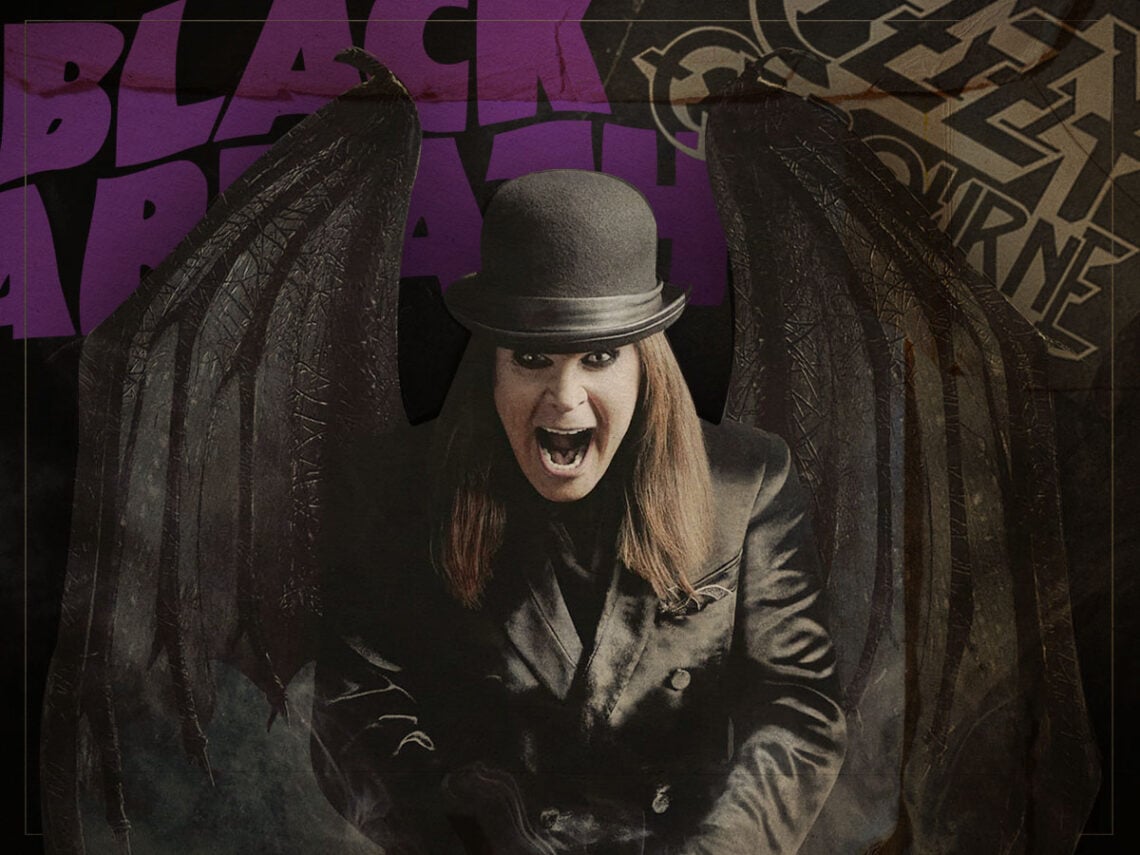
Five songs that define Ozzy Osbourne

There are some people who you think will never die, and Ozzy Osbourne has always been one of them. A man who seemed too badass, too rock ‘n’ roll to ever call it a day on life. The Prince of Darkness, the Godfather of heavy metal, equally one of the wildest and most humble musicians on the planet, surely there is no way Earth can turn without such a force?
Surely, if he were to walk right up to the pearly gates, whoever is at check-in will ask, “What are you doing here?” And yet, despite having such a presence, both in music and the world in general, the man who for so long seemed immortal has passed away.
The world is abuzz with well-wishers, which isn’t a surprise. He was a huge personality, someone with real charisma, to the point that his name stretched far beyond the realm of music and existed solely under the bracket of “entertainment.” However, during what will undoubtedly be days of people sharing their favourite clips, photos, and stories of Osbourne, we mustn’t forget the thing that originally put him in the public eye: his voice.
Black Sabbath were the first band to play this thing that we now know as heavy metal, and every single member of that band was a vital component in making it work. Tony Iommi on guitar, Geezer Butler on bass, and Bill Ward on drums. The three of them were a musical force to be reckoned with, the kind of sound that makes the devil shiver and that angels simply don’t have the hearing capacity to pick up the frequency of. Tying all of them together, the cherry on the top of this cake of thunderous distortion and crashing drums, was the vocal stylings of Ozzy Osbourne.
It would be pointless for us to try to explain why his voice was so unmatched. Every word he ever sang, every line that ever escaped him, had its own personality, charm and vigour. It is undefinable, and as a vocalist, he remains out of reach. So, rather than give you an explanation, here are five songs that define Ozzy Osbourne.
The perfect songs that define Ozzy Osbourne
‘Sabbath Bloody Sabbath’

He was called the Prince of Darkness for a reason. Ozzy Osbourne simply loved the occult. It might have been through pure fascination, or he might have even been gently pushed towards it through the laws of attraction, but by the time he came to record Sabbath Bloody Sabbath in a supposedly haunted castle, in the words of Ozzy himself, he had reached the “pinnacle” of Black Sabbath.
The group may have been struggling with some writer’s block, but the opening tune from the titular album is about as near to perfection as they got in 1973.
Though they were snorting vast amounts of cocaine, the group managed to cobble together a song that Geezer Butler called his best lyrics and Tony Iommi referred to as, “the benchmark for that album. It was a heavy riff, then the song went into a light bit in the middle, and then back to the riff again: the light and shade I’m always looking for. Ozzy sang very well on it, actually on all of the songs on the album. Very high!”
‘War Pigs’

Here it is, arguably the greatest protest song of all time. During a period where political uncertainty seems to be at its most volatile, the amount of protest songs which are being released regularly is unfathomable, and still, none of them come close to the power of ‘War Pigs’. Why is the song so good? The heavy-hitting lyrics? Yes. The punching guitar line? Pounding rhythm section? Sense of dread? Yes. Yes. Yes. But most importantly, it’s all down to the pained vocals of the Prince of Darkness.
Osbourne shows us in this song just how powerful his voice truly is. ‘War Pigs’ is about corruption, loss and frustration, and in the borderline isolated vocals that he has on the track, Osbourne manages to portray those three emotions and more. He sounds like he is mourning and screaming simultaneously. This song wouldn’t be as legendary if you didn’t have the greatest heavy metal vocalist of all time on it, and it perfectly personifies why Osbourne was the perfect man to lead such a monolithic genre.
‘Flying High Again’
It isn’t that Ozzy Osbourne solely relies on being crazy to make great hits, but it certainly has seemed to help. Across his discography the heavy metal icon has shared a rafter of reasons to assume he actually enjoys his gentle madness. ‘Flying High Again’ from the 1981 record Diary of a Madman is yet another example of this.
But it isn’t the only good thing about the track. It is also toploaded with the other secret ingredient that made Osbourne such a rapid success: unstoppable swagger. The tune is definitely drenched in heavy metal nuance, but it also has a classic rock swagger that would make Mick Jagger think twice about strutting across the room to turn it down. Of course, the song also celebrates that other inescapable part of Osbourne’s life at this time: drugs. It is an unabashed celebration of putting as many narcotics into his brain as possible, and this number is a distillation of his time.
‘Crazy Train’

The parting of Ozzy Osbourne and black Sabbath had been viewed by many as a nail in the coffin of the Prince of Darkness. He was, of course, a fantastic vocalist, but many believed the singer lacked the conceptual conviction to headline a solo career. It was a viewpoint Osbourne managed to scupper right from the very start. And, as you might imagine, the song came flying out the gates like a decapitated bat out of hell.
‘Crazy Train’ from 1980’s Blizzard Of Ozz would be Osbourne’s first solo hit and drive him into a new level of infamy. Balanced by Randy Rhoads’ unique riffery, Osbourne pelted the airwaves with enough heavy metal grit to make the audience weep while peppering in a chorus that would make Billy Joel blush.
It has become a mainstay of Osbourne’s legacy as well as being featured on countless TV and movie moments. The truth is, Osbourne was too talented to fail and had way too much charisma to care what anybody else assumed. Add in a dash of crazy and you have a recipe for success.
‘Paranoid’

It was impossible for Black Sabbath to sound unlike their surroundings, given that the city of Birmingham and the troublesome times that were post-war Britain were such dominant factors in their lives. While music was somewhat used as escapism, the anger and frustration that the band felt about the mundane nature of life bled into every guitar line, cymbal strike and vocal performance.
‘Paranoid’ was a song Geezer Butler wrote about his depression (which he hadn’t identified as depression at the time). A lot of people, both those making music and those listening, had similar feelings to those so unashamedly addressed in this song, and who better to sing about them than Ozzy Osbourne? With every line, you can hear the confusion, pain and turmoil that Butler was attempting to convey.
This sense of dread had never been so present in mainstream music before, and as such, it needed to be believable. The vocals of Osbourne made that the case, so that people didn’t just hear the song, they connected with it. It acted as a strange sort of escapism, one that didn’t allow the listener to escape anywhere; everyone was still in a hole, but the difference was that now they had something to decorate it with.
