


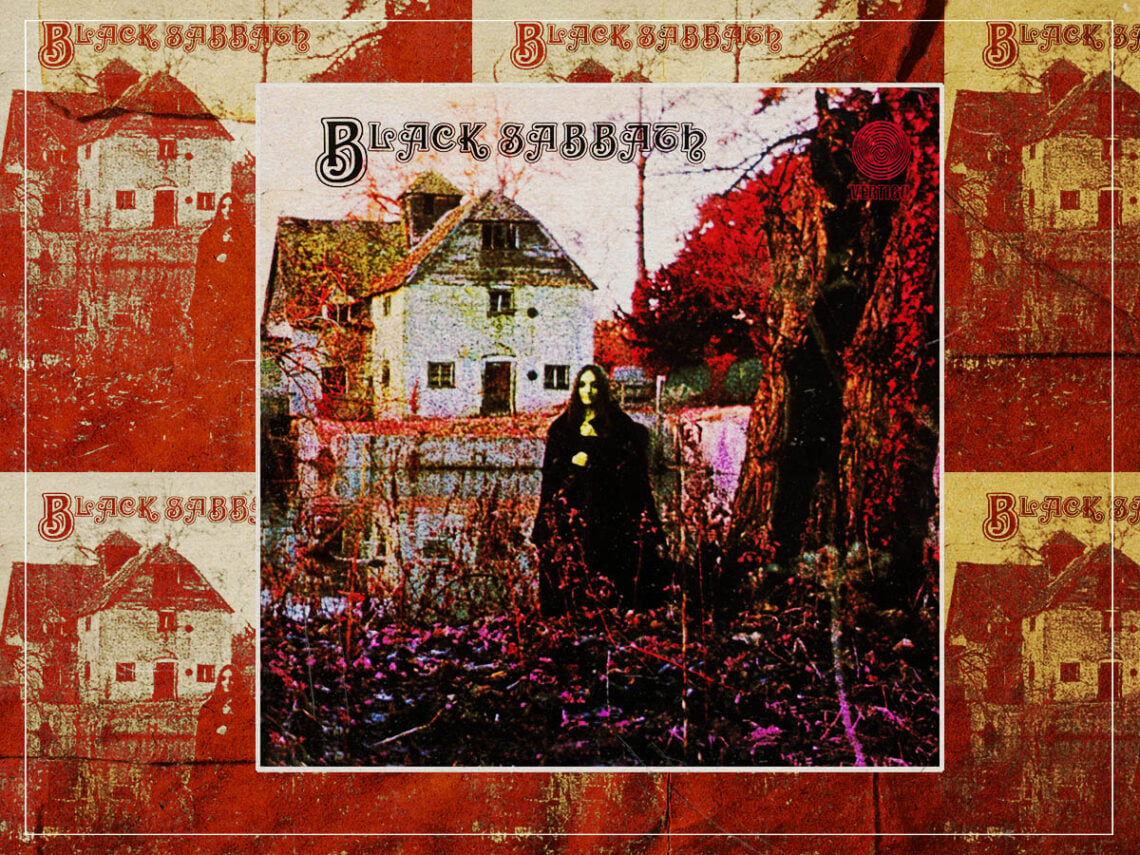
‘Black Sabbath’: the debut album with a sound as raw as war wounds

Steel bangs on steel, hammers ring off metal, and people wipe the sweat from their foreheads as they make a living in the only way that post-war Britain allowed. Birmingham was a rough place to live in the 1950s and ‘60s as the country licked its war wounds and tried to repair the emotional, physical and commercial damage that had been caused between 1939 and 1945. But as has always been the case, things of beauty can often emerge in times of hardship, a sentiment that rang true for Black Sabbath. More was made in the factories of Birmingham than just raw materials, as a cultural shift came about from the bang of steel on steel, the hammers ringing off metal, and Tony Iommi wiping the sweat from his forehead on a day that would mark the birth of one of the most influential genres of music to ever grace the planet: heavy metal.
“You cannot separate the environment of Black Sabbath from the music that they made,” said Joel McIver, a Sabbath specialist and author of two books on the band. He painted a picture of the future that the band members had in front of them, “If you were a lad back then in this environment, your future was 45 years on a factory assembly line. That’s literally the truth. That’s what so many people faced.”
Many families were struggling at the time as the income made from working in the factories wasn’t great, but given the state of the economy, there were very few other jobs available—music was often a form of escape. Not only did playing it bring joy to many, but it was common for people to spend their evenings dancing in the pubs, listening to whatever local bands were trying out material at the time. One of those bands was Black Sabbath, who will have been going by Polka Tulk and Earth.
What separated Sabbath from other bands of the day was undoubtedly the by-product of their environment. This applies not only to the songs they wrote and how anti-establishment they were in their theme but also because of their sound, which couldn’t have been further associated with Tony Iommi’s work in the factories.
It would have been hard for Iommi to see the positive that day, the tips of his fingers sliced off and rolling on the floor as blood spilt out of the stumps, but the horrific accident which would see the guitarist almost call it a day ended up being his first step toward changing the course of musical history. Following an accident at work, Iommi had the tips of his fingers severed, and they couldn’t be reattached. He could no longer play the guitar, but rather than hanging up his six-string, he created some false fingertips using the plastic from a detergent bottle. Because of the new fingertips which made contact with his guitar strings, Tony Iommi had to tune down to be able to bend them. It started as a necessary alteration but led to the toned-down and twisted sound that Sabbath eventually made famous.
“I’d play a load of chords, and I’d have to play fifths because I couldn’t play fourths because of my fingers,” said Iommi. “That helped me develop my style of playing, bending the strings and hitting the open string at the same time just to make the sound wilder.”
Bassist Geezer Butler also added to the heaviness of Sabbath’s signature sound, which was due to the fact he had no prior experience playing bass. “Back then, the bass player was supposed to do all these melodic runs,” he said, “But I didn’t know how to do that because I’d been a guitarist, so all I did was follow Tony’s riff. That made the sound heavier.”
Record labels picked up the new sound that Sabbath was brandishing across Birmingham’s music scene, and before long, they were recording their debut album. The band didn’t have much money behind them, so they couldn’t hire a studio for long. It meant that the project had to be recorded live, more or less in one take, with the only added extras being a bit of guitar layering and some added sound effects.

“We just went in the studio and did it in a day; we played our live set, and that was it. We actually thought a whole day was quite a long time,” said Iommi. “We thought, ‘We have two days to do it, and one of the days is mixing.’ So we played live. Ozzy was singing at the same time. We just put him in a separate booth, and off we went. We never had a second run of most of the stuff.”
While many bands would be hindered by the limited time that Sabbath had, the founders of heavy metal benefitted from the process. Their sound came across as raw as it did with their live sets; there was an undeniable energy in the music they made, which couldn’t be ignored. That iconic sound that had been capturing the hearts of the working class all over Birmingham had now been distributed to the world, and the world couldn’t get enough.
Angel Deradoorian, a musician formerly paired with Dirty Projectors, described what people loved about Sabbath’s sound. “They’re simple, yet very universal in what they’re telling. They’re anti-war. They’re anti-establishment. It’s about being real with the darkness that surrounds all of us in the world.”
Sabbath was propelled to fame, and their second album, Paranoid, only saw the hype surrounding them escalate. Paranoid was recorded shortly after their debut. The process remained the same, but they had slightly longer to assemble the songs. After that, the rawness that Sabbath were becoming famous for somewhat escaped them, as they were given access to all kinds of recording technology and continued to try and overcomplicate the music they were making.
“During Master of Reality, we started getting more experimental and began taking too much time to record,” said Iommi. “Ultimately, I think it really confused us. Sometimes, I think I’d really like to go back to the way we recorded the first two albums. I’ve always preferred just going into the studio and playing without spending a lot of time rehearsing or getting sounds.”
Black Sabbath captured the rage and frustration of an entire generation and put it to music. They are the product of their surroundings, and the raw energy they packed into the recording and writing process perfectly reflects that. Very few bands can represent their background in lyricism and sound like Black Sabbath can, as they captured the nihilism of post-war Britain and gave the nihilistic people who occupied it something to finally get excited about.
