


Five pointless times method acting went too far: “I had a wheelchair because it was so painful”

There’s clearly something effective about method acting, especially when so many of the all-time greats have adopted it as their preferred approach, but there’s a fine line between becoming one with the character and flirting with the self-indulgence of making unnecessary sacrifices.
The benchmark for how to master the method was first set by Marlon Brando, and even the people widely accepted to be the closest thing to his heir apparent would admit they’re nowhere near his level. By that metric, Daniel Day-Lewis is probably the next best thing, and the performances those two delivered speak for themselves.
Going method isn’t for everyone, and just as many stars have openly decried it as there are those who’ve embraced the contentious practice. That’s not to say it’s always a stupid thing to do, but some actors have taken things too far by going to extreme lengths for roles that really didn’t warrant such excessive preparations.
In certain cases, the ruthless scissors of the editing suite are to blame, but in others, the offenders have nobody to point the finger at but themselves for taking the method into utterly pointless territory.
Five times method acting went too far:
Scott Glenn (Apocalypse Now, Francis Ford Coppola, 1979)
Francis Ford Coppola’s Apocalypse Now survived one of the most torturous productions in Hollywood history to emerge on the other side as one of the greatest movies ever made, and Scott Glenn remains thrilled to be a part of it despite his dedication hardly being rewarded in screentime.
The actor only has around ten seconds of footage in the finished film, and he doesn’t even get to speak a single word of dialogue. And yet, Glenn spent no less than seven months on location and went to exorbitant lengths to get a handle on a character who barely even factored into Apocalypse Now at all.
When he wasn’t busy saving Coppola’s life or lending his technical expertise as a former Marine, Glenn embedded himself with the indigenous Ifugao population of the Philippines to learn their language and understand their culture to help him gain a better understanding of not only his meagre role as Richard M Colby, but why the tribe would fall under the thrall of Marlon Brando’s Walter Kurtz.
Robert De Niro (Brazil, Terry Gilliam, 1985)
Robert De Niro wanted to play Jack Lint in Terry Gilliam’s dystopian mind-bender, but after being informed the part had already been promised to the director’s old Monty Python cohort Michael Palin, he settled for what was essentially an extended cameo as Harry Tuttle instead.
He was only supposed to be on set for a week, but due to his desire for perfection and insistence that Gilliam shoot anywhere up to 30 takes until he was satisfied, De Niro hung around for twice as long as initially required, with the filmmaker admitting that the star’s exacting nature left him “wanting to strangle” the noted method man.
Playing a plumber with a moustache, De Niro didn’t have to look much further than Super Mario for inspiration. And yet, because he’s not interested in the business of doing things by half, he decided that spending weeks observing neurosurgeons and watching them perform complex operations was the ideal preparation for what only amounted to a handful of scenes in Brazil.
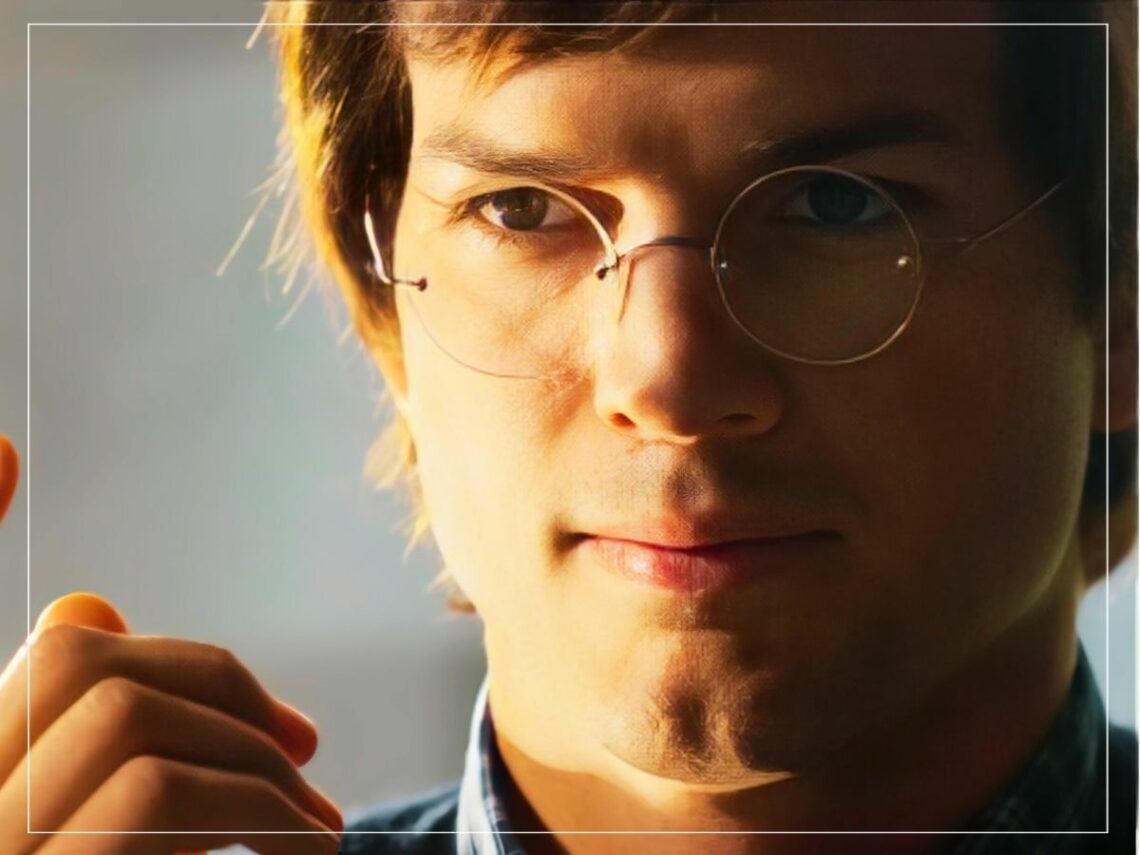
Ashton Kutcher (Jobs, Joshua Michael Stern, 2013)
In the battle of the competing Steve Jobs biopics, the one directed by Danny Boyle that starred Michael Fassbender, Kate Winslet, Seth Rogen, and Jeff Daniels was always going to be the winner.
Ashton Kutcher’s take on the Apple mogul did at least manage to release first, but it felt more like a made-for-TV movie than the prestige picture it clearly wanted to be. The leading man can’t be faulted for his commitment, but his sacrifice was about as pointless as it gets.
To get into character, Kutcher adopted Jobs’ strict fruitarian diet, only to develop pancreas issues so severe he ended up being hospitalised. Was it worth it for a biopic that fell flat among critics and faded from memory the second Boyle’s bigger, splashier, and starrier version came along? No, it was not.
Andy Serkis (Topsy-Turvy, Mike Leigh, 1999)
When Mike Leigh’s musical drama started shooting in the summer of 1998, Andy Serkis was a relative unknown who only had a handful of film and television credits under his belt, so it’s not as if anyone expected him to pull out all of the stops to play choreographer John D’Auban.
After all, he’s only in the movie for a few minutes and he’s billed 17th in the credits, which doesn’t seem like it would be the kind of role that would convince the actor he needed to immerse himself so deeply into character that it dominated every fibre of his existence.
Somebody probably should have told Serkis his role was in danger of being whittled down in post-production, though, which might have spared him the hassle of spending months learning to play the violin for a scene that ended up on the cutting room floor, never mind the four hours a day he spent with a choreographer for six months before shooting to master multiple different disciplines of dance.
Jared Leto (Chapter 27, Jarrett Schaeffer, 2007)
Would any list of method acting’s most pointless practitioners be complete without Jared Leto? Looking at the needless lengths he’s regularly gone to in the name of performance, it would feel strangely empty without him.
Prosthetics and artificial padding have come a long way in recent years, something Leto knows full well, having slapped them on for a number of films, including Morbius, Suicide Squad, House of Gucci, and The Little Things. Apparently, a fat suit was out of the question to play John Lennon’s killer, Mark David Chapman, in Chapter 27, which left him unable to walk.
Leto gained 67 pounds in short order by drinking microwaved pints of ice cream laced with olive oil and soy sauce and developed a bad case of gout for his troubles. Not only that, but he “couldn’t walk for long distances” and “had a wheelchair because it was so painful” to get around on foot after his body began to reject its rapid expansion. All that for a widely panned box office bomb that barely anybody even saw.
