


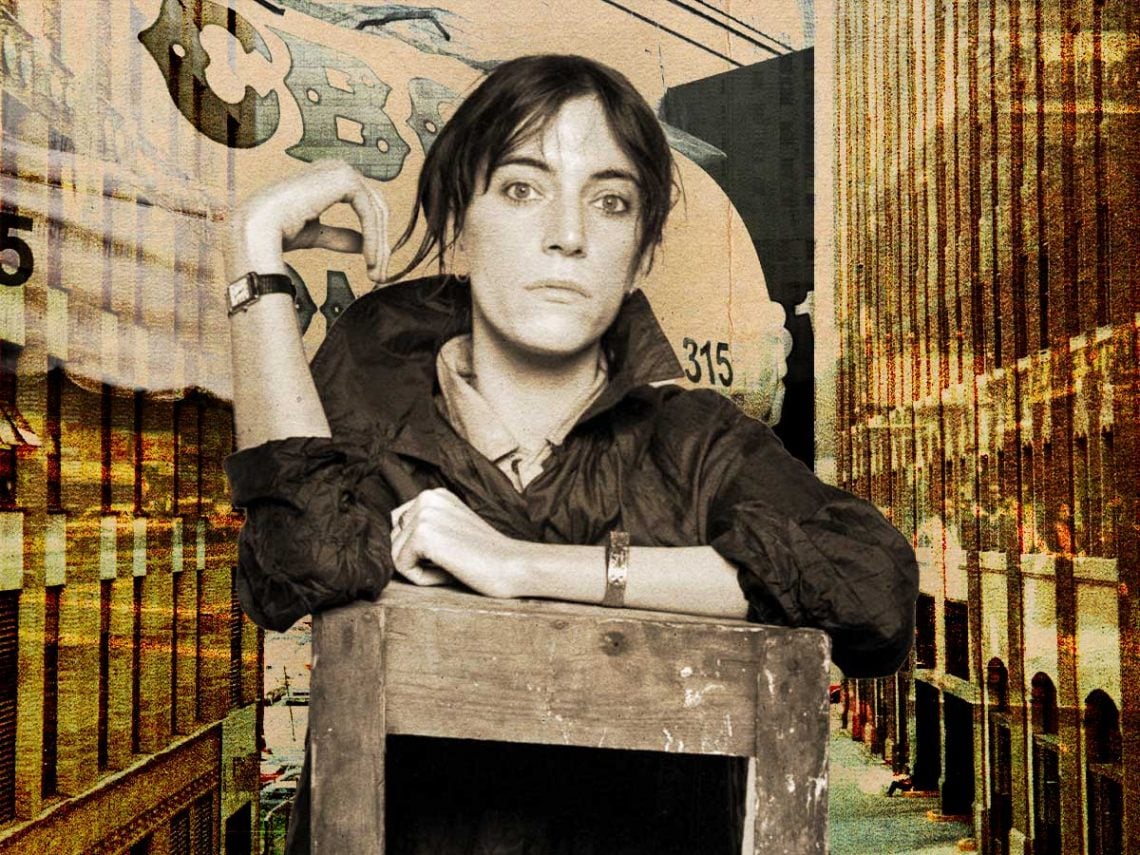
Five of Patti Smith’s most inspiring quotes

Patti Smith is more than a musician. She’s more than a writer. She’s more than the ‘Godmother of Punk’ as she’s been titled. In being a culmination of all these things, Smith has transcended to a higher plane where her seemingly limitless talent and incredibly articulate wisdom have made her a true sage that hoards of people respect, love and listen to. The only word that feels adequate enough to describe her role in society is ‘idol’.
Generations of music fans have known Smith’s name for her contribution to punk. As a critical part of the CBGB scene, her poetic take on the wild style expanded the genre’s sound into something more intellectual. Sure, Smith could rage with the rest of them, but her records proved that rock music didn’t need to leave literature at the door and that it could be just as smart as it is sensational.
But for those that have delved deeper than ‘Because The Night’, ‘Gloria’ or any of her other hits, the world of Patti Smith is one that sucks you in, inspires you and becomes a way of life. Through her memoirs Just Kids, M Train and The Year Of The Monkey, Smith draws back the veil to her inner life, providing her reflections on history interlinked with the philosophy her experiences have left her with. With that in mind, her vast contributions to music, poetry, and literature have become awe-inspiring, and Smith’s enduring creativity has become a light to follow.
For those who love her, Smith isn’t just a cultural figure. She’s a teacher. In her lyrics, writing, public appearances and beyond, she has passed down no end of wise words and tokens of advice that her followers hold dear. Whether it be inspiration or guidance, these five quotes are philosophies to follow.
Patti Smith’s most inspiring quotes:
“No one expected me. Everything awaited me.”
This is Smith’s declaration at the start of Just Kids. In the memoir about her life as a young artist, especially the years spent with her creative soulmate Robert Mapplethorpe, her story begins like so many others; it begins with her leaving her small hometown for something bigger.
Growing up in New Jersey, Smith comes from a blue-collar family. It’s a background she’s always been very proud of as she carries on the legacy of hard work in her family by calling her gigs ‘jobs’. But at the same time, the young artist knew she wanted more. After a rough few years that resulted in her being pregnant, giving her child up for adoption and finding herself working a painfully dull job in a factory, she knew she needed to make a change. In 1967, she made the move. She headed to New York, where she was homeless until she met Maplethorpe by Kismet, and the pair built their life together.
But on the cusp of that big change, when she cast off her old life for the hope of a new one, Smith defied fear with hope as she wrote this statement brimming with the future’s potential.

“Got to lose control, and then you take control.”
In the title track of her debut album, Patti Smith lets loose. While the opening track ‘Gloria’ starts with a powerful statement of ownership as she growls, “Jesus died for somebody’s sins, but not mine”, this lyric from ‘Horses’ feels like a vital lesson to learn.
Throughout her life, Smith has had to face a loss of control time and time again. Her life has been haunted by grief as she lost Mapplethorpe, her husband Fred ‘Sonic’ Smith, and her brother all in quick succession. She’s also outlived so many of the lights of her generation, losing so many friends over time. But amid all that, she has found ways to regain control and power in her life. In particular, her writing feels like a grounding force that allows her to reclaim a sense of purpose and calm. Over time, she’s taken on a role of remembrance, dedicating so much of her career to the legacies of those she’s lost, making sense of the senseless grief by continuing with her work. That’s something to learn from as a reminder that even amidst the chaos of pain, a person can always find ways to reclaim their life.

“Build a good name. Keep your name clean. Don’t make compromises, don’t worry about making a bunch of money or being successful — be concerned with doing good work and make the right choices and protect your work. And if you build a good name, eventually, that name will be its own currency.”
As a young artist in New York, Smith found herself in the company of legends. In the lobby of the Chelsea Hotel, the various idols that inhabited its halls would stop by, dropping tokens of wisdom in Smith’s lap during a casual interaction. The people she’d admired slowly became teachers and then friends.
One of them was William S Burroughs, the influential Beat writer. “William Burroughs was a very good teacher,” Smith said, “I learnt from him about how to carry myself, how to navigate life, about literature, about travel, but also about building one’s character.” They were teaching her that she knew she had to pass on as she shared his advice during a speech dedicated to young artists. “Build a good name” is a philosophy to live by, as Smith’s enduring reputation is proof that Burrough’s advice will lead to a fruitful and solid career.

“When you hit a wall, just kick it in.”
Writer’s block? Something standing in the way of bringing inspiration to fruition? Is an obstacle getting in the way of desire or destiny? Patti Smith’s advice is simple: fight your way through it.
In her early days, when she was writing away and trying to figure out what kind of artist she wanted to be, whether that be a punk, a poet, a playwright, or whatever, the philosophy she adopted was one of defiance. Taught to her by Maplethorpe and her partner Sam Shepard, Smith’s rebellious and creative peers instilled in her a confidence to never be held back. If you want something, grab it. If some mental boundary is keeping it from you, kick the wall in.

“In art and dream may you proceed with abandon. In life, may you proceed with balance and stealth. For nothing is more precious than the life force, and may the love of that force guide you as you go.”
Part of what makes Patti Smith so special and vital is her refusal to promote the stereotypes of what makes a punk. She sees the danger in that. During her years in the New York scene, she has the fatal nature of hedonism clear as anything, as drugs and recklessness took the lives of so many of her friends and peers. Yet still, that lifestyle has been promoted time and time again in lyrics and the enduring ideas of the ‘sex, drugs and rock and roll’ lifestyle or the idea of the tortured artist.
Smith is a necessary antidote to that. While promoting reckless abandon when it comes to creativity, imploring artists to take chances and push limits in their work, she promotes a life of peace, protection and kindness. As someone who is so passionate about the work and craft that goes into artistry, her philosophy demands that people take care of themselves, reminding the world that art can only happen if the artist is there and well enough to make it.

