


Five overlooked movies from directors who became icons

Some filmmakers strike gold with their very first film, soaring to box office success and critical acclaim and earning carte blanche on their next project. Most of the time, however, the path to fame is littered with interesting but unsuccessful experimentation and steady improvement.
There are other directors who simply weren’t high-profile enough to earn recognition when some of their best films were released. When Steven Spielberg made Duel in 1971, for example, he was a struggling twentysomething who was scraping together a living making teleplays. Although Duel bears many of the hallmarks of his greatest films, it wasn’t released widely enough to become a hit, even though it deserved to be.
Although movies like Alien, Persona, and The Substance benefit from repeat viewings, they shouldn’t overshadow the movies that their directors made before they were famous. These earlier works might not have the budgets or the star power their directors’ later films do, but that doesn’t stop them from being cinematic triumphs.
The films in this list range from the 1950s to the 2010s and encompass neo-noir, action, romance, and thrillers. All of them hint at the emerging style of their respective directors, and all of them stand on their own merits.
Five overlooked movies from iconic directors:
Duel (Steven Spielberg, 1971)
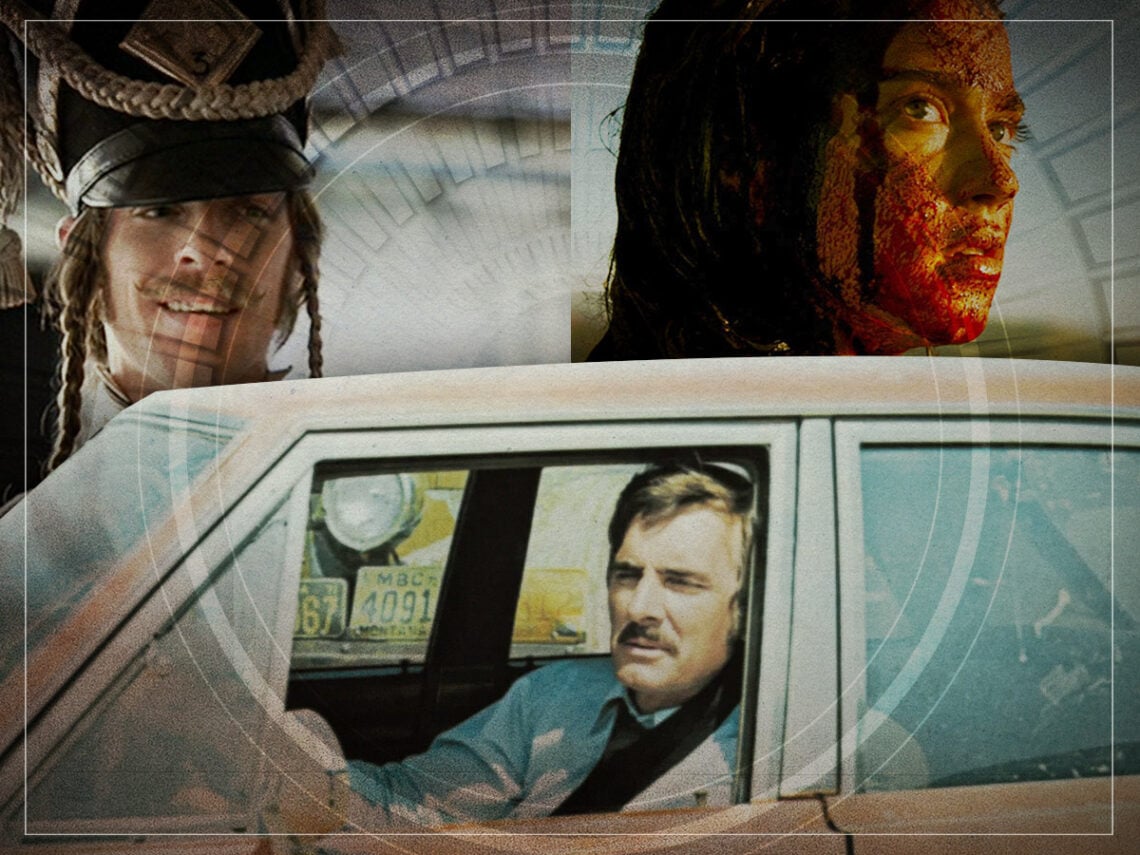
Steven Spielberg was a mere 25 years old when he made the television movie Duel. Filmed almost entirely on the dusty roads of the California desert, it stars Dennis Weaver as a middle-aged salesman who is stalked and menaced by a truck driver while on his way to meet a client. In a remarkable feat of cinematic skill and guts, Spielberg maintains a nerve-shredding level of tension for 90 minutes without ever showing the truck driver’s face.
In retrospect, it’s clear to see the talent that Spielberg was wielding in his mid-twenties. Many of his future directorial hallmarks are on-screen, from the steady ratcheting up of suspense to the everyday protagonist. There are even hints of suburban family drama at the margins. Even if Spielberg hadn’t become a Hollywood mogul and one of the greatest directors of all time, however, Duel still deserves to be a classic. Aside from a completely unnecessary voiceover, it’s a nearly perfect film that demonstrates that budgetary constraints can inspire some of the most creative filmmaking.
Revenge – Coralie Fargeat (2017)
Coralie Fargeat’s body horror masterpiece The Substance hits like a ton of bricks. It’s stylish, bold, and disgusting, a ruthless takedown of the impossible standards set on women and an off-the-rails bloodbath that is gloriously silly. All that cinematic verve had to come from somewhere, and it turns out, Fargeat had a similarly gruesome sensibility as early as 2017. If anything, Revenge is even more gory.
It stars Matilda Lutz as Jennifer, the young mistress of a wealthy businessman who faces unwanted sexual overtures from two of his colleagues on a secluded desert vacation. When one of them rapes her and the others take his side, she tries to run, only to find herself nearly killed and left for dead. Instead of dying, she seeks revenge.
There are several clear parallels to The Substance. The most obvious is the blatant misogyny, although Revenge goes much further. But there are even more specific ones, such as an extreme close-up on the mouth of one of the predators as he noisily chews. Ultimately, Revenge is a much darker, less fun, and bloodier (yes, really) movie than The Substance, but it’s full of style and features a protagonist who would give Rambo a run for his money.
Summer Interlude – Ingmar Bergman (1951)
Ingmar Bergman had a long and illustrious career, starting in the 1940s and extending into the ‘80s. Although he is often thought of as an esoteric filmmaker who could veer into the opaquely surreal, many of his movies are grounded in the simple beauty of the natural environment. Persona, for example, can be maddeningly disorienting and existential, but its rural island setting brings it down to earth. One of the director’s earliest films goes even further, centring on the natural environment to evoke youthful romance and painful nostalgia.
Summer Interlude tells the story of Marie (Maj-Britt Nilsson), a ballerina who mysteriously receives the diary of her first love (Birger Malmsten). She visits the island, where they share a brief summer romance, and the film dissolves into her memories of their time together. It is a deceptively simple plot that weaves together questions of regret, loss, and creative fulfilment. It also evokes the shimmering, timeless feeling of first love while exploring the harsh realities of what comes after. Released six years before The Seventh Seal and Wild Strawberries, it is often overlooked, but is one of the director’s masterpieces.
The Duellists – Ridley Scott (1977)
Ridley Scott was in his 40s when he released his first feature film, but after years of directing television commercials, he emerged as a fully-fledged auteur. Based on a short story by Joseph Conrad, the movie stars Harvey Keitel and Keith Carradine as rival officers during the Napoleonic Wars who fought a series of duels over nearly two decades. Set against the backdrop of the emperor’s rise and fall from power, it’s a sweeping story that manages to be far more precise and contained than Scott’s 2023 biopic of Napoleon.
When it was released, The Duellists was met with largely positive reviews and won ‘Best First Work’ at the Cannes Film Festival. Although it might immediately conjure associations with Napoleon and Scott’s 2021 film The Last Duel, it also deserves to be compared to 1982’s Blade Runner, if only for the director’s ability to build layer upon layer of atmosphere through cinematography. It also demonstrates his skills for staging fight sequences, a strength to which he has returned again and again throughout his career.
Blood Simple (Coen brothers, 1984)
Before Fargo and No Country For Old Men, Joel and Ethan Coen made a movie about normal people from a small town who find themselves in a twisted web of violence and crime. Blood Simple stars Frances McDormand as a young housewife whose husband discovers that she is having an affair with the bartender who works at his restaurant. He devises a convoluted plot to have them killed, and things quickly spiral out of control.
It was the feature debut for the Coen brothers, and it was an explosive one. It’s rare that filmmakers who go on to have such a specific style emerge fully formed, but Blood Simple features many of their trademarks. There are the plot intricacies of foreshadowing and fateful misunderstandings, and the powerful sense of place that they replicated so well with the Midwest pleasantries of Fargo and the border towns of No Country For Old Men.
With colourful yet believable characters, a labyrinthine plot that ties up all of its loose ends, and enough memorable images to carry the whole picture, Blood Simple remains one of the Coens’ best films and rightfully put them on the map.
