


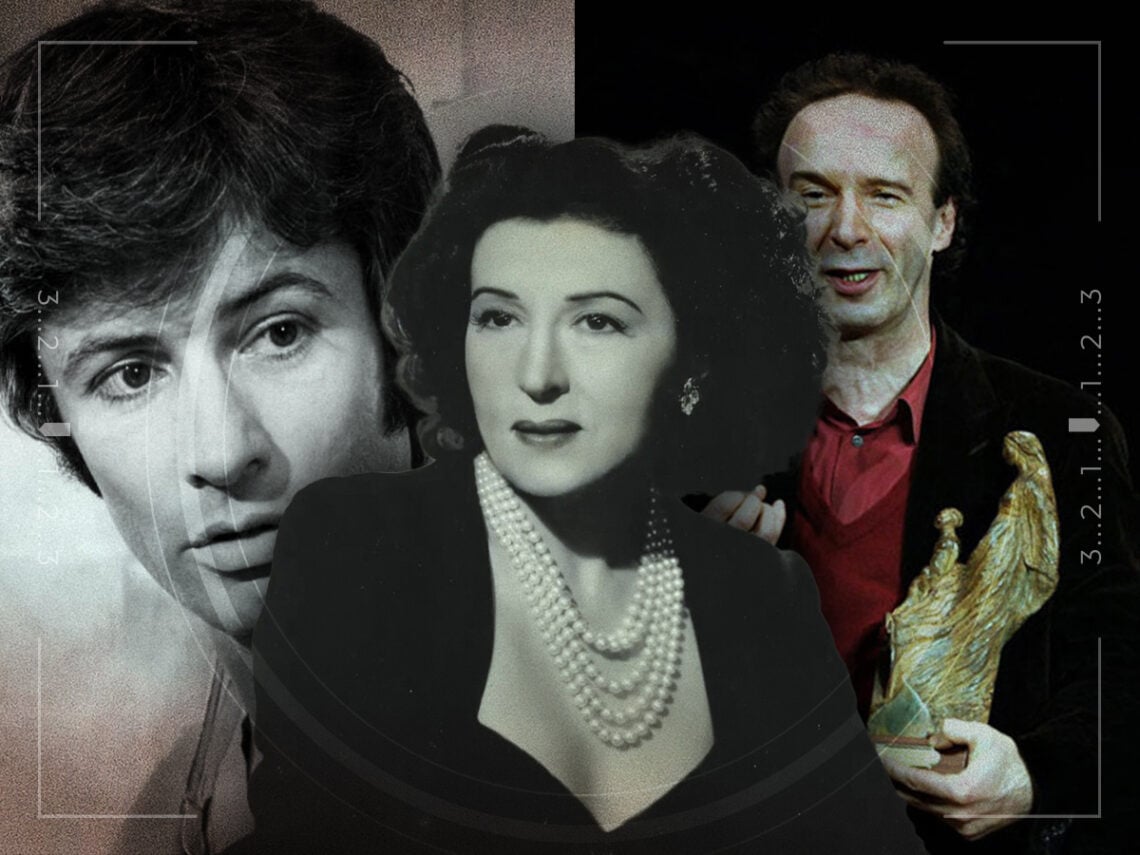
Five Oscar-winning actors nobody heard from again

Whether they are willing to admit it or not, most actors spend decades imagining the moment they stand in a theatre full of their peers, brandishing the statuette of a little gold man named Oscar. Winning an Academy Award is the highlight of most actors’ and filmmakers’ careers. It becomes part of the person’s name, like a knighthood or a doctorate, and it should, by all logic, ensure a long and fruitful career.
And yet, the Oscars curse is a real phenomenon whereby actors who win the most coveted award of their profession end up in a career spiral shortly thereafter. Marcia Gay Harden, who won an Academy Award for her performance in Pollack in 2001, was pretty blunt about her experience, saying, “The Oscar is disastrous on a professional level. Suddenly, the parts you’re offered become smaller and the money less. There’s no logic to it.” And that’s coming from someone who went on to win a second Oscar three years later for Mystic River.
There are several logical reasons that a person might have a career slump right after reaching the pinnacle of the industry. If it’s an actor who wasn’t famous when they earned their nomination, it’s possible that directors and casting directors simply associate them with the character for which they won the Oscar and assume they can’t do anything else. Others might not have opportunistic enough management to capitalise on the moment.
Whatever the reason, there are, sadly, many Oscar winners who fall so far into obscurity that people forget their names altogether, let alone the fact that they won the highest honour that the profession has to offer. Given how many options there are, this list does not include performers who are famous in other fields despite being relatively anonymous in cinema. Joel Grey and Mercedes Ruehl, for example, were famous and highly successful on Broadway before and after their Oscars, while Louis Gossett Jr and Art Carney were famous on television.
Five Oscar-winning actors nobody heard from again
Timothy Hutton

Timothy Hutton was just 20 years old in 1981 when he won ‘Best Supporting Actor’ at the Oscars for his role in Ordinary People, and he is still the youngest person to ever win the award. The film was Robert Redford’s directorial debut, a harrowing story about a wealthy family torn apart by the sudden death of one of their sons and the suicide attempt of the other. Hutton played the latter son grappling with post-traumatic stress disorder after witnessing his brother’s death, and his performance earned rave reviews.
Winning an Oscar so early in his career may have been a terrible stroke of luck for Hutton. His next film, Taps, was a modest success, featuring young Sean Penn and Tom Cruise, but from then on, he was relegated to either minor films or minor roles in big films. He appeared in the Meg Ryan, Kevin Kline romantic comedy French Kiss, as well as the 1996 ensemble drama Beautiful Girls. In the early 2000s, he began working in television, including on the shows Kidnapped, Leverage, and The Haunting of Hill House. The Oscar might have made him a star for a brief year or two, but he never became a household name.
Linda Hunt

Oddly enough, there aren’t many female actors who have completely disappeared after winning Oscars. Kim Basinger, Mira Sorvino, and Halle Berry all suffered career downturns, but they were already established stars, making the Oscar the beginning of the end of their A-list status rather than the beginning, middle, and end. Others, such as Beatrice Straight, went on to be prolific character actors.
Linda Hunt is one of the few examples of a female star who was not particularly well-known when she won an Oscar and who disappeared quickly thereafter. And perhaps it was for the best. Hunt, a white woman from New Jersey, won the ‘Best Supporting Actress’ Oscar for playing a Chinese Australian man named Billy Kwan in Peter Weir’s period romance The Year of Living Dangerously. It is perhaps the only instance in which Mel Gibson is not the most reprehensible thing about a film he stars in. At the time, Hunt’s performance was the sort of thing critics loved to hail as ‘brave.’ These days, we’d just call it ‘racist.’
Hunt continued her career as a character and voice actor after her award, appearing in David Lynch’s Dune, 2006’s Stranger Than Fiction, and Solo: A Star Wars Story. She also had recurring roles in the television series The Practice and NCIS: Los Angeles, but the Oscar was the high point of her career, even if it was a low point for cinema.
Roberto Benigni

If you’ve heard the name ‘Roberto Benigni,’ it was almost certainly in relation to his 1997 Holocaust comedy Life is Beautiful. He wrote, directed, and starred in the film and earned an Oscar for ‘Best Actor’ and ‘Best International Feature’ for his efforts. It was nominated for a total of seven awards, including ‘Best Picture,’ and was such a sensation that it pretty much guaranteed that Benigni would be a celebrity for life. And yes, his name still rings a bell for many cinephiles, but that doesn’t mean he’s had a successful career since that breakthrough movie.
He followed up his Oscar with a Razzie award for ‘Worst Actor’ for his live-action version of Pinocchio, in which he played the titular wooden boy. Since then, he’s appeared in several Jim Jarmusch films, including Coffee and Cigarettes, and Woody Allen’s To Rome with Love. More recently, he appeared in yet another version of Pinocchio, this time playing Gepetto. Suffice it to say that Benigni has never managed to capture lightning in a bottle a second time, but his fame for Life is Beautiful has meant that he is still well-known in some circles, even if his later work is not.
George Chakiris

George Chakiris rocketed to fame for his portrayal of Bernardo, the leader of the Sharks gang and Anita’s boyfriend, in the 1961 version of West Side Story. Like many other actors in the film, he wears brownface for the character, but aside from that massive asterisk, he turns in an excellent performance that probably was worthy of his ‘Best Supporting Actor’ award despite stiff competition from Montgomery Clift for Judgment at Nuremberg, Peter Falk for Pocketful of Miracles, and Jackie Gleason and George C Scott for The Hustler.
Interestingly, by the time he won the Oscar, Chakiris had already given up on Hollywood. He had the matinee idol looks that should have made him a star, but he had never managed to break through. Following a disappointing few years in movies in the 1950s, in which he played dancing roles in Gentlemen Prefer Blondes and White Christmas, he left for Broadway, playing Riff, the leader of the Jets, in the original production of West Side Story. When the film adaptation came along, he was given the role of Bernardo instead.
You’d think that West Side Story would be his long-awaited career breakthrough, but Chakiris never managed to approach similar heights. He made several box office flops in the 1960s, including two war movies, before packing up and heading to Europe. There, he continued to work in film, but was moving further away from a Hollywood comeback. He spent the remainder of his career working on the stage and in television, never quite managing to become a household name.
Katina Paxinou

Hollywood has had a terrible track record with diversity, especially early on, and it is possible that Greek actor Katina Paxinou was a victim of this phenomenon. She won an Oscar for her film debut, Sam Wood’s 1943 adaptation of Ernest Hemingway’s For Whom the Bell Tolls. The movie starred Hollywood royalty Ingrid Bergman and Gary Cooper, but it was Paxinou who walked away with the film’s only Academy Award.
Although she was a seasoned stage actor, Oscar winner, and naturalised US citizen, Paxinou never attained much recognition in Hollywood after the mid-1940s. She made several films in Europe, including Orson Welles’s Dr Arkadin in 1955 and Luchino Visconti’s Rocco and His Brothers in 1960. However, she was never given the chance to break through the way she was in For Whom the Bell Tolls. She continued to appear on stage and on television before her death in 1972, but her moment as cinematic royalty was long gone. Although she may not be a household name, Paxinou is still a source of pride for Greece. There is even a museum in Athens that is dedicated to her life and work.
