


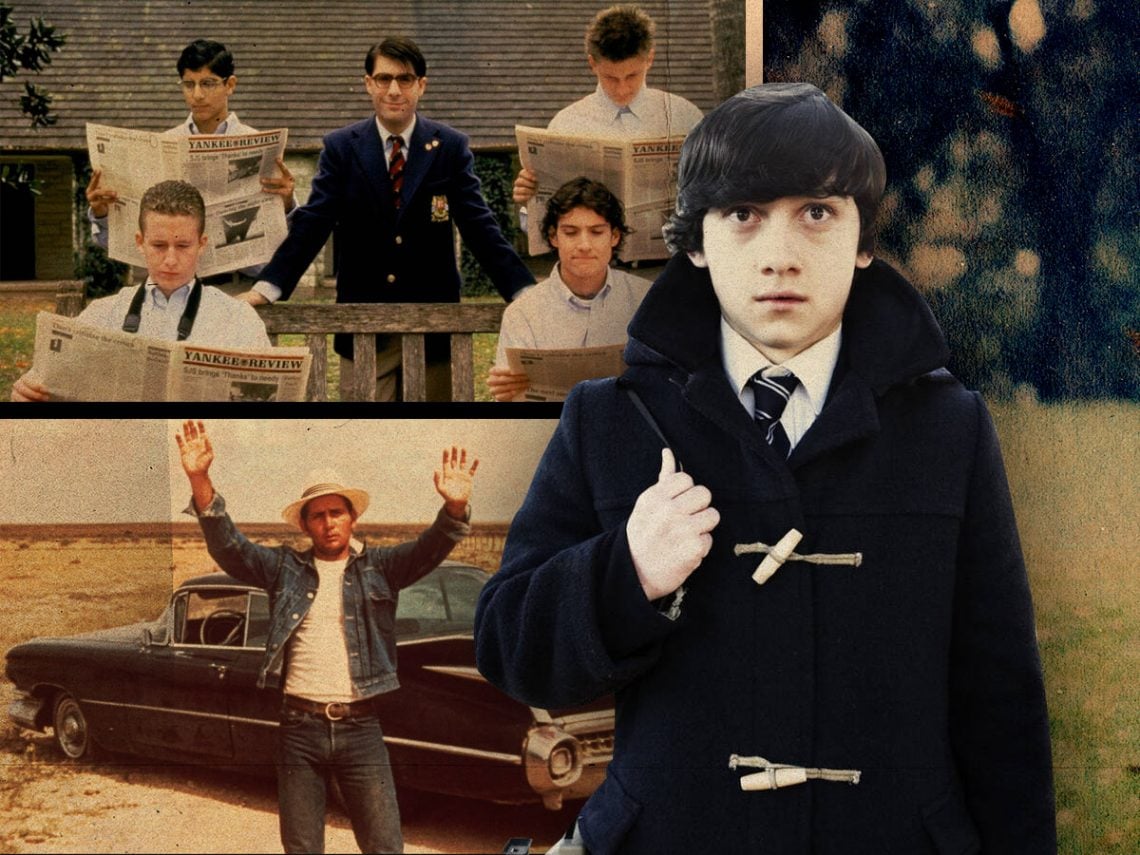
Five movies that inspired Richard Ayoade’s retro-influenced ‘Submarine’

In 2010, Richard Ayoade released his debut feature film, Submarine, a coming-of-age comedy-drama richly influenced by the French New Wave. The film stars Craig Roberts as a 15-year-old boy desperate to lose his virginity by his sixteenth birthday whilst grappling with plenty of teenage woes and his mother’s possible affair with an ex-lover. Also featuring Yasmin Paige, Noah Taylor, Sally Hawkins and Paddy Considine, Submarine captures the indie retro-influenced aesthetic of the era, aided by a solo soundtrack performed by Arctic Monkeys frontman Alex Turner.
The film is both heartfelt and hilarious. It centres on the unpopular and often unlikeable Oliver Tate, an antihero that you can’t help but empathise with despite his frequently pathetic and often downright mean behaviour. According to Ayoade in The Guardian, he adapted the story from Joe Dunthorne’s 2008 novel of the same name: “In most coming-of-age stories, the central figure feels like an apologia for the author: sainted, misunderstood, and much more sinned against than sinning. I liked that Oliver was selfish, mean.”
Submarine is highly stylised, but the film is far from lacking in depth. Super-8 montages, quick zooms, choppy editing and animations all feature within the film, which makes for a captivating and enjoyable viewing experience. Yet the piece of cinema is also one of the most honest coming-of-age movies of recent years. Ayoade is unafraid to make his characters pretentious and flawed, thus making its depiction of adolescence feel wholly realistic.
When watching Submarine, beady-eyed cinephiles might recognise direct homages, such as a shot which is a direct recreation of one from Ingmar Bergman’s Persona. Ayoade’s film is not just a homage to growing up but also a tribute to cinema. Below, find five films that significantly inspired Submarine, according to Ayoade himself.
Five movies that inspired Submarine:
The 400 Blows (Francois Truffaut, 1959)
Perhaps the film that demonstrates the most influence on Submarine is Francois Truffaut’s pioneering French New Wave classic, The 400 Blows. The picture follows a young boy, Antoine Doinel, who finds himself getting into trouble despite often well-intentioned behaviours. A complex portrait of a boy navigating a difficult home life and feelings of isolation, Jean-Pierre Leaud’s character bears much resemblance to the characterisation of Oliver Tate. Submarine even ends with Oliver running towards the sea, precisely what Antoine does as The 400 Blows comes to a close.
Ayoade shared with The Guardian: “I feel a good deal of the credit for this must go to Doinel, his and Léaud’s peerless creation: egotistical and sensitive; principled and capricious; romantic and inconstant; an intellectual drop-out; a truanting bibliophile.”
Rushmore (Wes Anderson, 1998)
Rushmore helped launch Wes Anderson and Jason Schwartzman’s careers upon release in 1998. The film stars Schwartzman as an eccentric teenager named Max, who befriends Bill Murray’s wealthy industrialist Herman. Just like Submarine, Rushmore harnesses a distinct vintage feel that gives the film a feeling of warmth and nostalgia. Ayoade said: “Unlike Oliver, Max is a great enthusiast and, at his beloved private school, is very open about his literary, cultural and intellectual ambitions. Oliver is Welsh and, like any British school pupil who wishes to evade ritual beatings, knows that studying must be done privately.”
However, he added: “I wanted Craig to see it was for Schwartzman’s brilliant, Buster Keaton-like stillness. Anderson delivers a wonderful mix of understated humour and genuine emotion.” Discussing Anderson’s style, Ayoade said: “He is a master filmmaker and should not be consigned to the ghetto of quirk.”
Love in the Afternoon (Eric Rohmer, 1972)
A later addition to the French New Wave, Eric Rohmer’s Love in the Afternoon is a tale of Parisian longing and infidelity, centring around a businessman who finds himself in too deep when he begins meeting up with an old lover, Chloe, despite claiming to be happily married. Ayoade, a massive fan of Rohmer, modelled the character of Jordana on Chloe, played by ’60s icon Zouzou, stating: “As she toys with the affections of a typically Rohmerian prevaricator, her main thought seems to be, ‘You’re not even worth killing.'”
The director’s other inspirations for Jordana’s ice-cool persona include Christina Ricci. Ayoade commented: “I gave Yasmin Paige several films starring Christina Ricci. Most of the time you feel that her main inner thought is ‘Kill.'” He also declared Zazie Dans La Metro’s 12-year-old protagonist as an influence because of her “same haircut and love of the colour red.”
Badlands (Terrence Malik, 1973)
Terrence Malik’s story of a 15-year-old girl who partakes in a killing spree with her older lover, Badlands, is a staple of American cinema. Sissy Spacek and Martin Sheen shine in their roles, loosely based on Charles Starkweather and Caril Ann Fugate, who went on a murder spree in the late 1950s. Although the film’s plot differs widely from Submarine‘s, Ayoade still looked at it for inspiration for his coming-of-age tale.
He wrote, “[Sheen’s Kit Carruthers’] constant interest in his own legacy is both disturbing and hilarious. Before he’s arrested, he stops to build a little monument to himself. He records advice for the next generation. In many senses, it feels like a film about the absurd, accepting, blank banality of modern celebrity.” Kit building a monument for himself reflects Oliver’s dreams of martyrdom at the beginning of Submarine.
Taxi Driver (Martin Scorsese, 1976)
One of the biggest films to emerge from the New Hollywood movement was Taxi Driver, Martin Scorsese’s character study of a Vietnam War veteran who spends his nights studying the decaying streets of New York as he drives his taxi. Again, Submarine is very different to Taxi Driver, yet Ayoade took much inspiration from Travis Bickle’s characterisation as a disillusioned outsider when fleshing out the portrayal of Oliver.
Ayoade revealed: “Paul Schrader’s script, Robert De Niro’s performance, and Martin Scorsese’s fevered channelling of Hitchcock, noir and Italian horror created one of the most iconic character studies ever. The dissonance between Bickle’s flatly intoned testimony and the reality of what’s actually happening is brilliantly chilling and funny.”
