


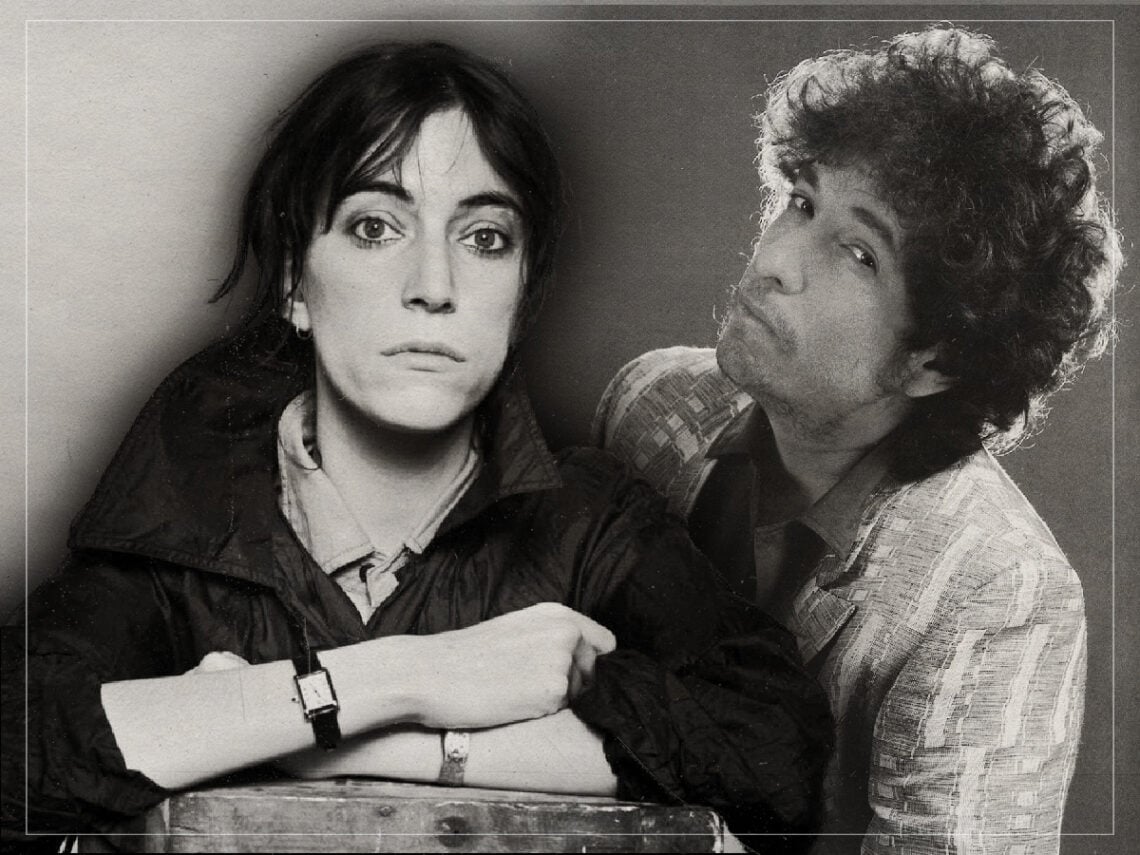
From self pity to creative isolation: The five most Bob Dylan-esque Patti Smith tracks

There’s a reason why Patti Smith, the Godmother of Punk, has always struggled with being labelled “punk”, and it’s not that she doesn’t see herself as a kind of rebellious, status quo-defying figure. Instead, it has more to do with its restrictions, especially when Smith has always been more concerned with constant artistic evolution. That, in her view, was true freedom.
Smith’s connection to the punk ethos began in the 1970s, an emergence that seems especially unique given that she, for the most part, wasn’t the type of sex, drugs, and rock ‘n’ roll fiend that many of her peers pandered to. Instead, Smith was an outsider, whose refusal to join any surrounding community or movement was enough for people to ascribe her the punk label she’d spend the rest of her life attached to.
That said, Smith isn’t the only one in the so-called punk arena who has had to fight to free herself from certain categories. Bob Dylan has been called just about everything under the sun, a symptom of having so much unique poetic flair that people simply don’t know what to do with it. But it all came from the inner workings of a mind that was always inherently complex, as well as a belief that rock doesn’t “reflect life in a realistic way.”
Dylan emerged long before the punk movement even began to take root, but those descriptions have always been just another way of celebrating his ability to shatter conventions with a lyrical and sonic fearlessness shared by very few others in the game. A tenacity, you might say, that he shared with a certain Patti Smith, especially when it came to inserting individual poetic musings into different formats to reflect the concerns of the generation. Let’s take a look at some of Smith’s most Dylan-esque tracks.
Patti Smith’s most Bob Dylan-esque tracks:
‘Birdland’

Smith once said that some of her favourite songs from her own discography were a collective group effort, including ‘Memento Mori’, ‘Gung Ho’, and ‘Birdland’. ‘Birdland’, in particular, morphed into her most poetic effort yet after she took the band’s improvisational atmospheric instrumentation and injected her own full narrative with a different assortment of complex characters and scenes.
Inspired by Wilhelm Reich’s A Book of Dreams (similar to Kate Bush’s ‘Cloudbusting’), Smith applied a quintessentially Dylan-esque self-critical and self-aware lens to explore her own disconnection and alienation. The recurring line, “he was not human”, eventually becomes a rumination on feeling alone, with Smith later claiming she is not human, either, returning the song to her own experiences, much like the way Dylan often incorporates his own viewpoint into reflections on the world around him.
‘People Have the Power’

While writing ‘People Have the Power’ with her late husband, Fred Smith, Smith attempted to evoke that familiar 1960s protest song feel to “reintroduce that kind of energy” and remind people that they truly did have the power to change the world.
Although that was the initial seed, ‘People Have the Power’ was also an ambitious affair, with lyrics that didn’t just preach in an overly pretentious or performative way. They called attention to the significance of adjusting your mindset, channelled as though Smith were talking to you herself, in the same way it seems like Dylan’s stories are often made for the listener alone: “Listen, I believe everything we dream / Can come to pass through our union / We can turn the world around.”
‘Dancing Barefoot’

Like many of Smith’s best songs, ‘Dancing Barefoot’ is packed with meaning, mainly about womanhood and the different layers of love, both spiritual and physical. There are also references to substance and addiction, especially with the interchangeable use of “heroin”, which could also be “heroine”, both with connotations to accessing a different, more euphoric state – much like how music often encourages us to dance.
Smith also recited some of her poetry in the song (“The plot of our life sweats in the dark like a face”), and imagined someone like Jim Morrison singing it when she wrote it, which influenced the way she sang it, choosing instead to adopt a lower register than usual. Much of her wording also echoes the kind of physical and spiritual reflections explored in Dylan’s work, blending both music and poetry to capture the simplicity of enjoyment.
‘Elegie’
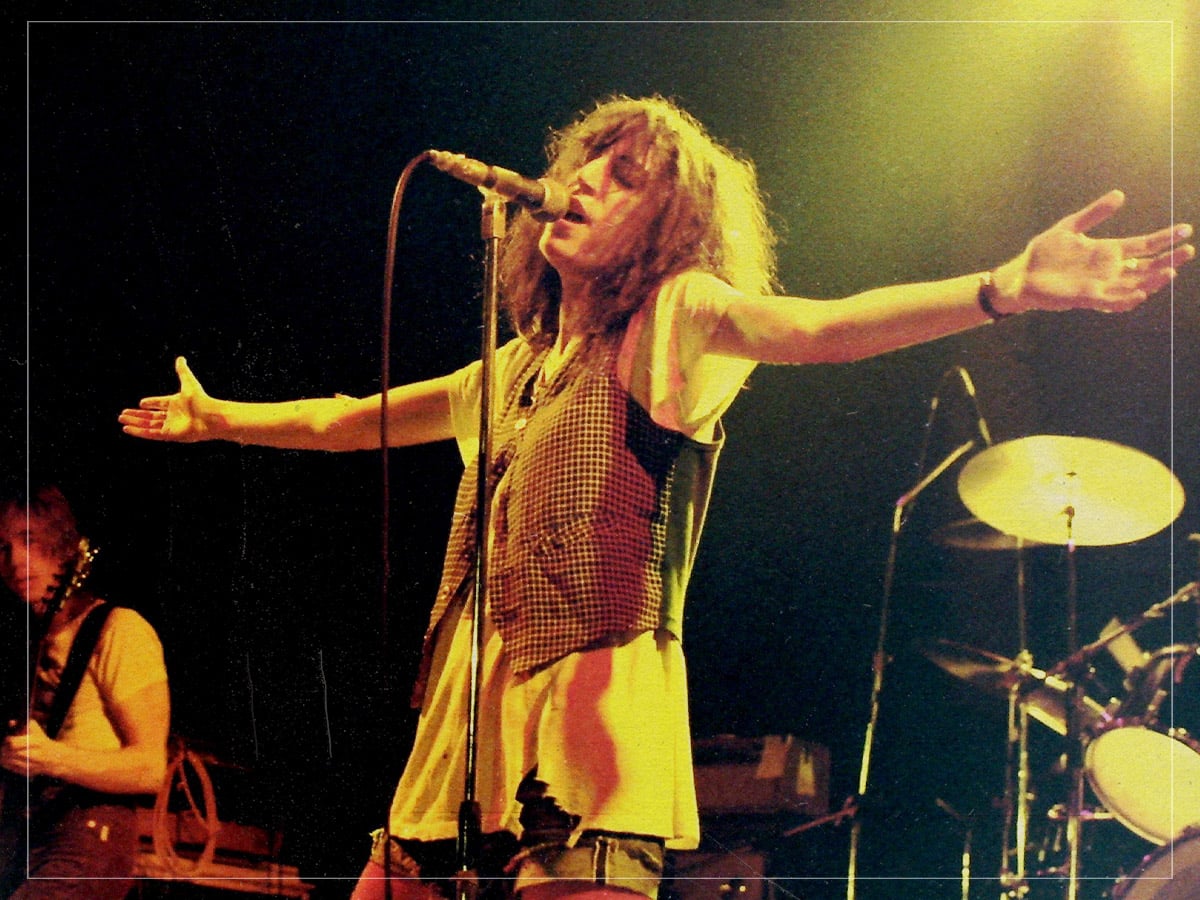
Recorded on the anniversary of Jimi Hendrix’s death, ‘Elegie’ borrows a line from the late guitarist’s ‘1983… (A Merman I Should Turn to Be)’ to capture the loss of losing someone so hugely important to so many people: “It’s too bad, that our friends can’t be with us today.”
Hendrix had a significant impact on both Smith and Dylan, both possessing some sort of spiritual connection to the legendary musician that manifested in different ways across their music. Mainly, both of them saw a uniqueness in him they couldn’t find elsewhere, so much so that Dylan once even called his take on ‘All Along the Watchtower’ the definitive version, and the one that people should remember above his own.
‘My Blakean Year’
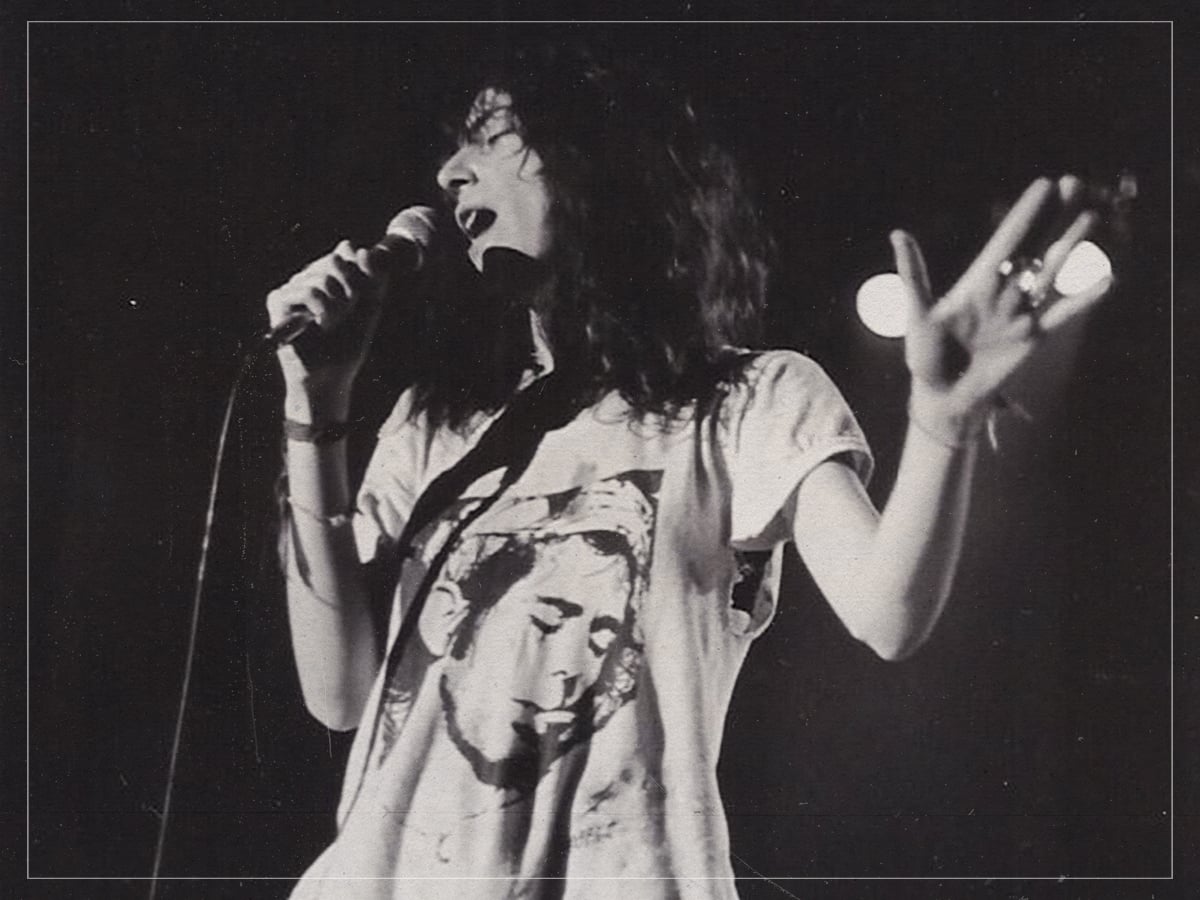
Smith wrote ‘My Blakean Year’ when she was feeling sorry for herself. No, really – she once said so herself, explaining that the song came together when she was feeling “unappreciated”, which led her to think about William Blake, who was “a great artist, poet, printer, philosopher, activist”, but “was ridiculed in his time” and “almost forgotten”.
Opening the song with a reflection on her own “Blakean year”, she calls attention to the isolation and disillusionment that often come with being an unappreciated artist, arriving at a conclusion not too distant from one Dylan would’ve made himself: that an artist’s purpose is to create, regardless of real-time popularity.

Never Miss A Tale
The Far Out Bob Dylan Newsletter
All the latest stories about Bob Dylan from the independent voice of culture.
Straight to your inbox.