


Five modern movie plot twists that made absolutely no sense

When handled correctly, being caught completely unaware by a revelatory plot twist is one of the greatest feelings that cinema has to offer.
Any viewer left stunned into submission by a game-changing twist doesn’t just begin questioning everything they’ve seen unfold on-screen to that point, but it encourages an immediate second viewing in order to pick up on the subtle cues peppered throughout the story.
On the other side of the coin, though, there are also plenty of twists that are either unearned, unnecessary or even detrimental to the movie as a whole. It probably sounded like a good idea in the writers’ room, but they’re not quite as impactful in execution.
Twists, both good and bad, have been a part of the cinematic diet forever, but not many to have come along in the last few years have been as forehead-slappingly dumb as the following five.
Five ridiculous plot twists:
5. The Little Things (John Lee Hancock, 2021)
Largely marked as an old-fashioned noir thriller with three Academy Award-winning stars in the lead roles, The Little Things was surprisingly unremarkable and uninteresting, a sentiment that extends right through to the infuriating twist ending.
While Denzel Washington is as reliable as ever in the role of another grizzled detective and Jared Leto is once again enjoying himself doing Jared Leto things as a suspected serial killer, the resolution undercuts everything that unfolded on-screen to offer an immensely unsatisfying finale.
Leto’s Albert Sparma reiterates several times that he’s not the guy, and he’s right. When taunting Rami Malek’s Jim Baxter after leading them to a false location where he claims the bodies are buried, Baxter snaps and murders Sparma by banging him over the head with a shovel.
Not only does Washington’s Deacon help cover it up, but it’s implied he also planted evidence to convince Baxter that Sparma was the real culprit, while it’s also revealed that Deacon accidentally shot and killed one of the victims he’s been pretending to find the entire time.
Essentially, The Little Things ends with the murder of an innocent – if unhinged – man, a revelation that Washington’s entire investigation is founded on partially false pretences, with a frame job thrown in for good measure while the true killer’s identity is never revealed.
4. Sweet Girl (Brian Andrew Mendoza, 2021)
One of the many entirely forgettable action thrillers to premiere on Netflix with reckless abandon, Sweet Girl finds Isabela Merced’s Rachel Cooper partnering up with Jason Momoa’s father, Ray, to track down the unscrupulous pharmaceutical executives responsible for letting a loved one die from cancer.
So far, so standard, but it’s revealed in the third act that Ray has actually been dead the whole time, too, having succumbed to his wounds after being stabbed on the subway during an assassination attempt. He’s never been by Rachel’s side at all during her rampage of revenge, which is ludicrous.
While it’s handily explained that Ray is a survival expert and his daughter is a trained fighter, Merced is almost an entire foot and a half shorter than Momoa. By extension, any hapless goon to have been pulverised or outwitted by the latter was actually being thrown around by someone of significantly smaller stature, repainting the action sequences as somewhere between ludicrous and hilarious if one can imagine Merced doing the heavy Momoa-shaped lifting all along.
3. Glass (M. Night Shyamalan, 2019)
A twist ending became such an expected part of M. Night Shyamalan‘s output that it eventually became a stick used to beat him over the head with, not that it prevented him from doubling down during the dismal finale of Glass.
Uniting Bruce Willis’ David Dunn, Samuel L. Jackson’s Elijah Price, and James McAvoy’s Kevin Wendell Crumb in a hybrid of Split sequel and Unbreakable crossover was an exciting prospect, Sarah Paulson’s Dr Ellie Staple has the ignominy of delivering the first of two mind-numbing twists.
After spending a large bulk of the film convincing the trio they’re psychologically unstable and not really superhuman beings, she then comes clean and admits she’s actually been part of a clandestine organisation that’s been killing off those with unnatural abilities for thousands of years.
The movie ends with the world being let in on the superpowered secret anyway, rendering the whole thing obsolete and virtually redundant as it applies to the climax of Glass as a whole. Even if she hadn’t been revealed as a shady underling, the end results would be exactly the same and a lot less pointless.
2. Spectre (Spectre, 2015)
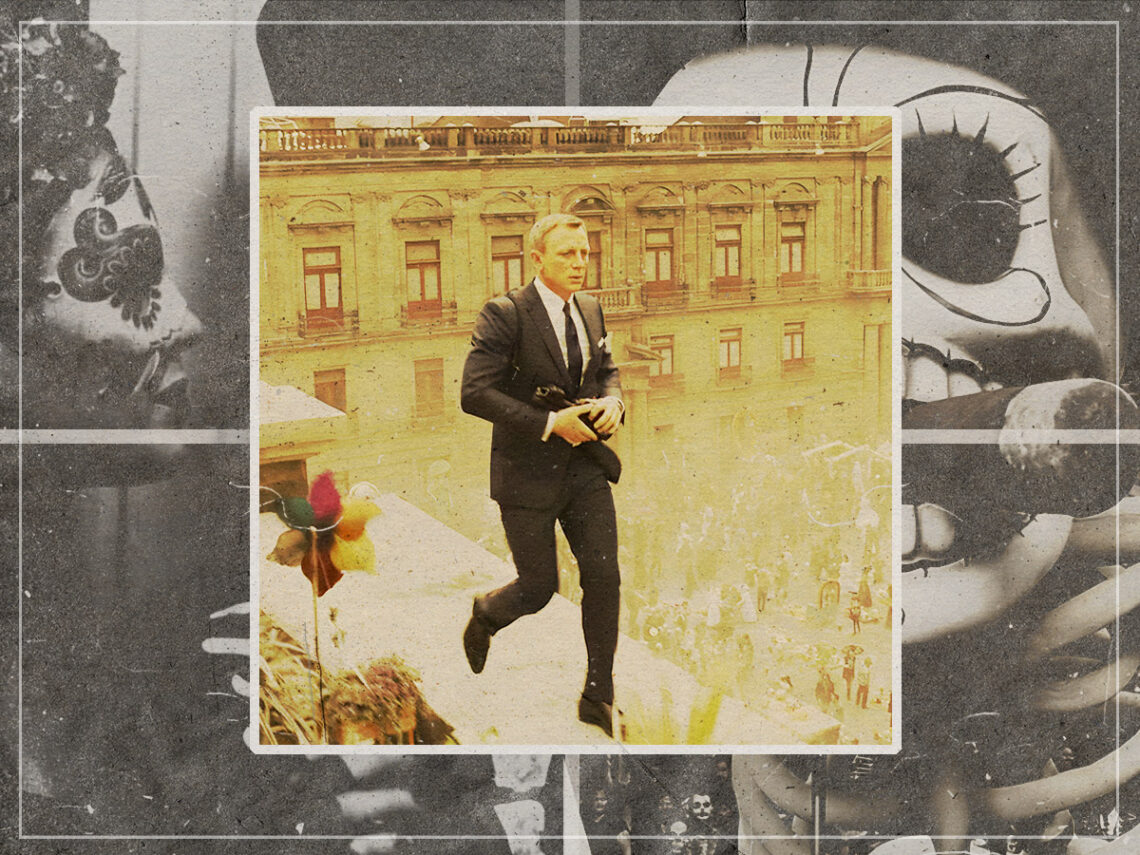
The post-Casino Royale reinvention of James Bond eventually began leaning harder and harder into the established tropes of 007’s long and storied history, but Spectre went so far it ended up aping Austin Powers.
Much like Mike Myers’ groovy spy and Dr Evil, it’s revealed that Christoph Waltz’s Blofeld and Daniel Craig’s Bond are essentially siblings having been raised together before going their separate ways in a convenient coincidence, which obviously necessitated one becoming good and the other evil.
Furthermore, it’s then revealed that Blofeld had been pulling the strings all along ever since Casino Royale, retconning not just Craig’s debut but Quantum of Solace and Skyfall as well to establish him as the biggest of big bads, tying the Craig-era mythology into insufferable and needlessly entangled knots in the process.
1. Serenity (Steven Knight, 2019)
From Academy Award-winning filmmaker Steven Knight, starring Academy Award winners Matthew McConaughey and Anne Hathaway, alongside Academy Award nominees Djimon Honsou and Diane Lane, with support from Golden Globe winner Jeremy Strong, comes the monumentally stupid Serenity.
Despite the esteemed sum of its parts, what begins as a murder mystery soon becomes something else entirely, and not in a good way. Hathaway approaches McConaughey’s ex-husband with an offer to kill her current spouse, as played by Jason Clarke before a batshit twist turns the entire thing on its head.
As it transpires, McConaughey’s character – and everyone else in the film – is part of a computer game created by his son Patrick to cope with his father’s death in Iraq. When his real-life mother remarried, he introduced them as figures in the game world to play out a murderous fantasy, which still doesn’t stop him from taking inspiration from his digital dad, plunging a knife into his real-world stepfather, and being charged with murder.
