


Five long-delayed movies that should never have been released

In today’s film landscape, fans enjoy unprecedented access to information about nearly every major studio release. Thanks to the internet, production photos, rumours, and behind-the-scenes gossip are now readily available—details that would have been virtually unknown two decades ago. As a result, if a film faces a troubled production or leaks begin to surface, its release is often delayed to allow for retooling, with studios acting swiftly to address the issues.
Countless movies have had every aspect of their troubled productions documented online in recent years, forming a stink that is hard to shake off. In truth, if your movie has bad internet buzz, altering that perception is almost impossible.
Now, considering movie studios are businesses that need to make money, they are loathe to cancel a film’s release entirely. Even if the film has a nuclear reputation and everyone at the studio thinks it’s a dud, it will still be released in some shape or form because some kind of return on investment is a reality of the business world.
The five movies highlighted in this list were released years after their initial scheduled dates, and some of them managed to make a bit of money at the box office. However, they were all savaged by critics and summarily dismissed by fans, which makes us wonder if they would have been better off staying unreleased.
Delayed movies that were better off unreleased:
The New Mutants (Josh Boone, 2020)
When The Fault in Our Stars’ Josh Boone signed up to direct the X-Men spinoff The New Mutants in May 2015, it sounded like a promising new instalment in the franchise was on the way. At that point, the series was at its highest point, with 2014’s X-Men: Days of Future Past uniting the two distinct X-cast eras in one time-travelling adventure and making the most money of any entry. Boone’s take on the material was said to lean into the horror genre, with his tale of teenage mutants trapped in a mysterious facility sounding more like a Blumhouse film than a superhero picture.
The film was initially scheduled for an April 2018 release, but then it suffered a series of crippling delays, which killed any momentum it had. By the time it limped into cinemas on August 28th, 2020, the world was in the grips of the Covid pandemic, and the X-Men franchise was circling the drain thanks to the disastrous release of 2019’s Dark Phoenix.
The fact that the movie had been butchered so much in editing over the years could be felt when watching it, too, as it found itself falling somewhere between a lame horror movie, a teen drama, and a low-budget superhero flick. $49million was all it could manage at the box office, and the reviews probably made everyone involved wish it had stayed on the shelf.
Accidental Love (David O Russell, 2015)
In 2008, David O Russell was in that awkward period between 2004’s I Heart Huckabees and his comeback film, 2010’s The Fighter. Still, he assembled an excellent cast for a rom-com based on a popular 2004 novel, including Jessica Biel, Jake Gyllenhaal, James Marsden, Catherine Keener, Kirstie Alley, and Tracy Morgan. However, the first inkling that this wasn’t your garden variety romcom is its title, Nailed. You see, the story follows a waitress with a nail lodged in her brain that causes her to act in bizarre ways. Naturally, these odd behaviours lead to the corridors of power in Washington DC, where she meets a dim-witted young Congressman who takes up her cause – and romances her.
From that description alone, it should be evident that Nailed would take a skilled filmmaker to navigate the quirky, satirical tone it’s trying to hit. This proved difficult for Russell, but not as difficult as the many and sundry financial difficulties the production was struck by, causing it to be shut down 14 times. The production company went bankrupt in 2010, and the film languished for four years before being resurrected by Millennium Entertainment.
It was finally released in 2015, seven years after shooting began, but Russell was so unhappy with it that it was credited to the pseudonymous “Stephen Greene”. Reviews were dismissive, and nobody involved was overly keen to take credit for the unfunny, unfinished, borderline unwatchable film.
Chaos Walking (Doug Liman, 2021)
The Bourne Identity and Edge of Tomorrow director Doug Liman was announced as the man who would bring Patrick Ness’s YA novel Chaos Walking to the big screen in 2016. Young superstars Tom Holland and Daisy Ridley were cast, no doubt hoping they’d attract a chunk of their Spider-Man and Star Wars fanbases to the cinema. It was scheduled for release in 2019, and everything seemed set for the next billion-dollar teen franchise in the vein of The Hunger Games and Twilight. Obviously, that’s not what happened, though.
After scathing test screenings in April 2018, plans were made to bring Holland and Ridley back for reshoots. However, the cost of casting two actors with longstanding commitments to massive franchises is this: they’re not available that often. Both stars couldn’t clear up their schedules for those reshoots until a year later, and Liman didn’t even helm them. Instead, future Alien: Romulus director Fede Álvarez stepped in and tried his best to save the sinking ship.
Álvarez’s efforts were in vain, though, because when the film finally released in March 2021, few people seemed to care. Lionsgate had to take a write-down, Holland and Ridley mostly wanted it swept under the rug, critics stuck the knife in, and audiences reacted with an almighty shrug. Oh dear.
Case 39 (Christian Alvart, 2009)
This supernatural thriller was shot in late 2006, and it starred Renée Zellweger, who was riding high on her Bridget Jones fame. A pre-Hangover Bradley Cooper co-starred in the film, as did Deadwood’s Ian McShane, and it was directed by a hot young German director making his English language debut. The story centred on a social worker who tried to protect an abused 10-year-old from her violent parents – but wait, there’s a twist. It turns out the little girl is a demon who feeds on bad feelings, and her parents attempt to kill her to save the world from her evil. Sounds like a ghoulish good time, right? Wrong.
In the end, Case 39 took more than three years to be released, thanks to two extensive delays. In fact, it was delayed so long that director Christian Alvart’s follow-up film Pandorum had already come and gone with minimal fanfare in 2009.
The bad press swirling around the film was hard to ignore, and the studio couldn’t shake the perception that it had been kept on the shelf because it was no good. Ultimately, this wasn’t wrong – the film was a mess that struggled to string together any real suspense and barely landed a single scare. Perhaps unsurprisingly, Alvart returned to his native land and hasn’t directed a Hollywood film since.
Red Dawn (Dan Bradley, 2012)
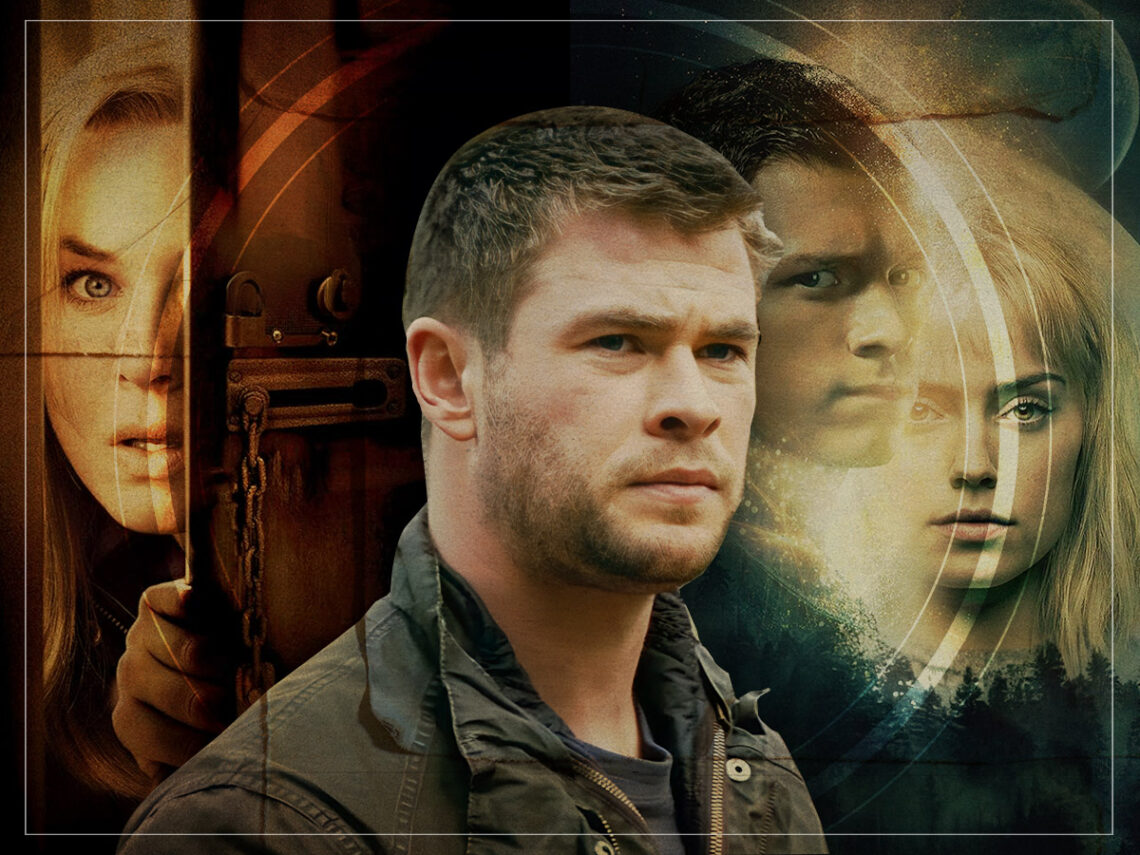
When the Red Dawn remake went into production in September 2009, nobody in North America had any idea who Chris Hemsworth was. By the time it was finally released on November 21st, 2012, though, he had starred twice as the God of Thunder in Thor and The Avengers. Film District, who had bought the rights to the troubled film after MGM filed for bankruptcy in 2010, probably hoped it now had the chance to make a few bucks with a genuine superhero in the lead. Unfortunately, Red Dawn didn’t benefit from any Hemsworth rub, and it tanked at the box office.
The film’s failure can’t be entirely attributable to the delay, though. Sadly, it’s just not a good movie, and it wastes a cast of young up-and-coming stars, including Hemsworth, Josh Hutcherson, Josh Peck, and Isabel Lucas. In hindsight, it’s one of those “Why did they remake this?” movies that presaged Hollywood’s modern obsession with IP by a decade.
In essence, there was no creative reason to remake the 1984 movie, and the filmmakers clearly had nothing to say with it, either. This is perfectly exemplified by the fact that the invading force in the movie was China all the way through production, just as it had been in the original film. But at the last minute, some post-production tweaks changed it to North Korea to protect the Chinese box office. Then, the movie wasn’t even released in China.
