


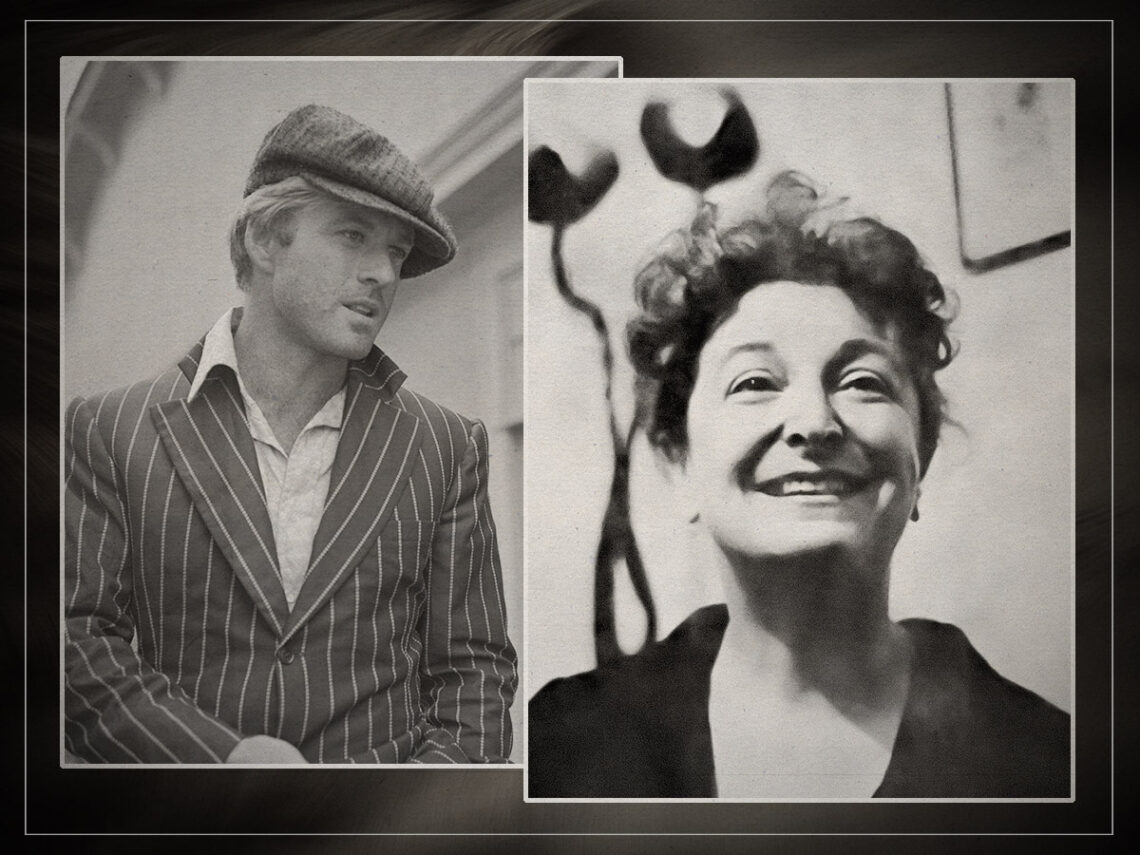
Five Hollywood careers almost destroyed by Pauline Kael

If there is one thing that could always be said about the legendary New Yorker critic Pauline Kael, it’s that her reviews were incredibly entertaining to read. Whether she was showering a film with effusive praise, or eviscerating an actor who had the temerity to do something she didn’t like, Kael was a compulsively readable writer.
Over the years, though, Kael’s intense readability and position at an institution as prestigious as the New Yorker perhaps gave her an outsized importance in Hollywood. Kael’s reviews could legitimately affect a film’s box office prospects, and any actor or director who found themselves in her crosshairs could have been forgiven for worrying about their careers.
You see, Kael wasn’t just known for writing bad reviews that raised a chuckle from the average reader. She was notorious for approaching her work from a very personal angle, which meant that quite often her reviews could be coloured by the obvious disdain she felt for certain people working in Hollywood.
From a leading man who was convinced Kael was out to get him as revenge for a personal slight to a legendary director who considered suing her for libel, here are five Hollywood careers almost destroyed by Pauline Kael.
Five Hollywood careers almost destroyed by Pauline Kael:
Robert Redford

In the early days of his movie stardom, Robert Redford’s star power, charisma, and fierce acting talent were undeniable to almost everyone in Hollywood. There was one notable holdout, though, and she often took things so far in her criticism of Redford’s performances that he began to wonder if her beef with him was personal.
In her infamous review of Butch Cassidy and the Sundance Kid, Kael snarked, “Redford, who is personable and can act, is overdue for stardom, though it will be rather a joke if he gets it out of this nonacting role.” This is probably the nicest thing she ever wrote about the handsome star, which is pretty incredible when you consider she accused him of, you know, not acting in his performance as Harry Longabaugh, aka the ‘Sundance Kid.’
In 1972, though, Kael did worse than criticise Redford’s acting style or platinum blonde locks. She wrote in her review of Jeremiah Johnson that the film ended with Redford giving Native Americans the finger, which could have seriously derailed his career if it hadn’t been obvious to everyone else that he was actually giving a palm-out salute. An upset Redford told Playboy, “The remark seemed so far-fetched and personal beyond the limits of responsible criticism.”
Stanley Kubrick

2001: A Space Odyssey is one of the greatest motion pictures of all time. Few people would argue with that statement – except Kael, of course, who called it “monumentally unimaginative.” Kael’s big problem with 2001, somewhat unsurprisingly, was its director, Stanley Kubrick, an artist she disliked from that point on.
In essence, Kael thought 2001 saw Kubrick disappear up his own navel with a film that was propped up on ideas that weren’t even unique to him. “It’s a bad, bad sign when a movie director begins to think of himself as a myth-maker,” Kael wrote, “and this limp myth of a grand plan that justifies slaughter and ends with resurrection has been around before.” Kubrick’s efforts to tie human evolution to extraterrestrial intelligence didn’t jive with her at all, calling it a cop-out and “probably the most gloriously redundant plot of all time.”
Three years later, Kael stuck the knife into Kubrick again when A Clockwork Orange raised her ire. Kubrick argued that his use of violence in the classic movie was his way of making an anti-violence point, but Kael simply saw it as desensitising audiences to depraved, grotesque imagery. “At the movies, we are gradually being conditioned to accept violence as a sensual pleasure,” Kael raged. “There seems to be an assumption that if you’re offended by movie brutality, you are somehow playing into the hands of the people who want censorship.”
Oliver Stone

If it is a critic’s job to remain unbiased in their viewing of any given film, reviewing it on its own merits without any baggage associated with the filmmaker or actors, then Kael regularly failed as a critic. However, if it is a critic’s job to simply give their opinion on a movie or a filmmaker’s body of work in a hilariously scathing fashion, then Kael excelled herself when it came to Oliver Stone. Boy oh boy, did she hate Oliver Stone.
“I despise his movies,” Kael once stated, which is an unequivocal as a critic can get. “If you care about movie art, there are certain people whom it’s legitimate to despise. JFK and Nixon are historically so dubious and yet accepted by audiences as accurate.” She didn’t just disagree with Stone’s admittedly loose application of historical fact, though. She also objected to his depiction of violence in a movie like Natural Born Killers.
In that film, Kael argued the audience is conditioned to empathise with the murderers instead of the victims. “Natural Born Killers is a horrible movie,” Kael wrote. “The victims are made ludicrous and pathetic, so you’re supposed to cheer the killers on.” Impressively, she refused to back down on her convictions even as Stone racked up four Oscar wins, and aimed one last dig at him in her retirement essay. In a true mic drop moment, she wrote, “The prospect of having to sit through another Oliver Stone movie is too much.”
Veronica Cartwright

Kael could make or break reputations in Hollywood, and by all accounts, she knew she had that power. Couple that with her tendency to make things personal, and you’ve got a recipe for disaster for actors who got on her bad side. According to Veronica Cartwright, best known for Alien and The Witches of Eastwick, she had an unusual encounter with Kael and always wondered if it had negatively affected her career.
In her early screen roles, Kael had raved about Cartwright’s performances, so she eagerly accepted an invitation when the critic invited her out for cocktails. However, in the middle of their evening, director James Toback, who Kael had been working with on an ill-fated expedition into Hollywood screenwriting, joined them. Cartwright said the evening took a weird turn, as Kael and Toback had “an odd relationship, very intense. I got a vibe like it was a little kinky.”
When Kael invited Cartwright to a screening after their drinks, though, and the actor refused, the atmosphere got even more frosty. In fact, Cartwright began to wonder if the rumours that Kael was a lesbian were true, or if Kael had invited Toback to set him up with her. Either way, she didn’t want any of it, and made her excuses to leave. After that, though, she told Vanity Fair, “Maybe it pissed her off that I didn’t reciprocate, because she never mentioned me in a review again.”
Orson Welles

In 1971, Kael wrote a 50,000-word essay entitled “Raising Kane”, which claimed screenwriter Herman J Mankiewicz was the sole author of Citizen Kane. She argued that he was the man mainly responsible for the film’s brilliance, not its director and star, Orson Welles. In fact, she went so far in her argument that she accused Welles of stealing credit from Mankiewicz. It was all part of her notoriously negative view of auteur theory, which posits that the director is the primary author of a film. Kael believed many more voices than one contributed to making any film great.
While putting together her piece, which received a huge amount of publicity, Kael neglected to contact Welles to get his side of the story. This meant she was only detailing one side of the film’s authorship debate, and her critics have pointed out that she was being hypocritical by taking the authorship away from one creator, only to give it to another. Either way, her essay deeply hurt Welles, and he even considered suing her for libel over the accusation that he stole credit.
The following year, Peter Bogdanovich – a New Hollywood icon and friend of Welles – published his own article in Esquire magazine that debunked Kael’s claims. He also revealed that she had based a lot of her work on the research of a UCLA professor who she failed to credit in her piece. Oh, the irony.
