


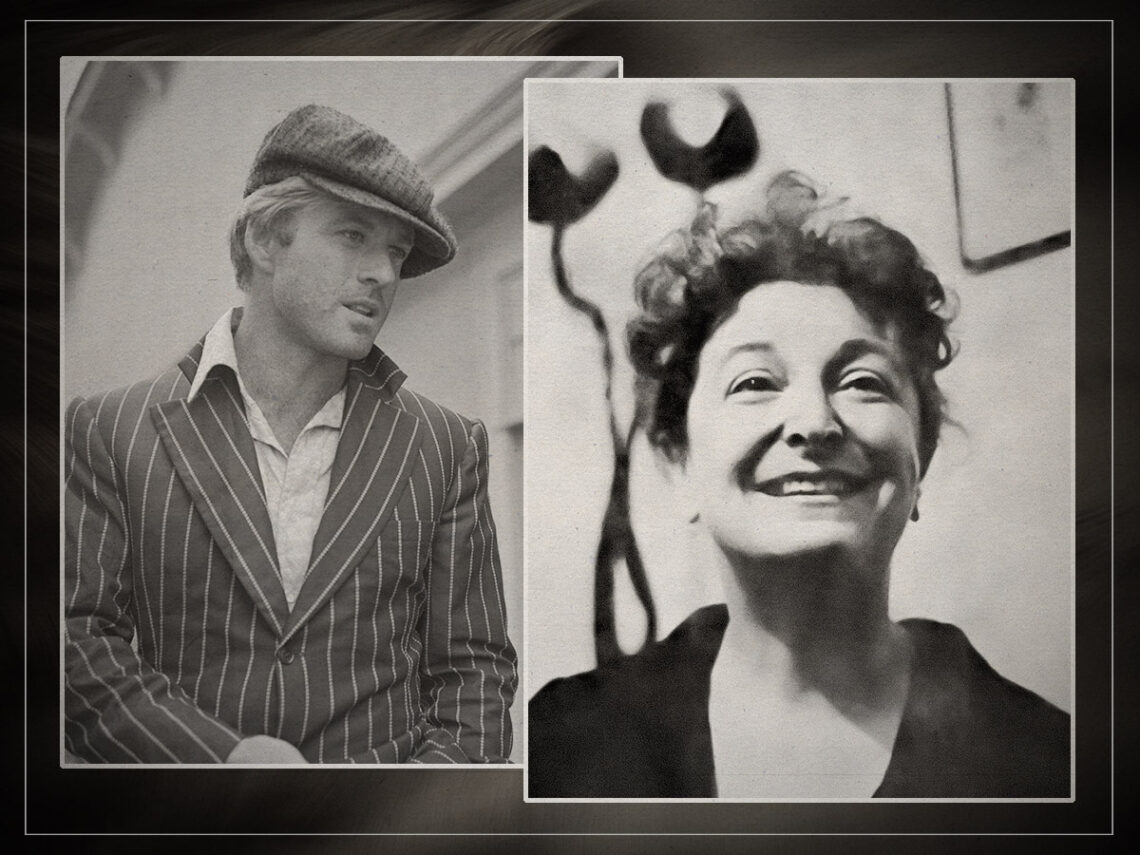
How Robert Redford made a career-long enemy of Pauline Kael: “I thought it was a gag”

In the annals of American film criticism, two names tower above all others. One is Roger Ebert, the beloved Chicago Sun-Times critic and one-half of the iconic duo Siskel and Ebert. The other, though, is Pauline Kael, the famed New Yorker critic known for her forthright opinions, which often flew in the face of her colleagues. Her bitingly funny, scabrous style influenced countless critics who came after her, but also filmmakers themselves.
For instance, Quentin Tarantino said Kael was as influential as any director in helping him find his style. However, Kael’s criticism didn’t always seem fair, and she may have victimised certain actors and directors throughout her career. One of the most regular objects of her ire was Robert Redford, who believes he inadvertently made an enemy of her.
When Redford was minted as a movie star in the wake of 1969’s Butch Cassidy and the Sundance Kid, he had already been working in film and television for the better part of a decade. Kael had given him some positive comments for his earlier films, but she hated Butch Cassidy with a passion, titling her review ‘The Bottom of the Pit’. She was particularly harsh about Redford’s part in the film, writing, “Redford, who is personable and can act, is overdue for stardom, though it will be rather a joke if he gets it out of this nonacting role.”
Over the next few years, Kael took every opportunity to lambast Redford for his performances in films now considered classics. Even stranger, they were well-received by most other critics at the time – all except Kael. For example, in her review of The Sting, she got personal, claiming that Redford “has turned almost alarmingly blond — he’s gone past platinum, he must be into plutonium; his hair is coordinated with his teeth.”
Worse, though, was her misreading of 1972’s Jeremiah Johnson, which could have affected Redford’s reputation in a big way. She compared the blonde actor to Lassie and claimed Johnson ended the film by giving the finger to Native Americans. In reality, Redford’s mountain man was giving a palm-out salute, and when Kael was called out on her mistake, she claimed she hadn’t seen the gesture properly because she wasn’t wearing her glasses. In ’74, Redford told Playboy, “The criticism was especially painful to me because of my feelings and concern for the American Indian. The remark seemed so far-fetched and personal beyond the limits of responsible criticism.”
On one fateful night in a Santa Monica restaurant, though, Redford finally got a picture of what he had done to anger Kael so much. He told Esquire magazine that when he and his wife had finished their meal and were leaving the eatery, a woman came running over to them. He claimed, “She grabs both my hands, and she says, ‘I’m Pauline Kael. You must hate me. But you have to understand something. You let me down.'”
Redford was totally thrown off by Kael’s remark and nervous energy. In fact, because he didn’t actually know what Kael looked like, he wasn’t even sure this was really her. He admitted, “I thought it was a gag,” envisioning a scenario in which his pal Paul Newman had paid a woman to pretend to be Kael to mess with him as they were engaged in a prank war at the time. The “you let me down” comment convinced him it was actually Kael, though, even if he couldn’t quite figure out exactly what she meant by it.
Kael told Redford, “I’m here for the stupid Academy Awards. If you’d like to talk, I’d be happy to see you.” He was still so thrown off balance by the unexpected encounter that he answered, “Let me call you.”
It was only after he left the restaurant that it finally clicked for Redford. By saying, “You let me down,” Kael was intimating he hadn’t made the kinds of movies she thought he should after she earmarked him earlier in the 1960s – almost as if she knew better than him what was good for his career. He didn’t like that. Not one bit. Redford noted, “That’s where a critic goes over the line. They want to own you. They want to dictate your path.”
So, as a man of his word, Redford did call Kael. However, when she asked, “Are you going to come by for a drink?” he replied, “I don’t think it would be appropriate. I appreciate the invitation, but I don’t think I should.”
He claimed she became enraged at him, and from then on, the reviews got worse and worse. He lamented, “Everything I did from then on, she just tore into me.”
