


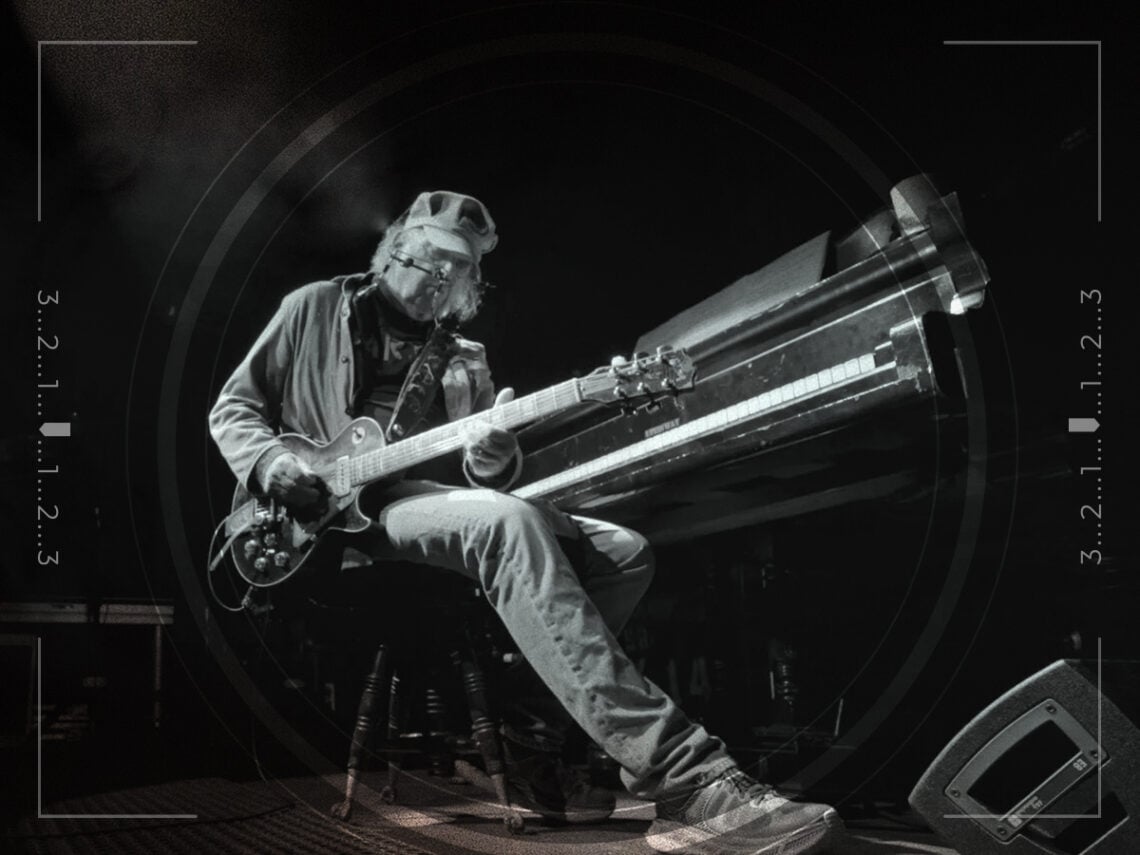
The five greatest guitarists of all time, according to Neil Young

“Nobody cares if you know how to play scales,” Neil Young once said. “Nobody gives a shit if you have good technique or not. It’s whether you have feelings that you want to express with music, that’s what counts, really.”
Telling Guitare et Clavier, “When you are able to express yourself and feel good, then you know why you’re playing.” The magic of Young is that he has expressed himself in myriad ways. From the quietly powerful tenderness of ‘Old Man’ that wouldn’t even blow a mouse’s eyelash off an air hockey table to the frenzied proto-grunge of ‘Cortez the Killer’ that could even prompt a monk to say ‘fuck you very much’ to his boss, he’s never lost sight of meaningful expression.
If he no longer feels content in an artistic lane, he’ll quite happily leave ‘Heart of Gold’ hits in the ditch and dust off the synthesisers and vocoder for the avant-garde experiment of Trans. In part, he frankly couldn’t give a shit. He’s proven that through actions like leaving Spotify, speaking out against Donald Trump (who notably never hits back because, comically, the President once declared Young his favourite artist), and threatening to boycott Glastonbury.
But it is also an expression of the eclectic, soulful art that inspires him. His admiration has never been too tied to a genre or technical style, in fact, he even hailed Joe Satriani and Eddie Van Halen as “geniuses” whose music he can’t stand, but rather a sense that someone is almost mystically bearing their soul with stirring originality. That’s what he sees as supreme artistry.
So, while the names below might be rather disparate, that’s not only a mark of Young’s ranging tastes, but also how he’s looking for sincerity in his six-string stars. “It’s just me with an instrument,” he said of his own sound. Well, these five guys share that same sentiment. There’s no separation. No room for showing off. (And in the five accompanying videos, you can see where Young reflected their influence in his own work).
Neil Young’s five favourite guitarists:
JJ Cale
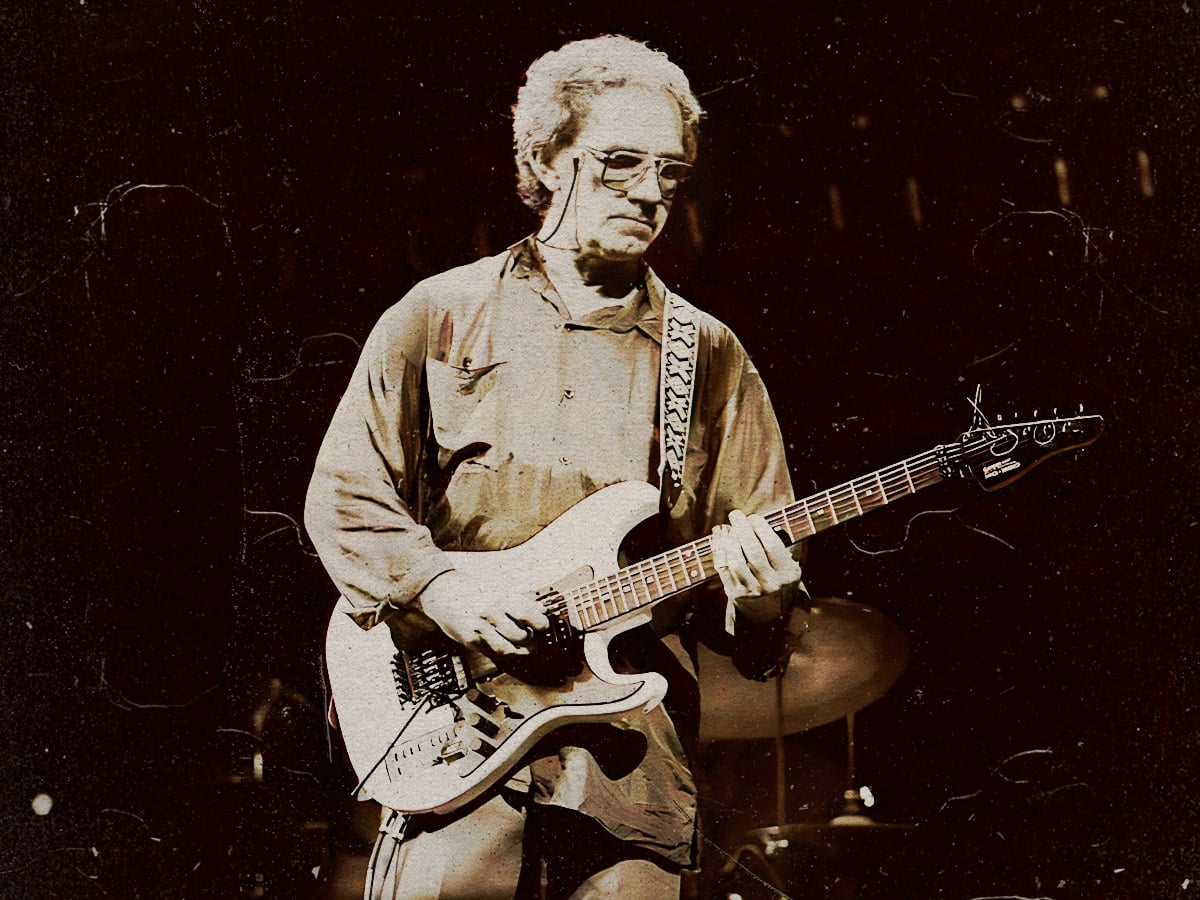
“What is it about JJ Cale’s playing? I mean, you could say Eric Clapton’s the guitar god, but… he can’t play like JJ. JJ’s the one who played all that shit first. And he doesn’t play very loud, either – I really like that about him. He’s so sensitive,” Young remarks in the biography, Shakey. ”Musically, he’s actually more than my peer, because he’s got that thing. I don’t know what it is.”
While Cale might’ve struggled for a hit outside of his session musician stints, spellbinding shows at the Whiskey a Go Go were enough for him to garner attention from those in the know in the late 1960s. But as Young notes, his lack of ”business acumen” still got in the way, and even his tender masterpiece, Naturally, released in 1971 as his debut album after years in the business, still didn’t chart and always seemed destined to become a cult classic after the fact.
However, the delicate touch that the likes of Young and Clapton raved about – both stars who would go on to play with him and be blown away – is enough for the ‘After the Gold Rush’ star to crown him one of the two “best electric guitar players“ in history.
See that delicate touch reflected below:
Jimi Hendrix

The other “best electric“ guitarist is, of course, Jimi Hendrix – Young isn’t that much of a contrarian. After all, what he adores is someone who is respectfully bonded with their instrument, and Hendrix often played as though he had fallen into a trance. In an interview with the Musicians Hall of Fame, he commented, “Hendrix was the best at being able to do his expression with his guitar. I’d say, out of the ’60s, as far as someone taking the guitar to another place, Hendrix was number one.“
Adding, “No other guitar player even came near Hendrix in the way he handled playing rock ‘n’ roll in a trio, guitar, bass and drums.“ He wasn’t just a great guitarist, but also a great bandleader in the Miles Davis sense. As Young continues, “He was so unique, he had his own place. It was the Jimi Hendrix Experience. Out of all the trios, there was nothing like the Jimi Hendrix Experience, and the way they all played together, the bass player, the drummer, it was all three of them together that made that sound.”
This is always something that Young has looked to emulate. Nearly always, the star tours with his band name proudly printed in equal size on the bill, one hand washing the other, in a bid to achieve elevation. As Keith Richards once said, “There’s something beautifully friendly and elevating about a bunch of guys playing music together. This wonderful little world that is unassailable. It’s really teamwork, one guy supporting the others, and it’s all for one purpose, and there’s no flies in the ointment, for a while.“ Achieving that takes humility, ironically, a skill that every true virtuoso needs.
See that wailing abandon reflected below:
Bert Jansch
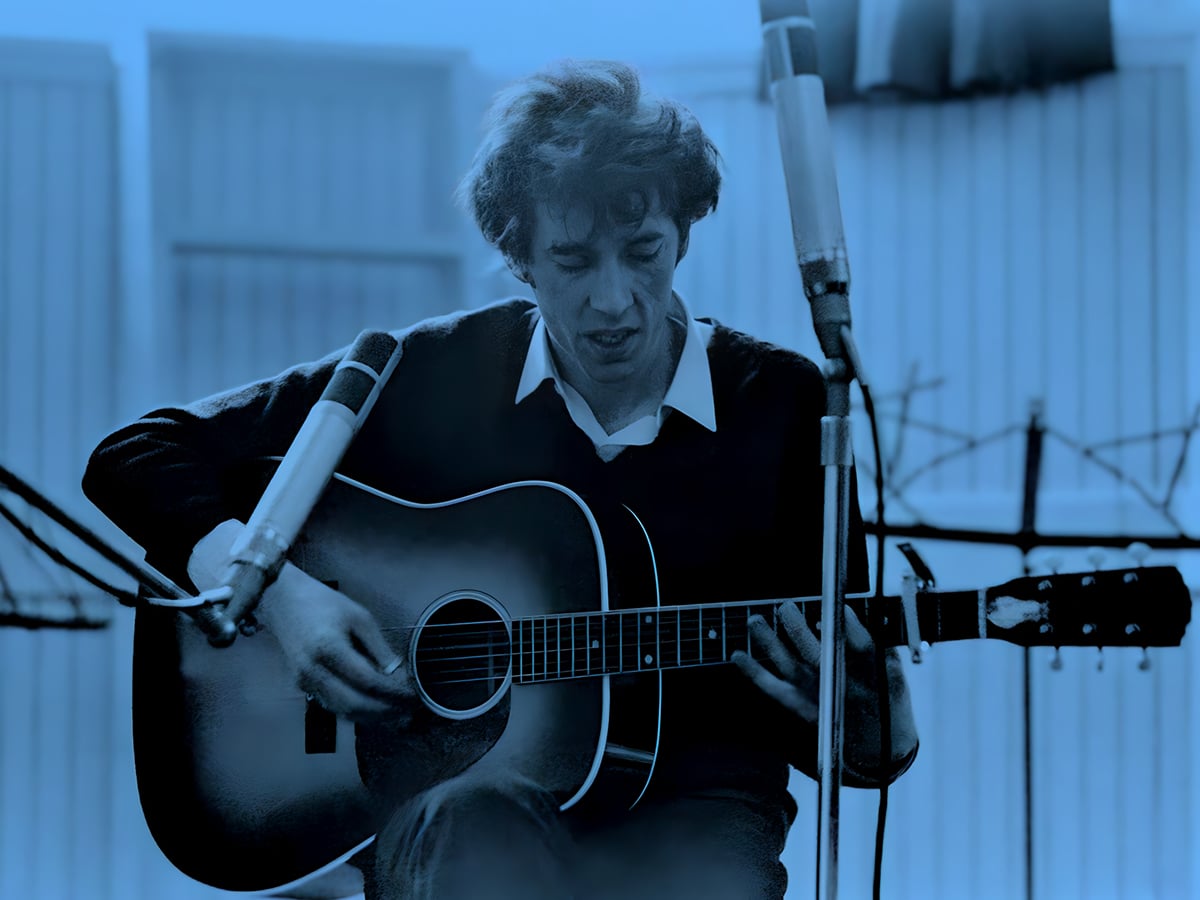
Why is it that every ‘greatest guitarist of all time’ list almost always exclusively features electric guitarists? With the acoustic, there’s less to hide behind, more room for error, and natural touch becomes more important. That’s why Young reveres the Scottish folk star Bert Jansch so highly. “Bert Jansch is the best acoustic guitarist; he’s my favourite anyway.”
Once again, Hendrix serves as a barometer for Young, adding, ”As much of a great guitar player as Jimi was, Bert Jansch is the same thing for the acoustic.” And even continuing, ”He is a hero of mine, and one of my greatest influences.” Over the years, he has even admitted that he has inadvertently stolen melodies from him, all while commenting that he’ll ”never play guitar as good” as the icon.
He’s not alone in his appraisal of Jansch’s startlingly singular styles either. Johnny Marr put his finger on the certain ‘something’ that escaped Young, stating, ”Bert actually made the term ‘cool’ mean something,” he said of the way he made idiosyncratic stylings something to be proud of. Adding, “Without Bert Jansch, rock music as it developed in the ’60s and ’70s would have been very different.”
See that singular charm reflected below:
Nils Lofgren

There’s a difference between a soloist and a member of a band, and for Young, his Crazy Horse mate, Nils Lofgren. ”He’s part of the band,” he says. ”He’s skilful, beautiful, got great touch, but he’s open. Most importantly, he’s listening to everything.” That jazz-like sentiment has brought out the best in Young’s playing, too.
While Young says that Lofgren ”just fits in” while also offering a ”hot rock ‘n’ roll style”, it seems clear to all involved that he would just fit in anywhere. If he was a crocodile he could blend in with alligators, no problem. His open-ear form of playing allows him to seamlessly bring out the best in the mix, elevating the overall sound with a deft touch of class.
That takes all round artistry, and it is this that Bruce Springsteen even reflected on, highlighting, ”Nils is a unique combination of talents: musical and psychological and emotional.”
See that intermingling spirit relfected below:
Jimmy Page

“I’m a hack compared to him,“ Young says in regards to Jimmy Page in Shakey. “He can really play.” He even noticed that first-hand when he got to jam with his heroes in Led Zeppelin. Later reflecting on the magic of the experience in his song ‘Downtown’, in which he sings, “Jimi’s playin’ in the back room, Led Zeppelin on stage, There’s a mirror ball twirlin’, And a note from Page, Like a water-washed diamond.”
Page provides “a big sound“ that influenced Young to swell his own output. After his delicate folk beginnings, after being awed by Page, Young started to instruct Logfren to “play loud… you gotta be a lot louder.“ Page was the master of meeting that roaring mantel, reaching for orchetsral heights, and while Eddie Van Halen might’ve thought that made him sloppy, Young would happily reply, ”Nobody gives a shit.”
In the process, Page achieved a glorious imperfection that Young greatly admired. As Ritchie Blackmore put it, ”If you are always playing the correct notes, there is something wrong, you’re not searching, you’re not reaching for anything.”
See that orchestral overture reflected below:
