


Five iconic fictional movie characters inspired by real people

As Los Angeles rises out of the desert and pans into view during the opening sequence of the Coen brothers’ The Big Lebowski, we hear a conversational ode of sorts to ‘The Dude’. Within that opening stanza, Sam Elliot drawls out the following: “Sometimes there’s a man, well, he’s the man for his time and place, he fits right in there.” It’s an assertion that could summarise a fair chunk of cinema history.
Well, even when you don’t want to tell the character’s story, their persona can still inform your fiction. They are not alone in this method. Legions of directors have scoured through reality to find the fellows who form the perfect conduit to fiction. As Ray Bradbury once wrote: “Plot is no more than footprints left in the snow after your characters have run by on their way to incredible destinations.”
From the jazz singer behind the comic Miss Piggy to the mystic figure who helped to spawn the entire detective genre, some of the most iconic characters ever created have a real-life birth certificate, a mere perspective step away. We have amassed the fascinating tales of some of the folks who were transformed for a big screen story.
Five movie characters inspired by real people:
Indiana Jones – Hiram Bingham III (Indiana Jones)
Hiram Bingham III boldly ventured into the Peruvian wilderness in 1911 while enjoying a break from his post as a lecturer at Yale University. Therein, he happened upon an ancient mystic world. His discovery is a matter of miles away from the opening scenes of the Raiders of the Lost Ark: Machu Pichu.
Bingham was the sort of fellow who you would trust in any situation, and his life reads like the stuff of heroic fiction. After discovering Machu Pichu, he set off on other intrepid expeditions, and he always seemed to return with the spoils of a great story. He then went on to serve as an aviation instructor during World War I. And he was eventually elector governor of Connecticut—a post he served in for a single day before being called to the Senate.
Miss Piggy – Peggy Lee (The Muppets)
Sadly, for Peggy Lee, Miss Piggy is a spinster who is, unfortunately, constantly trying to wank off a frog. It’s not an ideal character to have inspired, even if I have been a bit overly gratuitous with her Amphibian lust. As a member of The Muppets since 1976, Miss Piggy is just about the most beloved bombshell around.
Miss Piggy creator, Bonnie Erickson, told The Smithsonian: “My mother used to live in North Dakota where Peggy Lee sang on the local radio station before she became a famous jazz singer. When I first created Miss Piggy, I called her Miss Piggy Lee—as both a joke and an homage. Peggy Lee was a very independent woman, and Piggy certainly is the same. But as Piggy’s fame began to grow, nobody wanted to upset Peggy Lee, especially because we admired her work. So, the Muppet’s name was shortened to Miss Piggy.”
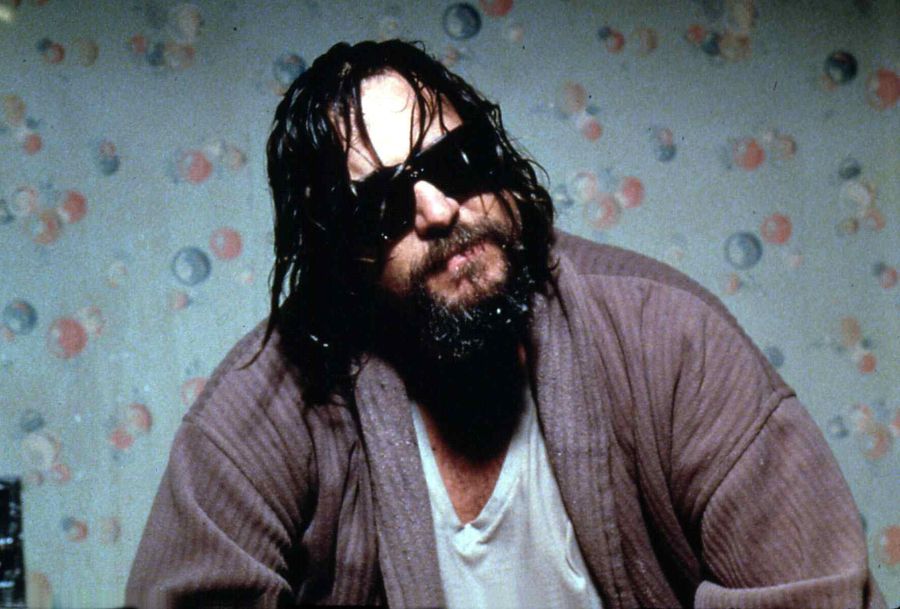
The Dude – Jeff Dowd (The Big Lebowski)
The Dude is an amalgamation of some of the most laid-back people that the Coen brothers happened to know. However, the Vodka in the White Russian of this creation, so to speak, was the film producer and renowned activist Jeff Dowd.
“The body language is one hundred percent me in the movie. Do I drink White Russians all the time? No. … The reason it was White Russians is you could have a lot more fun with a White Russian than you can with say, a vodka soda,” Dowd told Huffington Post. Hell, he has even had the nickname ‘The Dude’ since sixth grade based on a mutation of his surname and, of course, because he’s the sort of fellow who takes ‘er for the rest of us sinners.
While Dowd was a pivotal figure in the film community and had a working life that any Little Urban Achiever would dream of, he was renowned for his casual demeanour and style. Moreover, he was an avid bowler, and his college years were near enough identical to the tales that The Dude extolls.
Sherlock Holmes – Dr Joseph Bell (Sherlock Holmes)
Sir Arthur Conan Doyle worked as a doctor while he was writing his debut Sherlock Holmes novel, A Study in Scarlet. The charismatic detective with an idea for the smallest of details was reportedly inspired by his old medical professor, Dr Joseph Bell.
Bell’s trademark skill was to dazzle his students by bringing a patient into the lecture hall and determining their condition, occupation, class, marital status, and any other details he could muster merely from their appearance and mannerisms. In short, Bell was the master of judging a book by its cover.
Four novels and 56 short stories later, Doyle wrote to Bell. He declared: “It is most certainly to you that I owe Sherlock Holmes and though in the stories I have the advantage of being able to place him in all sorts of dramatic positions, I do not think that his analytical work is in the least an exaggeration of some effects which I have seen you produce in the outpatient ward.” It’s elementary, doctor.
Travis Bickle – Arthur Bremer (Taxi Driver)
Taxi Driver: The streets of Manhattan have descended into the postlapsarian nightmare forecast in a thousand bad acid trips from the decade earlier. The technological fix for a society that the post-war progression promised has been swallowed up in nothing more than the sprawl of concrete and the rise of brutalist architecture. With no life ring cast from those in power or prominence, who were more concerned with threats from afar than the onset of internal decay, the denizens of the city sink into the plashy mire of crime and punishment. It is a dystopian mire that Travis Bickle watches unfold from the dangerous view of a city cab steering wheel.
Although loosely inspired by the dower spot writer Paul Schrader found himself, it was a real-life felon whom Robert De Niro drew upon for inspiration. Arthur Bremer was a shy and reserved busboy at the Milwaukee Athletic Club who loved his job until he was fired after customers complained that “he whistled and marched in tune with music played in the dining room.” Thereafter, his mental health began to slide.
After securing a few more jobs, being dismissed, and witnessing the death of a friend, Bremer began conspiring to assassinate Richard Nixon and George Wallace to make the world happier. In 1972, he attempted to assassinate Wallace. The attempt left Wallace permanently paralysed from the waist down before Bremer was apprehended and arrested. In the months prior, Bremer made endless diary entries and kept a taped recording of readings from it. De Niro listened to this on a loop while getting into character for Travis Bickle.
