


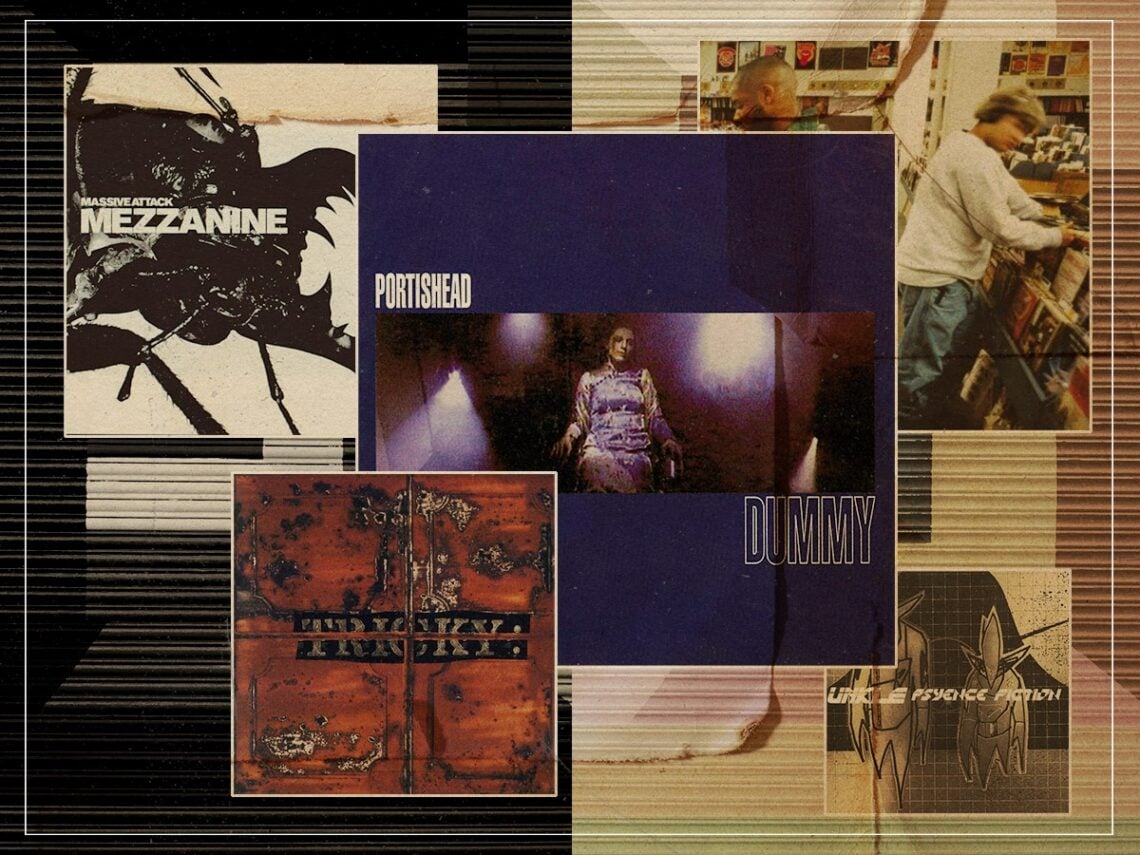
Five Easy Masterpieces: an introduction to trip-hop

After rock music colonised charts on a global scale throughout the 1960s, genre classification became increasingly loose. Traditional descriptors such as jazz, folk, and the blues are still used to describe music to this day, but from their roots in the early 20th century, an intimidating tree of ill-fitting subgenres has grown. In the 1990s, the term trip-hop started to appear in music mags, used by journalists endeavouring to group a blossoming generation of artists who took hip-hop to another level.
Though the term was coined in the mid-1990s, trip-hop style music existed as far back as the late 1980s. What sets trip-hop apart from hip-hop is that it marries a more diverse array of genres, such as acid jazz, post-punk, reggae, and electronica, into an often more complex composition. As a rule of thumb, trip-hop artists will mix samples with a more melancholic instrumental atmosphere and introspective lyrics.
The parameters for trip-hop were set in Bristol, first by The Wild Bunch, an experimental hip-hop collective that morphed into Massive Attack at the turn of the decade. The band’s 1991 debut album, Blue Lines, featured future solo star Tricky and demonstrated the eclecticism of the genre. Although rapping appeared in highlight tracks like ‘Blue Lines’ and ‘Safe From Harm’, it was far from necessary, with the soulful single ‘Unfinished Sympathy’ and the anthemic closer ‘Hymn of the Big Wheel’ in its midst.
Over time, more artists arrived to evolve and redefine the genre. Notably, in the Bristol scene, Portishead completely eradicated any rapping, instead opting for a style of sample-based music more rooted in jazz than hip-hop. Throughout their first two albums, Portishead presaged the intense depths of Massive Attack’s Mezzanine with Beth Gibbons’ beautiful yet unsettling lyrics, the productional prowess of Geoff Barrow, and Adrian Utley’s effects-ridden jazz guitar stylings.
Below, we list the five most essential trip-hop records everybody should be familiar with. From here, dive deep into each of these artists’ catalogues and venture out into those of Morcheeba, Nightmares on Wax, Kruder & Dorfmeister and more.
Five essential trip-hop albums:
Portishead – Dummy
Dummy is the Dark Side of the Moon of the trip-hop genre. Though Portishead never felt comfortable with the tag, their innovative use of trippy samples and record scratches helped to define the blossoming Bristol scene in the early 1990s. Unlike neighbouring pioneers Tricky and Massive Attack, Portishead were sans rap, instead using their chilling soundscapes to frame the hair-raising vocals of frontwoman Beth Gibbons.
The majesty of Dummy endures to this day, partly thanks to Portishead’s mysterious lack of activity. In a 2024 interview with Far Out, guitarist Adrian Utley explained that the trio felt enormous pressure to follow up their Mercury Prize-winning debut. “Although there wasn’t massive pressure from a record company – nobody’s ever interfered with us really – I think it was personal pressure within us, going, ‘Christ, we can’t do that again. We can’t repeat what we’ve just done!'” Though Portishead and Third failed to reach the same peaks, both were exquisite in their own right, the latter successfully abandoning the trip-hop label.
Massive Attack – Mezzanine
Like Portishead, Massive Attack hasn’t been a prolific recording act. Their huge success throughout the 1990s and 2000s led to similar pressures and resulted in several creative feuds within the band. After releasing Blue Lines and Protection in 1991 and ’94, respectively, the collective took a little time to restructure their DNA before releasing their third album, Mezzanine.
With rap performances from Tricky and the enveloping classic ‘Unfinished Sympathy’ in its ranks, Blue Lines deserves a mention as possibly the most iconic and defining of the trip-hop masterpieces. However, Mezzanine just about takes gold in my books as a more consummate, coherent release that brought a darker side to the genre with influences from post-punk and industrial music. To top it all off, the album features discerning samples from The Cure, Led Zeppelin and The Velvet Underground’s discographies.
DJ Shadow – Endtroducing…..
The American producer Joshua Paul Davis, better known by his stage name DJ Shadow, claims to have “invented trip-hop” because the term was first coined in 1994 following the release of his song ‘In/Flux’. Journalist Andy Pemberton first came up with the term “trip-hop” to describe the musical journey, or “trip,” of the single in a review. While ‘In/Flux’ may have been the first song to be deemed trip-hop, Massive Attack had captured the flag a couple of years prior with Blue Lines.
Two years after “inventing” trip-hop, Shadow released his debut album, Endtroducing….., a truly originative work of art that brought an industrial edge to the instrumental hip-hop wave. Shadow worked meticulously on Endtroducing….. for two years, using his trusty Akai MPC60 sampler and very little else. In a colossal milestone for sample-based music, this record was the first in music history to be crafted entirely from samples.
Tricky – Maxinquaye
After beginning his career as a close collaborator of the Massive Attack collective in Bristol’s early trip-hop scene, Tricky branched out into a successful solo career. Tricky’s voice had given life to such classics as ‘Blue Lines’ and ‘Karmacoma’, and as he entered the studio to create an album with full creative agency, he brought us some of his most enduring classics in Maxinquaye, including ‘Aftermath’, ‘Hell Is Round the Corner’ and ‘Pumpkin’.
Arriving in February 1995, Maxinquaye was a huge breakthrough in Tricky’s storied career. Though it remains his most iconic record, I urge you to use it as a jumping-off point. As the man himself admitted in a 2023 interview with Far Out, he reached his peak in the following three studio albums. “Commercially, Maxinquaye was the biggest album, but I don’t think it’s affected people the most,” he explained. “If I could figure out which album helped people the most, I’d say that was the one I’m most proud of.”
UNKLE – Psyence Fiction
Two years after releasing Endtroducing….., Josh Davis joined British DJ and producer James Lavelle to record Psyence Fiction under the collaborative handle UNKLE. The album was yet another milestone for sampling, but instead of instrumental compositions, the pair opted for more lyrically led tracks. “My frustration was that I didn’t want to make weird instrumental hip-hop records. We could’ve easily achieved that but I wanted songs,” Lavelle said of the record. “Listening to Richard Ashcroft was a revelation because I thought, ‘If I could bring that ilk of singer in with what I was hearing from Shadow, I’ll crack it.'”
Lavelle manifested his vision of a song-orientated album with the help of collaborating rock musicians, most notably The Verve’s Richard Ashcroft (‘Lonely Soul’), Radiohead’s Thom Yorke (‘Rabbit in Your Headlights’), Badly Drawn Boy (‘Nursery Rhyme/Breather’), and The Stone Roses Ian Brown (‘Be There’). This album, like Mezzanine, is a perfect marriage of trip-hop and contemporary rock music.
