


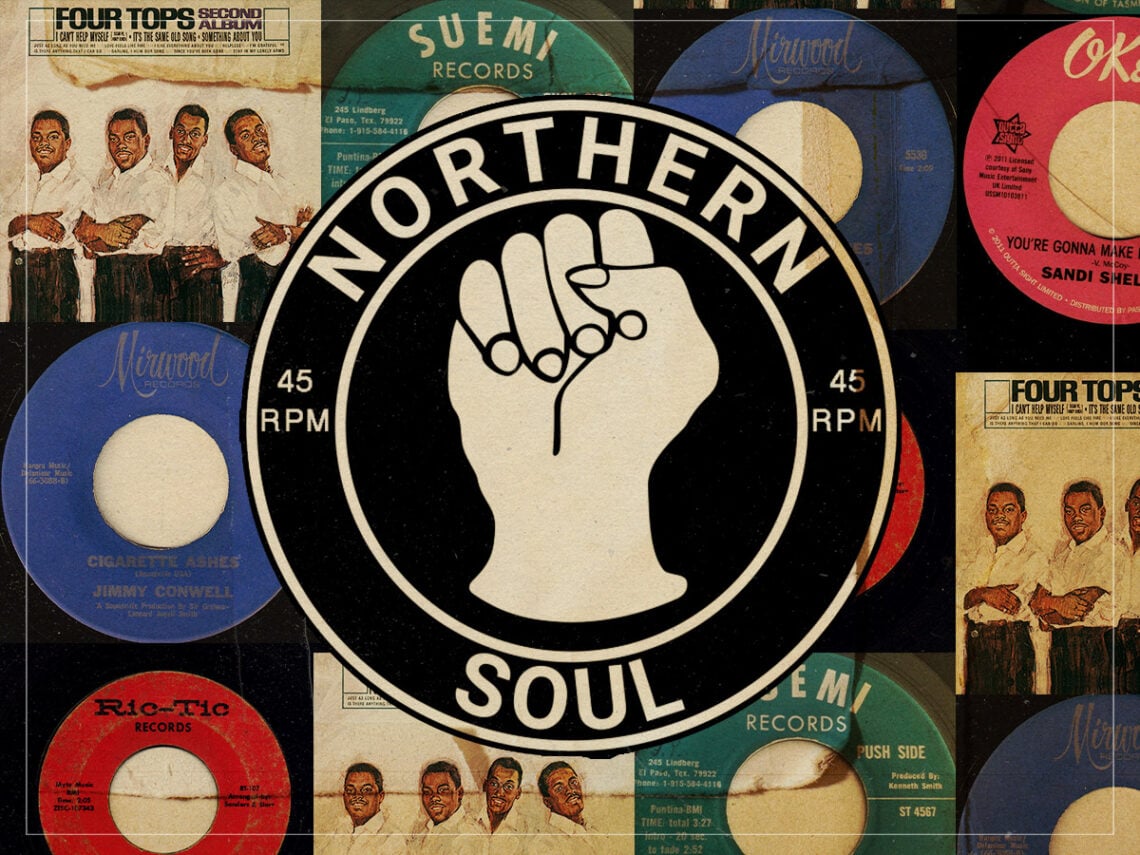
Five Easy Masterpieces: an introduction to northern soul

Dancefloors dusted in talcum powder, amphetamine-fueled adolescents, and the sweet sounds of American soul; northern soul captured the attention of England’s youth back in the 1970s. Emerging from the tail-end of the mod subculture, swathes of young people across the north of England became infatuated with obscure, overlooked, and forgotten soul records from across the Atlantic. Before too long, these young soul obsessives would find a home on the dancefloors of legendary venues like The Twisted Wheel, The Torch, and, most infamous of all, Wigan Casino.
At that time, every other musical scene, movement, or fandom revolved around a handful of bands or artists, but northern soul was a completely different type of scene. Rather than worshipping artists, soul fans coveted the various DJs who uncovered these rare vinyl records and played them to death at all-night dances.
After all, the artists who recorded many of these northern soul classics were virtual unknowns. In more than one case, they had recorded one or two singles for a small independent label in the US, the singles had flopped, and the recording artists had gone on with their lives, unaware of the cult status they had achieved in places like Wigan, Blackpool, and Manchester.
Although northern soul’s heyday was inarguably back in the 1970s, its relevance and popularity has never really waned over the past 50 years. Many of the original soul clubs from those early years, such as the Leeds Central Soul Club, are still drawing in crowds with the infectious rhythm of old school American soul. What’s more, the younger generation are starting to revisit the scene, with groups like Deptford Northern Soul Club and Northern Grooves hosting their own northern soul all-nighters in the 21st century.
Northern soul is among the most exciting, enduring, and rewarded music scenes in British history, so it makes sense that a new generation of listeners is becoming infatuated with its distinctive sound. Given its penchant for obscurity and the seemingly endless array of singles that could, in one way or another, be classed as northern soul, breaking into the sound of the movement can be a pretty daunting task for newcomers. So, your friends at Far Out have collected five essential masterpiece singles from the northern soul scene to get you started.
Five essential northern soul singles:
The Four Tops – ‘I Can’t Help Myself’ (1965)

Credited with establishing the distinctive sound of the northern soul scene, the first pick on our list comes from Motown heroes, The Four Tops. Although northern soul was largely concerned with the obscure and forgotten records of American soul, the impact of Hitsville USA is utterly unavoidable. Written by the songwriting masters Holland-Dozier-Holland, who also wrote The Four Tops’ other northern soul classics, like ‘Reach Out (I’ll Be There)’, it was the song’s beating rhythm which caught the attention of hopped-up youths in the northern soul scene.
Upon its initial release in 1965, ‘I Can’t Help Myself’ shot to the top of the US singles charts, and reached a commendable 23 in the UK, where Motown didn’t have quite the same command over the pop charts. In fact, the single was one of Motown’s most successful in 1965, arguably marking the peak of Motown’s golden age. Perhaps more impactful than that accolade, though, ‘I Can’t Help Myself’ represented the gold standard of the northern soul sound and was endlessly replicated in the years that followed.
Edwin Starr – ‘Back Street’ (1966)

Motown Records were certainly not the only soul label making waves during the 1960s. Countless different independent labels sprang up around the same time as Berry Gordy started Tamla, and Ric-Tic was among the most exciting and innovative. Founded by Joanne Bratton and Eddie Wingate in 1962, the Detroit label provided a home to a wealth of incredible soul artists, but Edwin Starr was perhaps the most prominent figure within their roster. Starr released six singles with Ric-Tic before the label and its assets (including Starr) were acquired by Motown in 1968.
Of those six singles, the 1966 classic ‘Back Street’ drew particular attention from the northern soul scene. Not only does the song feature Starr’s typical vocal prowess in full force, but its lyrics might as well be the manifesto for the northern soul scene in general. “The people on the back street, they swing, all night long,” could have been written specifically for the northern soul movement, and the lines work particularly well when accompanied by the blaring horns and angelic backing vocalists.
Sandi Sheldon – ‘You’re Gonna Make Me Love You’ (1967)

A favourite of Manchester’s Twisted Wheel all-nighters, Sandi Sheldon was once a great mystery within the world of northern soul. For many years, the only information available about the powerful vocalist whose 1967 track ‘You’re Gonna Make Me Love You’ typified the upbeat energy of the northern soul scene came from the scarce information included on the record’s label. Published by Okeh Records, a vitally important label within northern soul, the song was one of two singles recorded by Sheldon during the late 1960s, and neither ended up being hits.
As was discovered by Blackpool Mecca DJ Ian Levine decades later, Sheldon was actually a pseudonym used by an artist named Kendra Spotswood, whose recording career had never really taken off back in the 1960s. Unbeknownst to her, she was one of the defining voices of the soul scene in England. Still, to this day, ‘You’re Gonna Make Me Love You’ is on regular rotation at northern soul events, although it might cost you upwards of £1,000 to get your hands on an original copy of the single.
Jimmy Conwell – ‘Cigarette Ashes’ (1966)

A monster track at Torch all-nighters in Stoke, Jimmy Conwell unveiled the instrumental dance smash ‘Cigarette Ashes’ in 1966, originally as the B-side to Second Hand Happiness, via Mirwood Records. Arguably a perfect northern soul single, the track encapsulates the pounding dance rhythm that the scene became synonymous with. Shortly after its release, Conwell released a new version of the song, this time with lyrics, as ‘That Beatin’ Rhythm’ under the name Richard Temple, but that is something special about the instrumental track that simply cannot be replicated.
Instrumental songs have rarely troubled the pop charts, particularly in the world of funk and soul, but that didn’t stop labels throughout the 1950s, 1960s, and 1970s from issuing a deluge of utterly incredible instrumental tracks. Many of these songs found their way into the record boxes of northern soul DJs, with another prominent example being ‘Exus Trek’ by the Luther Ingram Orchestra, the instrumental version of ‘If It’s All The Same To You Babe’. Ultimately, though, you’d have to go a long way to match the brilliance of ‘Cigarette Ashes’.
Lou Pride – ‘I’m Com’un Home in the Morn’un’ (1970)

After being conscripted into the army during the late 1960s, the Chicago-born Lou Pride had something of a rebirth towards the end of the decade. Relocating to El Paso, Texas, the talented vocalist gained the attention of obscure Texan soul label Suemi Records, who issued his first solo single, ‘I’m Com’un Home in the Morn’un’ in 1970. Complete with infectious brass horns, Pride’s universal vocal style, and lyrics which seem to suit the idea of all-night dances, the obscure track found a natural home in the bosom of the northern soul scene.
The single could be considered something of an outlier within northern soul, particularly given its runtime. While the vast majority of other northern soul classics are rendered as two or three-minute anthems, Pride’s debut has a runtime of well over five minutes – a pretty long time to be dancing to one song. Nevertheless, its unwavering energy, punctuated by explosions of brass, means that the song practically flies by (it probably goes even quicker if, like many punters at Wigan Casino, you’re hopped up on speed).
