


Five criminally overlooked actors-turned-directors

Actors-turned-directors are a dime a dozen. It’s practically a foregone conclusion at this point that if you’re famous enough as an actor, you will, at some point, step into the director’s hair. This has led to some pretty painful low points in actors’ careers. Madonna tried her hand at it twice, first in 2008’s Filth and Wisdom and again in 2011 with W E, and both films were difficult to sit through. Then, there was Eddie Murphy’s Harlem Nights, and nearly the entirety of James Franco’s pretentious oeuvre.
Those who have managed to successfully make the leap are now more famous as directors than actors. Clint Eastwood and Ron Howard were huge stars in their day, but when they turned to directing, it was almost as if they’d never been anything else. Greta Gerwig is only a few films into her career as a filmmaker and already, she’s dwarfed the work she did as an actor.
Some of the most promising actors-turned-directors do not appear on this list simply because their work behind the camera is hopefully just beginning. Viggo Mortensen and Maggie Gyllenhaal, for example, have only made one film each, and both have been extremely impressive. Hopefully, there is much more to come from them as filmmakers.
Those who do make the list had long careers as actors and took at least one remarkable detour into directing. In some cases, they simply decided that they didn’t want to bother with directing anymore, but in others, the negative reviews surrounding their directorial efforts quashed any hopes they had of reinventing their careers. Years later, it’s time to appreciate their work for what it was: masterful and infuriatingly undervalued.
Five actor-directors that deserve more recognition:
James Caan

James Caan is one of the most surprising ‘what ifs’ of the directorial world. The actor was best known for his portrayal of Sonny, the most volatile and violent member of the Corleone family in The Godfather. He spent much of his career raising hell, getting into trouble with the cops, and playing tough guys, but in one instance, he directed a film that was actually pretty darn excellent.
Hide in Plain Sight is a crime drama in which Caan plays a working-class father who searches for his children after his wife disappears with them and her new husband. It’s a tightly-crafted low-budget thriller in which Caan is not just an excellent actor, but a remarkably able director. There is no showiness or unnecessary experimentation, and it feels as if a much more seasoned filmmaker made it.
Caan was originally meant to simply star in the film but ended up as the director when he couldn’t get his first choice, Hal Ashby, to helm it. It isn’t the greatest film ever made and certainly isn’t the best film of Caan’s career, but it was full of potential that the actor unfortunately never explored again.
Ida Lupino

Ida Lupino was only the second woman to join the Director’s Guild of America after Dorothy Arzner, and as a filmmaker, she was in a class of her own. She began acting as a teenager, had an affair with eccentric business mogul and producer Howard Hughes, and enjoyed a modestly successful career as a Hollywood starlet. Her most famous films as an actor included the Humphrey Bogart crime dramas They Drive by Night and High Sierra.
When Lupino began directing films, however, they were far from the cookie-cutter studio fare that she was looped into as an actor. She founded a production company in the 1940s with the aim of making independent, issue-oriented films. Her first, Not Wanted, was a decidedly non-Code-compliant drama about pregnancy out of wedlock. Never Fear, directed in 1950, was about polio, and Outrage was about rape. In other films, she explored other taboo topics at the time, including bigamy.
Her most famous film, The Hitch-Hiker, is a taut film noir about two men who are kidnapped and blackmailed into driving a murderer to the Mexican coast so that he can escape the authorities. It is an unusually cruel movie for the era and is still a tough watch. Although Lupino is much more respected now than she was during her lifetime, she remains criminally underrated.
Charles Laughton

Charles Laughton has been profoundly underserved by the passage of time. Once one of the most highly respected character actors of his day, he has been largely forgotten by everyone except classic cinema buffs. Nominated for three Oscars, he won ‘Best Actor’ in 1934 for his role in The Private Life of Henry VIII. His most famous role was as Quasimodo in the 1939 adaptation of The Hunchback of Notre Dame, a role that he imbued with tragedy and pathos that still resonate.
In 1955, he turned his hand to directing, creating the gothic horror thriller The Night of the Hunter. It stars Robert Mitchum as a self-professed preacher who preys upon the family of a man he murdered in prison. It is a deeply unsettling film, made all the more so by its religious overtones and the fairytale imagery that the director incorporates throughout.
It was so poorly received when it was released that it broke Laughton’s spirit. He dropped out of another film he had been slated to direct and never helmed another film. It was essentially an arthouse film at a time when no such thing existed. Decades later, The Night of the Hunter is widely considered to be one of the greatest movies ever made and has been a key inspiration for everyone from Spike Lee and the Coen Brothers to William Friedkin.
Barbara Loden

Barbara Loden rose to prominence as an actor during the 1960s and was one of the early members of the Actor’s Studio. With her classically beautiful features, she was instantly typecast as an ingenue in Hollywood, even though her abilities and interests were much more nuanced and transgressive for a film industry that was only just beginning to deviate from the Hays Code. Her most prominent film role was in the 1961 romance Splendor in the Grass, and she had a prolific stage career, winning a Tony in 1964 for After the Fall.
In 1970, Loden wrote, directed, and starred in the independent drama Wanda, a pioneering feminist masterpiece that still burns decades later. The director plays a housewife who escapes her excruciatingly mundane life and seeks adventure with a bank robber, only to find cruelty and abuse from every man she meets. It isn’t for the faint of heart, but it is an ingenious and thought-provoking film, shot with the unsentimental directness of a documentary.
Loden directed several short films and theatrical productions in the years following Wanda, but never made another feature. Nor did she get to see just how revered her film would become. She died in 1980 of breast cancer, decades before Wanda became a touchstone of independent cinema.
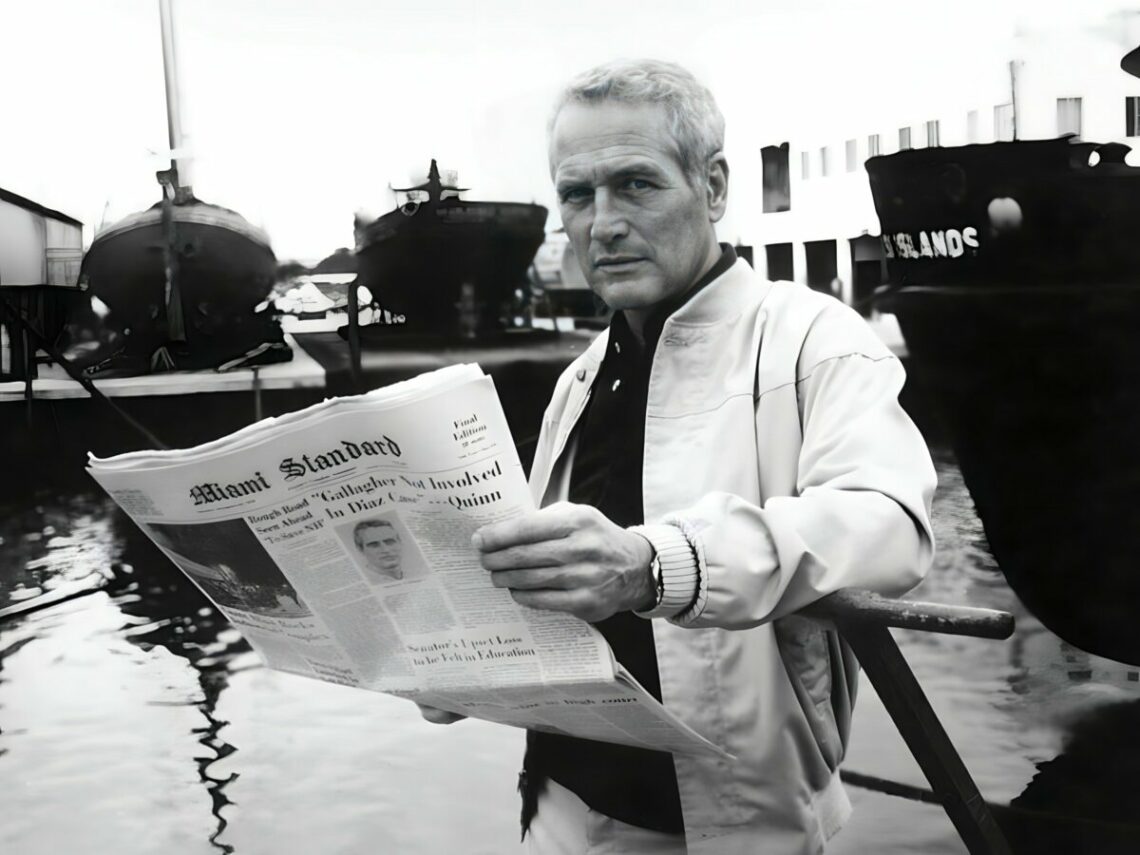
Paul Newman

It’s tough to argue that Paul Newman is underrated as an actor. He was one of the biggest movie stars in his day with films like The Hustler, Cool Hand Luke, Butch Cassidy and the Sundance Kid, and Slapshot. He may even be more iconic in death than he was during his starry, decades-long career.
However, even some of Newman’s most passionate fans do not know that he was also a director. The Oscar winner made only a handful of movies, but almost all of them are so excellent that you’d be hard-pressed to distinguish them from those made by the greatest auteurs. His first directorial effort was the 1968 passion project Rachel Rachel, which he made as a showcase for his wife, Joanne Woodward. The film was nominated for four Oscars, including ‘Best Picture,’ and the actors who worked on the film were in awe of Newman’s skills as a director.
Even Elia Kazan, the director of such classics as On the Waterfront and East of Eden, believed that Newman was even better behind the camera than he was in front. “Maybe five years from now,” he said, “People will say, ‘Boy, Newman was a good actor, but when it comes to directing, he’s better.’” Sadly, not enough audiences have come to this realisation.
