


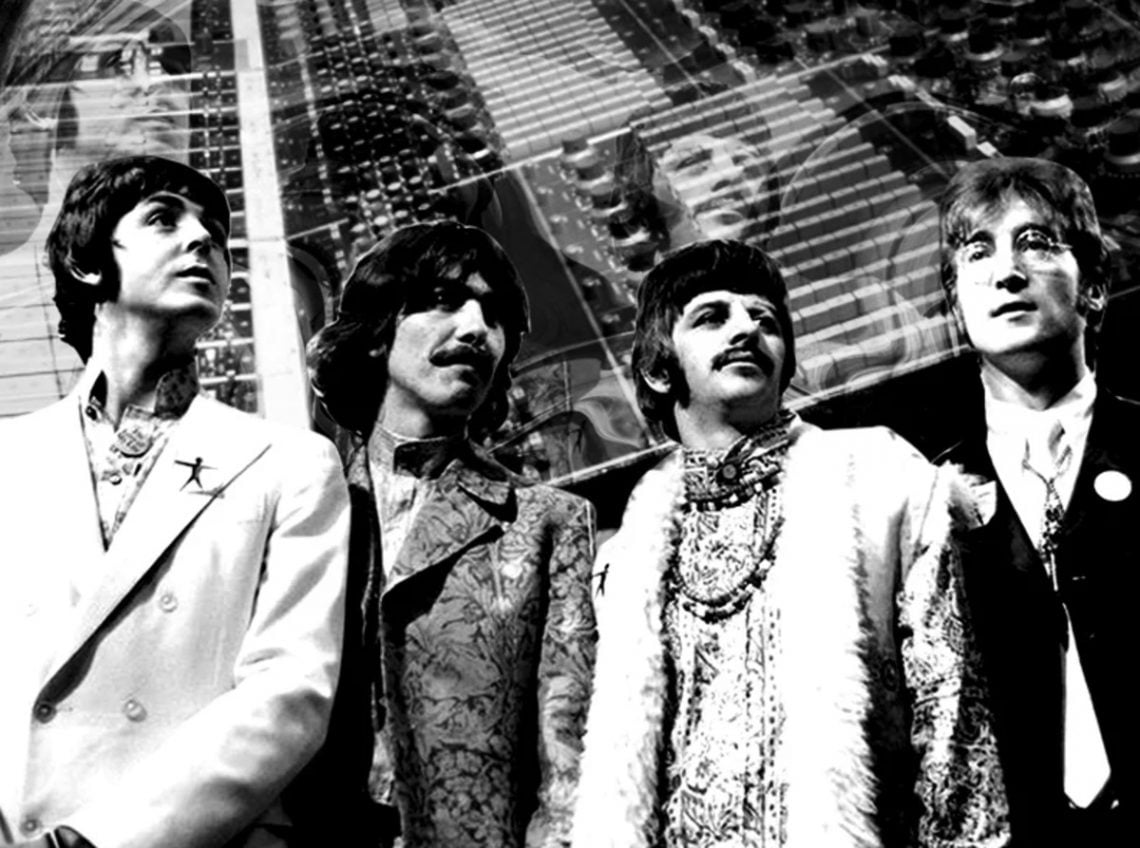
The five creepiest songs by The Beatles

Next to some modern gangster rap, hardcore punk and metal, even the darkest corners of The Beatles’ oeuvre appear suitable for child consumption. However, as the Fab Four rose to an increasing level of public awareness in the 1960s, they began to encounter a significant degree of controversy and censorship.
As we all know, the ’60s were a time of meteoric cultural upheaval as post-war gloom dispersed and economies grew. The baby boomer generation began to mature into adulthood at this juncture, and their changing attitudes up-ended the neck hairs of parents across the west. This attitude is most easily visualised with a look at ’60s hippie culture; in with the colour, psychedelic drugs and free love and out with war, racism and materialism.
Of course, The Beatles didn’t start the hippie movement, but they were undoubtedly among the key guiding forces of the counterculture. The youth of the western world was losing religion and now putting a god-like status on musicians like The Beatles and The Rolling Stones. At the time, this change worried the more conservative people in society, especially when it was discovered that the cheeky mop tops from Liverpool had started taking LSD and writing crackpot lyrics about marmalade skies and claiming to be walruses.
The controversial references to sex, drugs and politics in the Beatles’ later albums were no stranger to censorship, with the BBC banning six songs overall. However, several distinctly creepy songs by the playful foursome slipped beneath the radar at the time. This isn’t to say that all of the below should have been banned, but the rife references to misogynistic violence might cause a bigger blip on said radar if released in the modern age.
With some selections more controversial than others, we list the five creepiest songs recorded by The Beatles.
The five creepiest songs by The Beatles:
‘Run For Your Life’ – Rubber Soul
Perhaps the creepiest of all of the Beatles’ lyrics appear in John Lennon’s lyrics in ‘Run For Your Life’. The track was released at the end of Rubber Soul’s second side as if tentatively added to the roster. Lennon was known for having a sinful side and was no stranger to bouts of rage and violence.
The lyrics open boldly: “Well, I’d rather see you dead, little girl/Than to be with another man/You better keep your head, little girl/Or I won’t know where I am/You better run for your life if you can, little girl/Hide your head in the sand, little girl/Catch you with another man/That’s the end, little girl”. Fortunately, outside of his lyrics, Lennon never went as far as murdering any of his partners.
‘Maxwell’s Silver Hammer’ – Abbey Road
If some of the other Beatles tracks hint at violence, ‘Maxwell’s Silver Hammer’, McCartney’s stain on the shiny white suit that is Abbey Road, comes with a lethal blow to the head. The song tells the story of a student, Maxwell, who murders his fellow student, Joan. Lennon famously declared, “I hate it” during an interview, while it gives Ringo Starr flashbacks to “the worst session ever”.
McCartney’s lyrics read: “Maxwell Edison majoring in medicine/Calls her on the phone/’ Can I take you out to the pictures, Joan?’/But as she’s getting ready to go/A knock comes on the door/Bang, bang, Maxwell’s silver hammer/Came down upon her head/Bang, bang, Maxwell’s silver hammer/Made sure that she was dead”.
‘You Like Me Too Much’ – Help!
When The Beatles released Help! in 1965, Lennon and McCartney allowed George Harrison two slots to fill. On the first side came the ‘I Need You’, a judicious yet needy track. The creepometer needle begins to twitch on side two with Harrison’s second track on the album as he makes a mild notch on the bedpost of domestic abuse.
“You’ll never leave me and you know it’s true/‘Cos you like me too much, and I like you/And it’s nice when you believe me/If you leave me/I will follow you and bring you back where you belong,” the lyrics read. While not as explicit as ‘Run For Your Life’, these are words one could expect to hear from the Patrick Batemans among us.
‘Getting Better’ – Sgt. Pepper’s Lonely Hearts Club Band
This psych-era hit is so full of colour and hope that Smash Mouth’s cover made the cut for The Cat in the Hat soundtrack in 2003. However, if we disengage from our reverie and give the lyrics a closer look, the Beatles’ offer up another frown-inducing dose of domestic violence. For this classic track, McCartney took on most of the songwriting with a little help from Lennon here and there.
“I used to be cruel to my woman/I beat her and kept her apart from the things that she loved/Man, I was mean but I’m changing my scene/And I’m doing the best that I can,” McCartney’s protagonist sings with meagre attempt at remorse.
‘Norwegian Wood (This Bird Has Flown)’ – Rubber Soul
This Rubber Soul classic famously stuck in the craw of Bob Dylan, who accused primary songwriter John Lennon of copying his style. In response, the American singer-songwriter reprimanded the Beatle in his Blonde on Blonde track ‘Fourth Time Around’. However, some shrewd observers might also have taken issue with the menacing implications of the final verse: “And when I awoke I was alone/This bird had flown/So I lit a fire/Isn’t it good Norwegian wood?”
McCartney revealed the true meaning behind this cryptic ending in Barry Miles’ biography Paul McCartney: Many Years from Now. “In our world the guy had to have some sort of revenge,” he said of the protagonist. “It could have meant I lit a fire to keep myself warm, and wasn’t the decor of her house wonderful? But it didn’t; it meant I burned the fucking place down as revenge, and then we left it there and went into the instrumental.”

Never Miss A Beat
The Far Out Beatles Newsletter
All the latest stories about The Beatles from the independent voice of culture.
Straight to your inbox.