


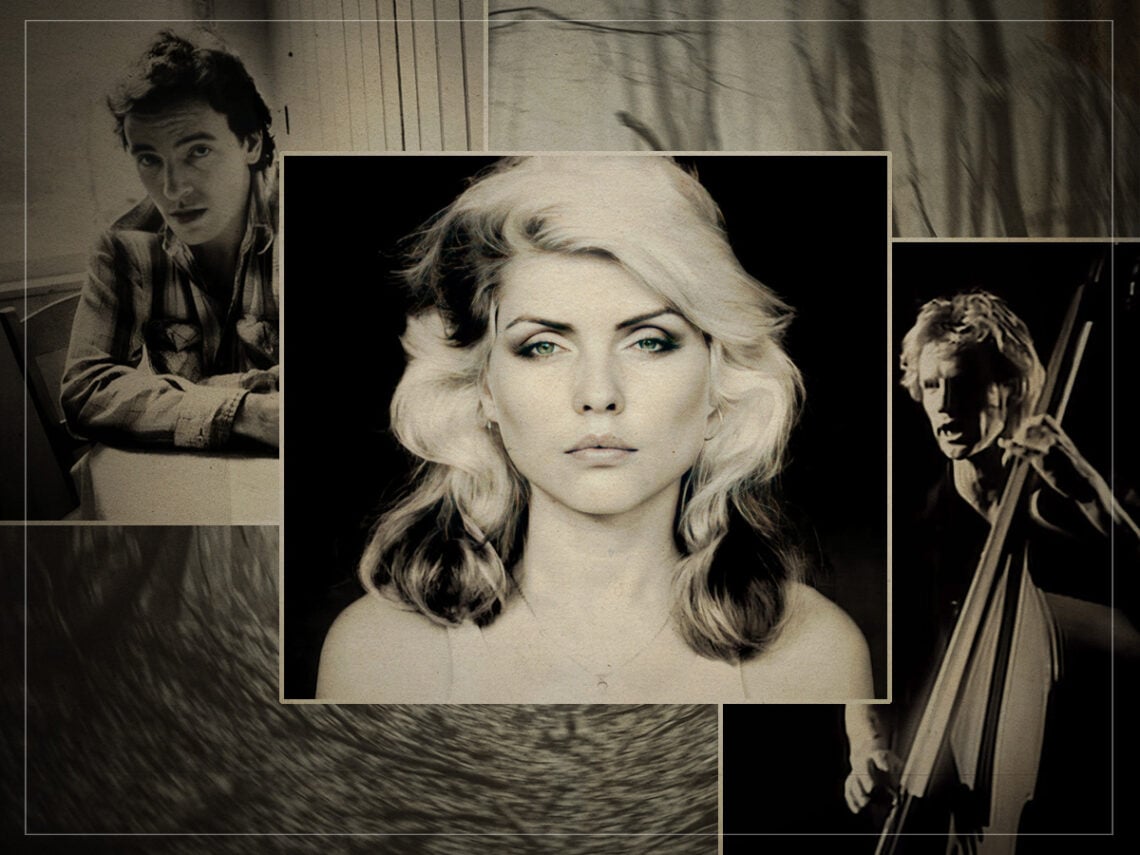
Sweet little creeps: Five classic love songs that would fail the psychopath test

Smut. The charts are full of it. The whole place is a cesspit of delinquency. Or at least that’s how it might seem to a stuffy conservative on the surface. But in truth, that’s simply not the case… the world of art is far smuttier than they could ever begin to imagine—there are reams of songs that they listen to without ever digging deep enough to realise that what lingers beneath the church-friendly veneer is a hell-fire of perturbing subtlety.
As it happens, this is also one of the key artistic triumphs that define our age. If Bob Dylan brought a new sense of irony to lyric writing, a lot of other acts took his double meanings and skewed them in weird new ways. And by weird ways, I mean that often the intent doesn’t shine through—it’s obfuscated on purpose. Whether it is an irony that many of us have missed or a dark backstory twisted by an otherwise pretty melody, many famous love songs are hiding secrets.
This became an art in itself in the modern age. Music was no longer just a pretty sound on a crackling radio; a new mystic sense of depth offered an allure. There are thousands of love songs out there, but can you spot the ones penned by stalkers? Can you decipher the one rogue lyric that twists a tale on its head – that became the game and the goal of many songs? Songwriters sought out masks to
So, from a Bruce Springsteen song that could be sung from the perspective of a serial killer to a lullaby we’ve been getting all wrong, these are the tracks that you never even knew were secretly creepy, cracked or decidedly controversial. But first, what are the traits we’re testing them against?
Although estimates vary wildly, the most accepted figure put forward by Oxford University states that 1% of the Western populace are psychopaths. Contrary to the blood guts and mayhem of deranged nutjobs in slasher movies, real-life psychopathy sports a much more multifaceted front. The standard notion of measuring psychopathy is a checklist of twenty categories first devised by legendary psychologist Dr Robert D Hare.
You can see the list of points that Dr Hare drummed up as indicators of psychopathy below:
- Glib and superficial charm.
- Grandiose (exaggeratedly high) estimation of self.
- Need for stimulation.
- Pathological lying.
- Cunning and manipulativeness.
- Lack of remorse or guilt.
- Shallow affect (superficial emotional responsiveness).
- Callousness and lack of empathy.
- Parasitic lifestyle.
- Poor behavioural controls.
- Sexual promiscuity.
- Early behaviour problems.
- Lack of realistic long-term goals.
- Impulsivity.
- Irresponsibility.
- Failure to accept responsibility for own actions.
- Many short-term marital relationships.
- Juvenile delinquency.
- Revocation of conditional release.
- Criminal versatility.
So, which songs fall foul of a few of those faults?
Five classic love songs that are actually incredibly creepy:
‘That’s How I Got to Memphis’ – Tom T Hall

“If you love somebody enough
You’ll follow wherever they go”
It’s an opening lyric that sounds like the ultimate act of devotion from the man’s perspective, but for his ex-partner, it is an incredibly chilling declaration that wherever she flees, he follows. The soft, beautiful crooning and remarkably melodious music might set the scene out in a sanguine manner, but that only makes it even more perturbing—the stalker is blinded by self-righteousness and has no handle on his disturbing ways, atypical of the amoral, self-serving psychopath in our midst.
Over the years, Hall hasn’t even commented on the narrator’s mindset, which might be the creepiest fact of all: in 1970, nobody considered that travelling for days in hot pursuit of someone who has left you might be problematic. In fact, in the years that have followed, the song has become a country standard, with glaring lines like, “She would get mad, and she used to say, that she’d come back to Memphis someday” have been passed off as nothing shy of romantic.
‘Every Breath You Take’ – The Police

“Every breath you take, and every move you make,
every bond you break, every step you take,
I’ll be watching you”
If you imagine the lyrics above without the musical accompaniment read by Liam Neeson in some gruff and gritty thriller, then the true intention of the song is immediately apparent. Sting wrote the song in a paranoid state during a period when he suspected his wife might have been having an affair. Clear hints spring to the fore with lines like, “Every smile you fake,” but overall, the message seemed to be masked for some as they were blinded by the sound of chiming reggae guitars.
This is a sign of how melody can twist our psychology. In truth, I could’ve plucked any single lyric from the song, and you’d agree that it sounds creepy enough to call the real police over if the context of a love song is stripped away. In fact, Sting likened his state of paranoia to that of “Big Brother” in George Orwell’s 1984 and the notion of “surveillance and control”. This sense of aggrandising the simple drift of love is another bombastic trait of psychopathy. The sinister monomania is as clear as day in the track. But we’re so conditioned to expect love songs in the charts that spotting a rogue divorcee in the midst simply passes us by.
‘I’m On Fire’ – Bruce Springsteen

“Hey, little girl, is your daddy home?
Did he go and leave you all alone?
Ooh, I’ve got a bad desire”
It’s never been doubted that there’s a hell of a lot of lust in ‘I’m On Fire’, which is rendered creepy whichever way you cut alongside the use of the word “daddy”, but I’d go a step further and wager that this is actually a song written from the perspective of a psychopath. Around the time that the song was written in the early 1980s, psychopath studies were becoming increasingly scientific as Robert D Hare honed his studies for societal usage. One of the elements that was revealed is that bed-wetting was a key trait of psychopaths.
So, while it might typically be assumed that Bruce Springsteen is crooning about cold sweats when he sings, “At night, I wake up with the sheets soaking wet,” when tied to the constant use of “knife”, “cut”, “skull” and “bad desire”, you’re left with a far darker picture than mere lust. It seems the singer knows all too well that the “little girl” is home alone, and he’s picked her out from afar as the only person who can “cool [his] desire”.
‘One Way Or Another’ – Blondie

“One way, or another, I’m gonna find ya
I’m gonna get ya, get ya, get ya, get ya”
The psychologist Albert Ellis once said, “the art of love is largely the art of persistence.” There is a grain of truth to that when it comes to due upkeep and maintenance, to use two terribly unromantic words, but there is also a dark flipside when persistence is misguided and reprehensibly one-sided. That was the case when it comes to the tragic story that Blondie masks with the upbeat melody to ‘One Way or Another’.
Debbie Harry actually wrote the lyrics from the perspective of an ex-boyfriend who stalked her. Thus, the poppy turn that Blondie twisted it with is almost a postmodern technique to capture the warped mind of an unreliable narrator—the repetitive modulation of the song representative of the way he would grow bored and then redouble his dubious efforts. But if you’re on the receiving end of the song, it’s harrowing, as Harry explains, “I was actually stalked by a nutjob, so it came out of a not-so-friendly personal event. I tried to inject a little levity into it to make it more lighthearted. It was a survival mechanism.”
‘You Are My Sunshine’ – Johnny Cash

“I dreamed I held you,
In my arms”
‘You Are My Sunshine’ is a melody that has whisked millions of kids to sleep. Its lilting lullaby tones are as sweet as caramelised strawberries, but in Johnny Cash’s version, the sweetness comes from a place of utter desperation. His sunshine has departed to the extent of an Alaskan December, and he is beyond the point of pure dejection—regressing to a sense of childlike hopelessness. So, while psychopathy might not be entirely apt here, he is certainly in the middle of mental episode.
Further verses beyond the ones you whisper to your little one end with lines like “You have shattered all of my dreams” and “You’ll regret it all some day.” The fact that a song so utterly depressing and deeply problematic has been extrapolated by society at large to represent soothing paternal love is a cultural oddity that always seems to occur with nursery rhymes.
