


From Luis Buñuel to Alfred Hitchcock: Five brilliant movies set in a single room

Modern cinema is, more often than not, a pretty maximalist affair. Now, I’m in no way opposed to seeing CGI cave trolls battling elvish warriors or spacecraft shooting into hyperspace, but sometimes less is more. Sometimes you need something really minimal to remind you that cinema’s central purpose is to tell a good story. From Luis Buñuel to Alfred Hitchcock, these five films are about as minimalist as it gets.
So, why do single-location films work so well? The best stories are driven by character. As Netflix demonstrates time and time again, no amount of visual splendour can disguise a crappy script with two-dimensional characters. Sadly, a lot of directors feed into the philosophy that, while you can’t polish a turd, you can hire a big-budget VFX team to make it look like it was squeezed out by a unicorn, on a mountain, in the snow.
Directors undertaking a film set in just one location are forced to devise new and interesting ways to create meaningful dramatic tension. Often, this means throwing groups of complex characters into a room and seeing how they interact with one another. Other times, characters must deal with revelations that alter their whole worldview. More often than not, it ends up being pretty damn riveting.
Five brilliant movies set in a single room:
The Exterminating Angel – Luis Buñuel (1962)
Buñuel’s most captivating drama centres on a simple premise: a group of friends attends a lavish dinner party and are unable to leave. After the meal, they retire to the salon for an evening of music and chit-chat. By morning, they can’t quite seem to bring themselves to exit.
As the food begins to run out, panic sets in. Despite the efforts of the army and the police to enter the house, they cannot stop the group’s gradual descent into depravity. In this daring piece of filmmaking, Buñuel peels away layers of bourgeoisie pretence to reveal something stark and unnerving: within us all, there is something animalistic itching to get out.
My Dinner With Andre – Louise Malle (1981)
If everyone had judged this 1981 film by Louise Malle on its premise alone, It would probably have remained unwatched. Today, it remains one of the most captivating philosophical explorations of human life in modern cinema.
In My Dinner With Andre, we join playwright Wallace Shawn and his theatremaker friend André Gregory at a restaurant on New York’s Upper West Side, where they begin a long and confessional conversation covering everything from love and money to death and superstition. A lot of people are off by the idea of watching two cosmopolitan intellectuals conversing for an hour and a half, but My Dinner With Andre is so charming that you’ll quickly find yourself glued to the screen.
12 Angry Men – Sidney Lumet (1957)
This pioneering courtroom drama by Sidney Lumet is perhaps the most famous example of a film set in a single location. A snapshot of a nation on the cusp of change, 12 Angry Men was originally a teleplay. Lumet was sensible enough to keep Reginald Rose’s one-room setting, having understood how essential it was to the tension at the heart of the script.
In Lumet’s behind-the-curtain look at the American legal system, we are introduced to 12 jury members deliberating over the fate of an inner-city teenager accused of murder. Stuck in a small room on a sweltering Summer afternoon, they try to come to a unanimous verdict. But, soon, personal issues and interpersonal conflicts begin to interfere with the process.
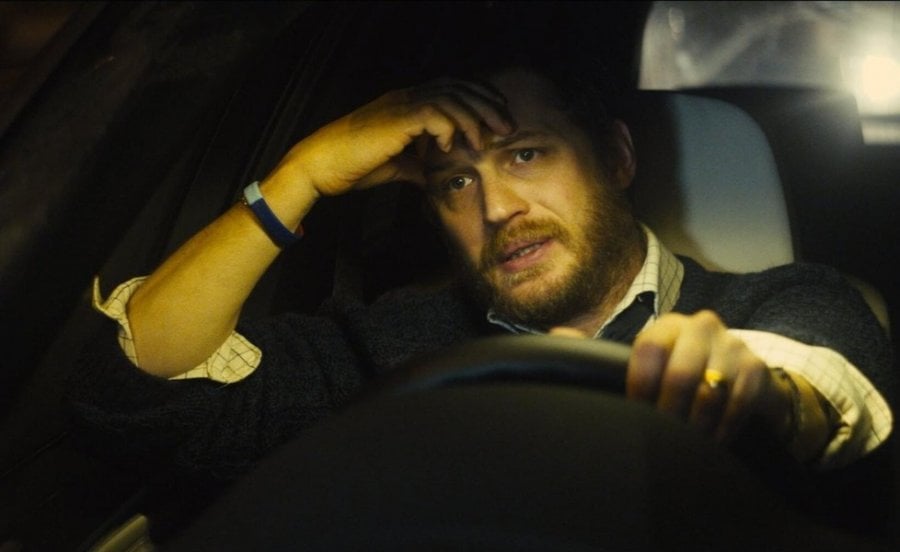
Locke – Stephen Knight (2014)
Based on an original screenplay by director Steven Knight, this 2014 gem follows Ivan Locke – played brilliantly by Tom Hardy – as he drives from Birmingham to London to be present for the birth of his illegitimate child.
On the way, he receives endless phone calls from his wife and colleagues, setting off a chain reaction that threatens to destroy everything. It might sound dangerously repetitive, but Knight’s minimalistic approach to drama proves utterly engrossing.
Rope – Alfred Hitchcock (1948)
Like Rear Window, Rope takes place in a single apartment. In this case, it’s the property of two young men who regard murder as an art form. In an effort to demonstrate their dark, Nietzschean philosophy, they decide to strangle a former classmate and conceal the body in an old chest. Convinced that their superior intelligence will keep them safe, they then throw a party for the victim’s friends and family – serving food on the chest in which he is buried.
Rope was one of Hitchcock’s early experiments in long takes. He wanted the entire film to be a single, continuous shot. Unfortunately, technological limitations made this impossible, and he was forced to disguise his cuts. Still, the long shots really emphasise the spatial tension at the core of this incredibly tense 1948 thriller.
