


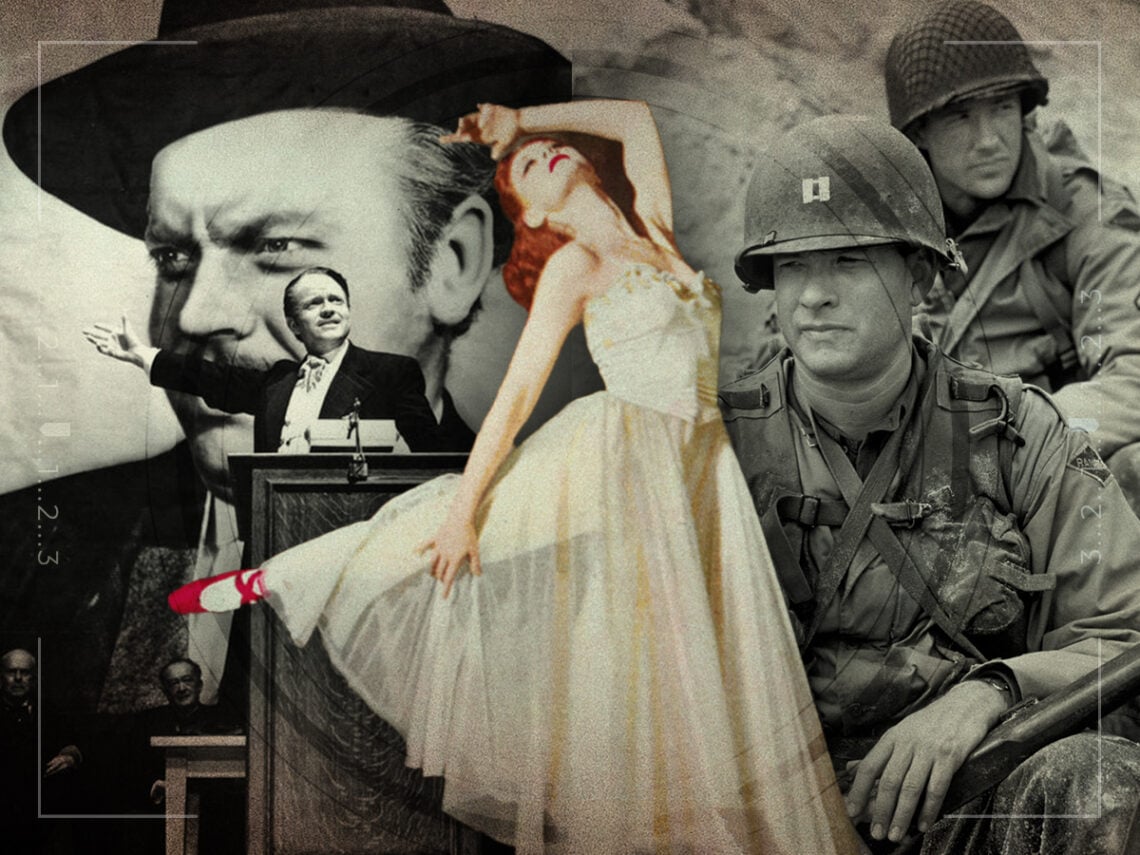
The five biggest daylight robberies in Oscars ‘Best Picture’ history

It would be inaccurate to say that the Oscars get it wrong most of the time, but there is no denying that they get it wrong extremely often. This makes it pretty challenging to narrow down the worst robberies in the history of the Academy Awards because you could make a pretty robust list for every individual year.
The elephant in the room is that some of the worst Oscars snubs in history are the movies that don’t even get nominated. Jeanne Dielman, 23 quai du Commerce, 1080 Bruxelles wasn’t even close to the Oscars race. Don’t Look Now, In the Mood for Love, Portrait of a Lady on Fire, and The Seventh Seal are some of the greatest films ever made, and yet, none of them earned a single Oscar nomination.
To avoid getting into the weeds, we’re narrowing our focus to movies that fit two criteria. The first is that they were all nominated for ‘Best Picture’, and the second is that there was a clear movie that should have won but didn’t. There have been plenty of years in which a mediocre film has won, but the competition didn’t offer any obvious alternative. In 1995, for example, Braveheart beat Apollo 13, Babe, Il Postino, and Sense and Sensibility. All of those would have been more deserving of the award, but none of them were the one and only obvious alternative.
The snubs that make this list are, by necessity, downright egregious. They are so awful that they outdo the year that Going My Way beat Double Indemnity and the year Driving Miss Daisy beat, well, anything at all. Sometimes, the Academy gets things laughably wrong, and we would be remiss to forget it.
The five biggest Oscars robberies:
1941: ‘How Green Was My Valley’ beats ‘Citizen Kane’

Starting off with a doozy, the Academy once snubbed the most revered film of all time. Citizen Kane is the entry-level cinematic masterpiece. It’s become so synonymous with greatness that you don’t have to be a film nerd to roll your eyes at the Academy for getting this one so terribly, terribly wrong. Orson Welles was just a sweet child of 25 when he directed and starred in the thinly-veiled biopic of media mogul William Randolph Hearst. His use of a nonlinear narrative structure, deep-focus lensing, and creative camera angles set the template for expressive cinema for the foreseeable future, and he’s been hailed as one of the greatest directors of all time ever since.
Instead of handing the statuette to the person who deserved it, the Academy handed it to one of Welles’s heroes. John Ford’s How Green Was My Valley is a sweeping family saga about a Welsh mining town. There’s nothing wrong with it, but, as the saying goes, it’s not Citizen Kane. Ford himself was no stranger to snubs. As an inspiration for everyone from Welles and Akira Kurosawa to Martin Scorsese, he somehow lost the ‘Best Picture’ award for his greatest films (Stagecoach, The Searchers, and The Man Who Shot Liberty Valance) and won for what was one of his most forgettable.
1948: ‘Hamlet’ beats ‘The Red Shoes’

At least they nominated The Red Shoes. Until the 1940s, the Oscars acted as if cinema outside Hollywood didn’t exist, which left an entire world of cinematic excellence off the ballot. Still, there’s really no excuse for giving the award to the wrong British picture if you’re going to go to the trouble of nominating more than one.
Michael Powell and Emeric Pressburger’s sumptuously dark fairytale about a ballerina who is forced to choose artistic ambition over romance has captivated audiences for decades and inspired people like Martin Scorsese, Francis Ford Coppola, and Steven Spielberg to become filmmakers. It is the definition of cinema, blending hypnotic visuals with superb performances and music.
Instead, the Academy threw away the Oscar to Hamlet, which is exactly what you’d get if you asked an American in 1948 to describe what they thought a British movie would look like. Starring, directed by, and adapted by Sir Laurence Olivier, who, at 40, took it upon himself to play the teenager of the title, Hamlet is aggressively plummy and overstuffed. Think lots of tights and synthetic facial hair. It has gotten worse with age, but there is still no justification for voters in the late ‘40s to deem it better than The Red Shoes, a film that, if anything, has gotten better with age.
1998: <strong>‘Shakespeare in Love’ beats ‘Saving Private Ryan’</strong>

Stealing Oscars is the least of Harvey Weinstein’s crimes, but there’s no denying his brazenness in this arena. In 1998, a charming but slight period romance about how hot Shakespeare was swept the Oscars, beating two war movies, a Holocaust comedy-drama, and a serious biopic of Queen Elizabeth I.
Weinstein tended to bully his way into getting what he wanted, and he desperately wanted little gold men. Shakespeare in Love took home seven of them by the end of the evening, including ‘Best Picture,’ ‘Best Actress’ for Gwyneth Paltrow, and ‘Best Supporting Actress’ for Judi Dench. That last one was pretty galling (no offence to Dame Judi) because she won it for playing Queen Elizabeth I for eight measly minutes. Meanwhile, Cate Blanchett, who was nominated for ‘Best Actress’ for an entire film’s worth of Elizabeth-ing, got zilch.
The real gut punch, though, was the fact that Shakespeare in Love won the top prize over Saving Private Ryan, a film widely considered to be one of the greatest of the ‘90s. Sometimes, Oscars upsets help keep things fresh and exciting. Other times, they delegitimise the whole thing.
2005: ‘Crash’ beats ‘Brokeback Mountain’

Some Oscars snubs only become shocking with time. The fact that Citizen Kane lost ‘Best Picture’ wasn’t particularly scandalous in 1942 because no one thought it was destined to be hailed as the single greatest film ever made. But when it comes to the 78th Academy Awards, people knew in real time that there had been a massive fuck up. When the time came for ‘Best Picture’ to be announced, most people assumed that Ang Lee’s tenderly devastating queer romance Brokeback Mountain would take home the prize, but in the end, it was a ham-fisted attempt at examining race relations in Los Angeles that won the day.
Paul Haggis’s Crash was roundly criticised even before that undeserved Oscar for its shallow depiction of racial harmony. It’s pretty clear that the win had a lot to do with the overwhelming old, straight, and white male voters in the Academy at the time, who probably felt a lot more comfortable watching a movie in which white people quickly fixed racism than a film in which two cowboys fall in love. Whatever the reason, ‘Best Picture’ presenter Jack Nicholson summed up the general feeling in the room when he mouthed one word after announcing that Crash was the winner: “Whoa.”
2018: ‘Green Book’ beats ‘Roma’

The Academy has an absolutely shameful, multifaceted history of racism. When Hattie McDaniel made history by winning ‘Best Supporting Actress’ for Gone with the Wind, she was forced to sit at a small table in the back of the room because the hotel where the ceremony was held was segregated. In the decades that have followed, nearly every acting and directing Oscar has gone to white actors and filmmakers, even as the Academy tries to diversify its voting body.
Despite (or because of) that sordid history, the Academy has been eager to shower awards on movies that take a decidedly simplistic view of race relations, whether it’s A Patch of Blue, Driving Miss Daisy, Crash, and, in 2019, Green Book. Dubbed ‘Miss Daisy Driving’ by some of its critics, it follows a bigoted chauffeur in the 1960s (Viggo Mortensen) who is hired to drive a Black concert pianist (Mahershala Ali) through the South. Told largely as a tale of white redemption and saviorhood, it hit all the wrong notes, but still took home the gold.
Alfonso Cuarón’s black-and-white drama about an indigenous Mexican housekeeper who works for a wealthy Mexican family was heavily tipped to win. In retrospect, many pundits blamed its loss on Hollywood’s backlash against Netflix, which had distributed the film, but that still doesn’t explain why Green Book won when alternatives like Yorgos Lanthimos’s The Favourite and Spike Lee’s BlacKkKlansman were also nominated and more deserving.
