


The five best and five worst Hipgnosis album designs

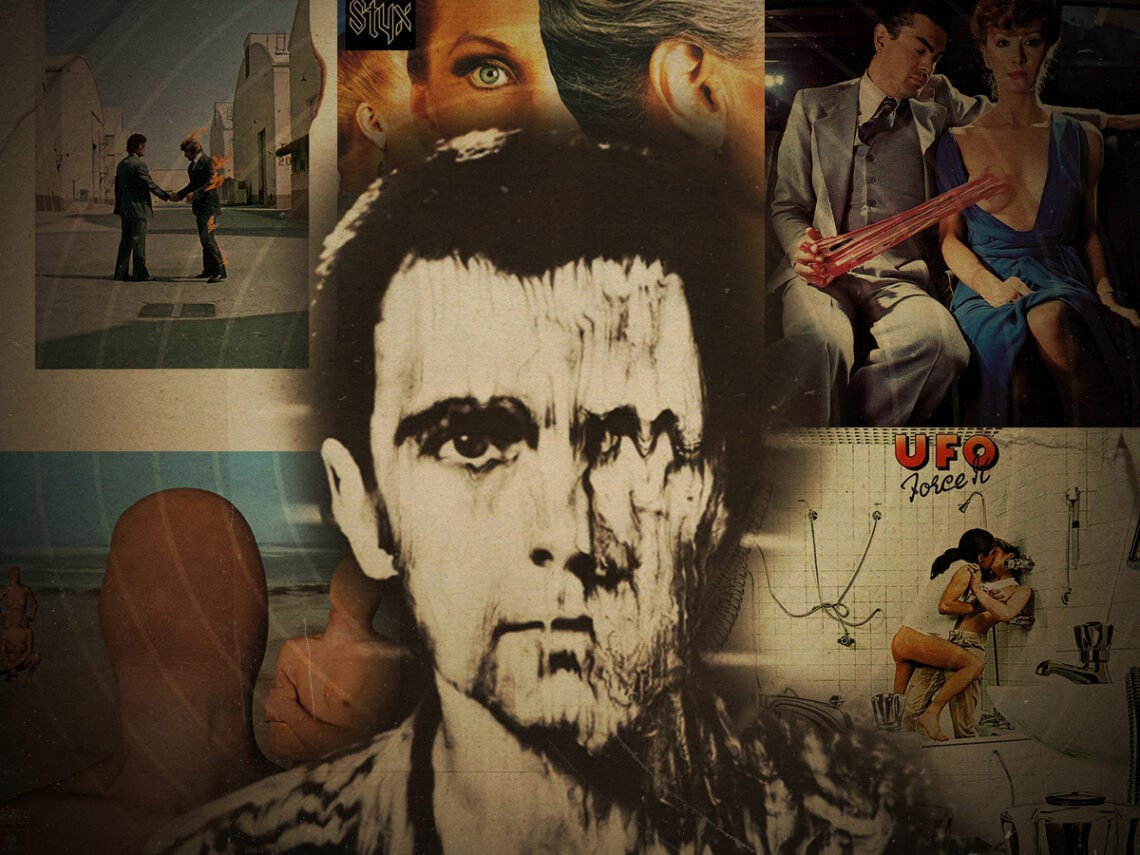
For the first time in rock and pop, music’s arts department found its first real star with the litany of iconic covers dreamed up by the UK’s Hipgnosis art collective.
From Pink Floyd to Led Zeppelin, T Rex to Hawkwind, Hipgnosis’ visual stamp across the late 1960s and early 1980s brought an unseen flair to the record sleeve that rock and prog fans soon eyed up among the liner note credits with just as much fervent attention as the band members themselves. At their best, crafting sleek, highly stylised graphics with their meticulous photo touches and detailed collages, or often capture highly orchestrated shots in camera for exotic gravitas.
Art school kids Storm Thorgerson and Aubrey Powell, later to be joined by Peter Christopherson, all elevated the stature of the records that fell on their desk when they felt like it. However, they could just as easily fall victim to their own schoolboy humour, pretentious misfires, and lapses into gaudy horror to counter their hollow heights with the stale relics of classic rock’s worst visual blunders.
It’s all part of the Hipgnosis mythos, even their spectacular flops wrapped in little pieces of rock lore that litter the 1970s’ musicland with its own trail of intriguing rubbish. Supposedly, Hipgnosis operated on a “pay what you think it’s worth” business model, so as it’s impossible to separate the great from the shit in the Hipgnosis legacy, we’ll select ten of the works that either deserved their millions or left the artists seriously considering a payment withhold.
The five best and five worst Hipgnosis album designs:
Good: AC/DC – ‘Dirty Deeds Done Dirt Cheap’
Release Date: November 1976 | Producer: Harry Vanda and George Young | Label: Atlantic
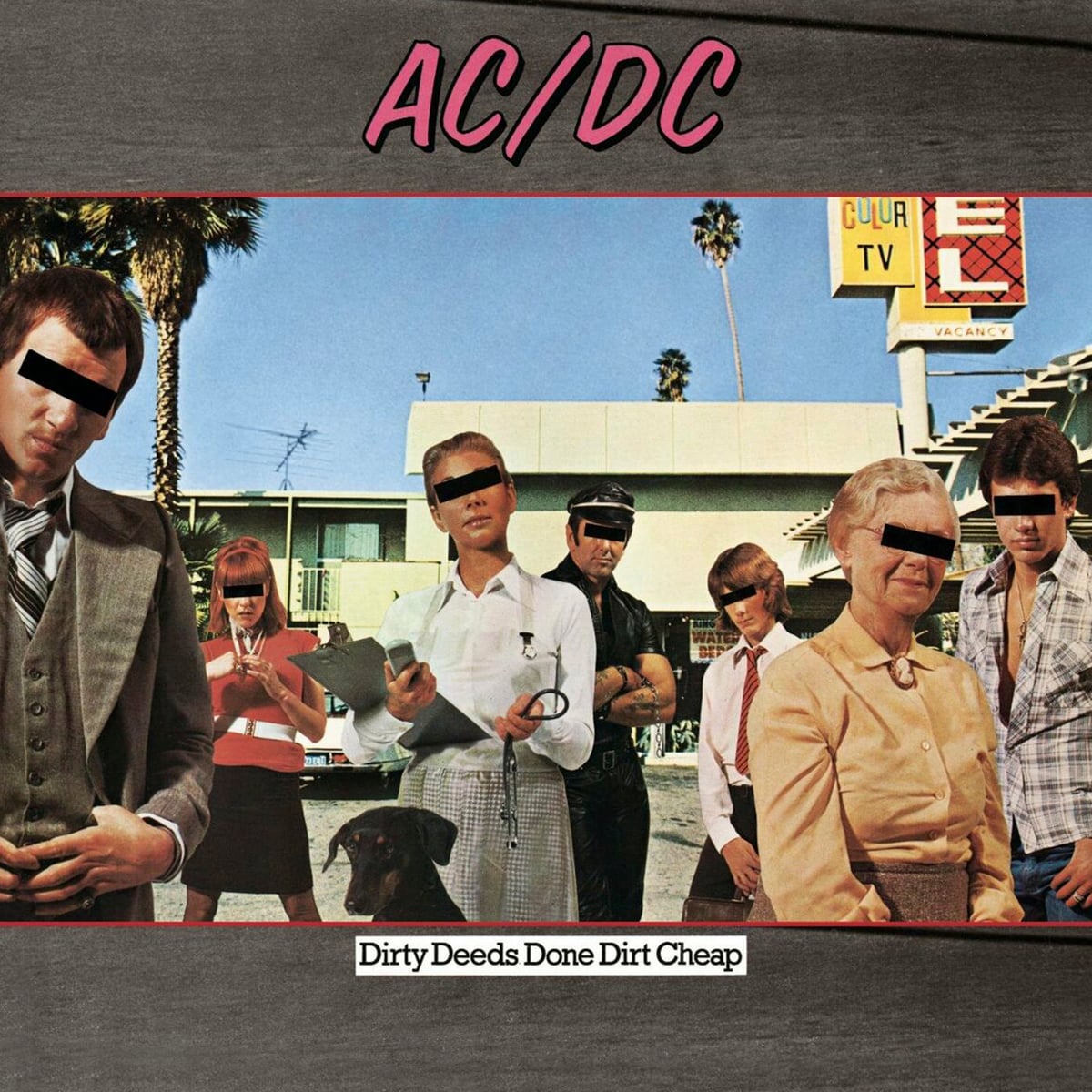
While hard rock heroes back home in Melbourne, Oz’s AC/DC were yet to reach the behemoth levels of fame they’d seize by the end of the 1970s. It took the Hipgnosis team to raise the band’s profile a notch, handling the visuals for their second international LP, Dirty Deeds Done Dirt Cheap, the domestic version featuring a cartoon Bon Scott exposing an oversized, tattooed arm ready to take a swing.
The first issue certainly captured AC/DC’s comic energy, but Hipgnosis opted for a slyer aesthetic arrest for the Atlantic Records release. Inspired by the National Enquirer’s habit of blacking out their exposé interviewees’ eyes for anonymity, the snap of a Sunset Strip motel was then served as the backdrop for the various models shot by the team for a sharp yet surreal vignette of the US commercial landscape, the spiky collage look perfectly at home with the day’s new wave underground.
Bad: Black Sabbath – ‘Technical Ecstasy’
Release Date: October 1976 | Producer: Black Sabbath | Label: Vertigo
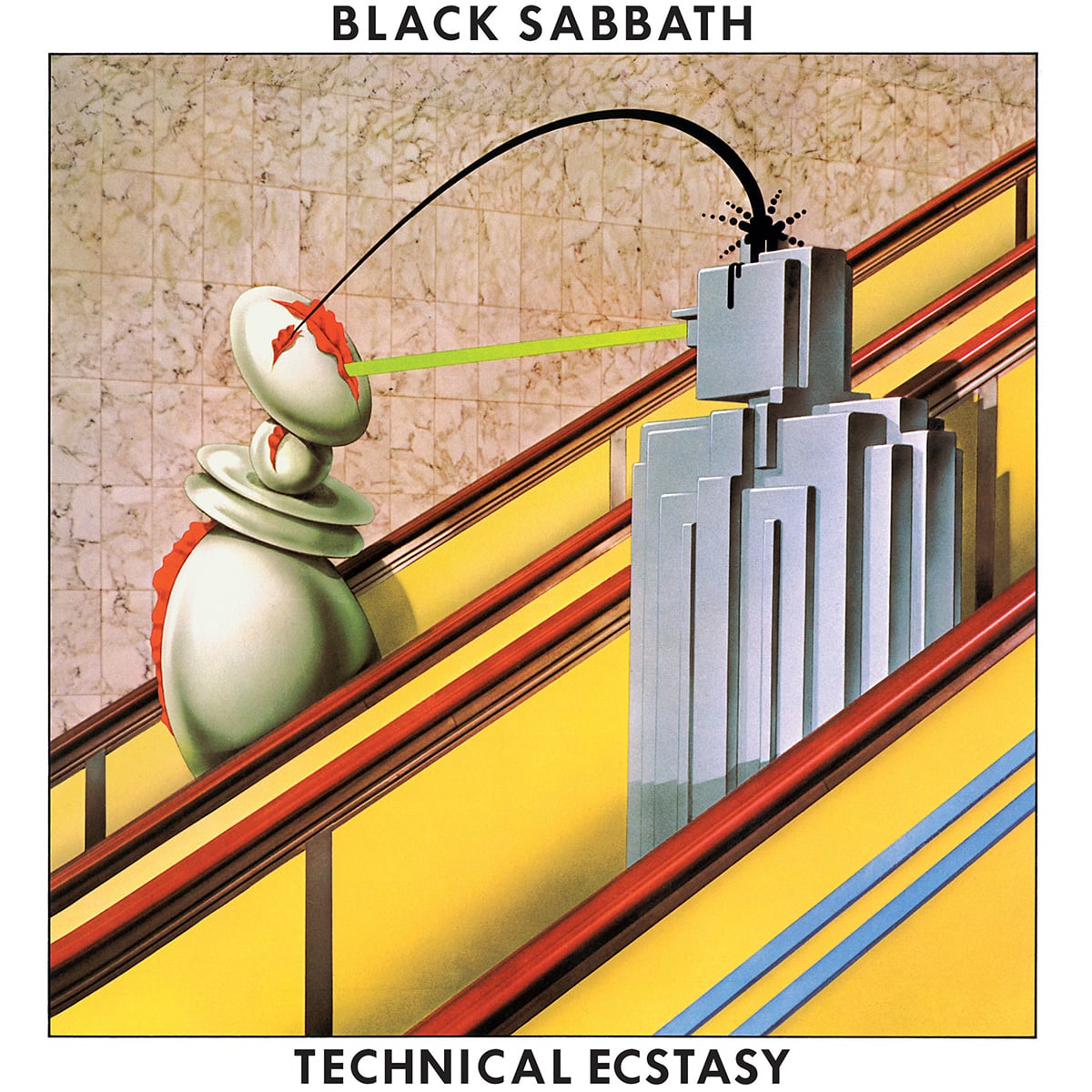
There’s no arguing that the cover illustrates the title, Thorgerson interpreting an act of ‘technical ecstasy’ as the sexual exchange between two machines in an electric, magnetic connection humans can’t comprehend. While such an image could have worked well on some underground, pulp sci-fi paperback, it just doesn’t capture the world’s premier heavy metal band.
It’s Black Sabbath for God’s sake! Where’s the occult symbolism, coven shroud, and general demonic summoning befitting the Brummies’ downtuned dungeon attack? To be fair, Black Sabbath were trying to break out of conventions musically, paying attention to punk and even touching on pop balladry with Bill Ward’s ‘It’s Alright’, but Technical Ecstasy’s copulating mechas belong to the record of a very different band – despite boasting a song like ‘Iron Man’ in their canon.
Good: Peter Gabriel – ‘Peter Gabriel’
Release Date: May 1980 | Producer: Steve Lillywhite | Label: Charisma
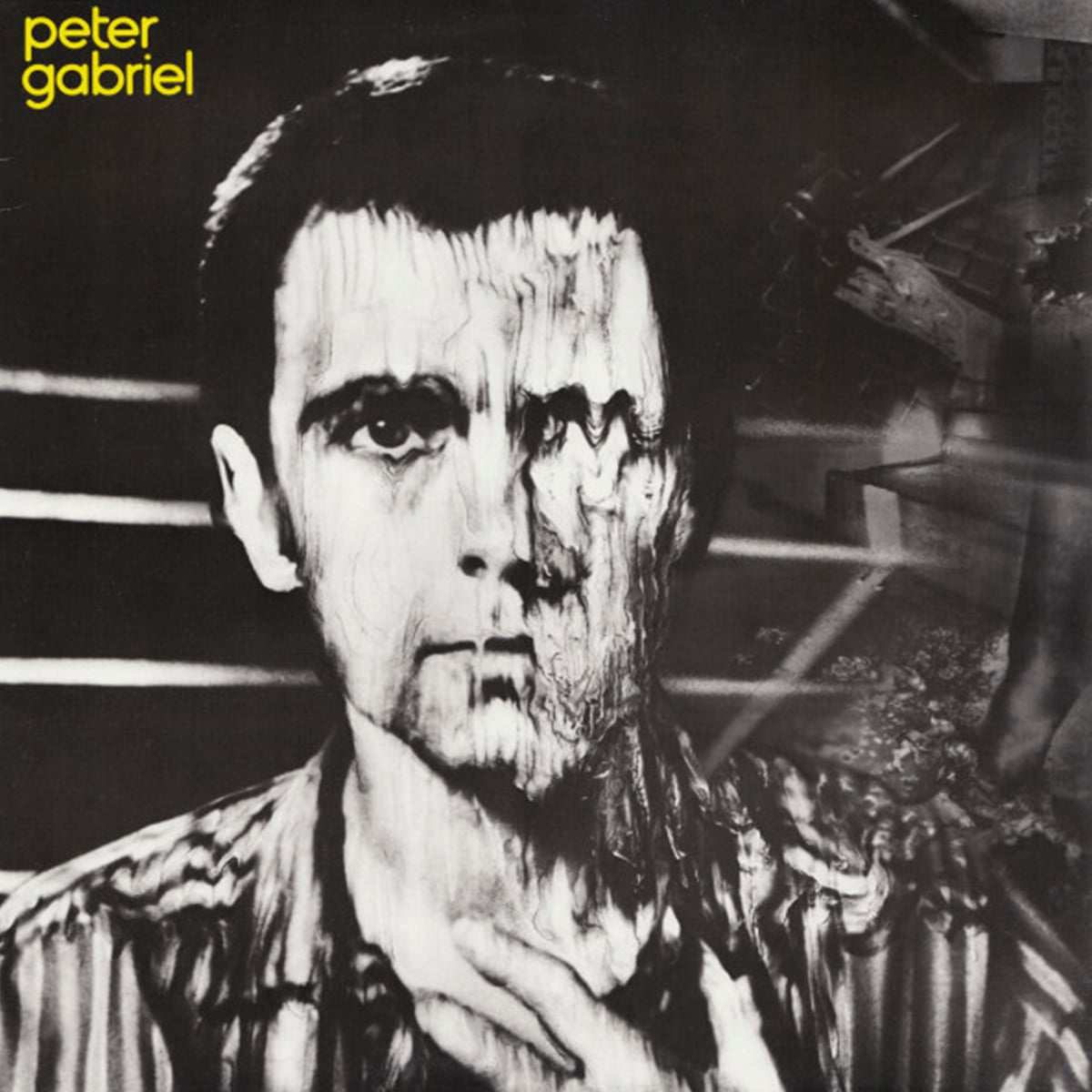
Sometimes, an artful playaround with a photo profile is all you need. For the third of his eponymous solo efforts after leaving Genesis, Peter Gabriel fully embraced himself in the world of sonic sculpt, crafting eerie soundscapes built by the day’s drum machines, synth textures, and very early adoption of the Fairlight CMI to create his innovative pop visions.
Wanting to capture the album’s thick, aural viscosity, Hipgnosis took an instant hardcopy of Gabriel with a Polaroid SX-70 and immediately sought to smear, skew, and generally distort one half of the face to create the gloopy effect, hence the album’s subsequent Melt moniker among fans. Gabriel was keen to get stuck into, perfectly happy to desecrate his Polaroid in any way he could for his 1980 LP’s arresting surrealism.
Bad: Styx – ‘Pieces of Eight’
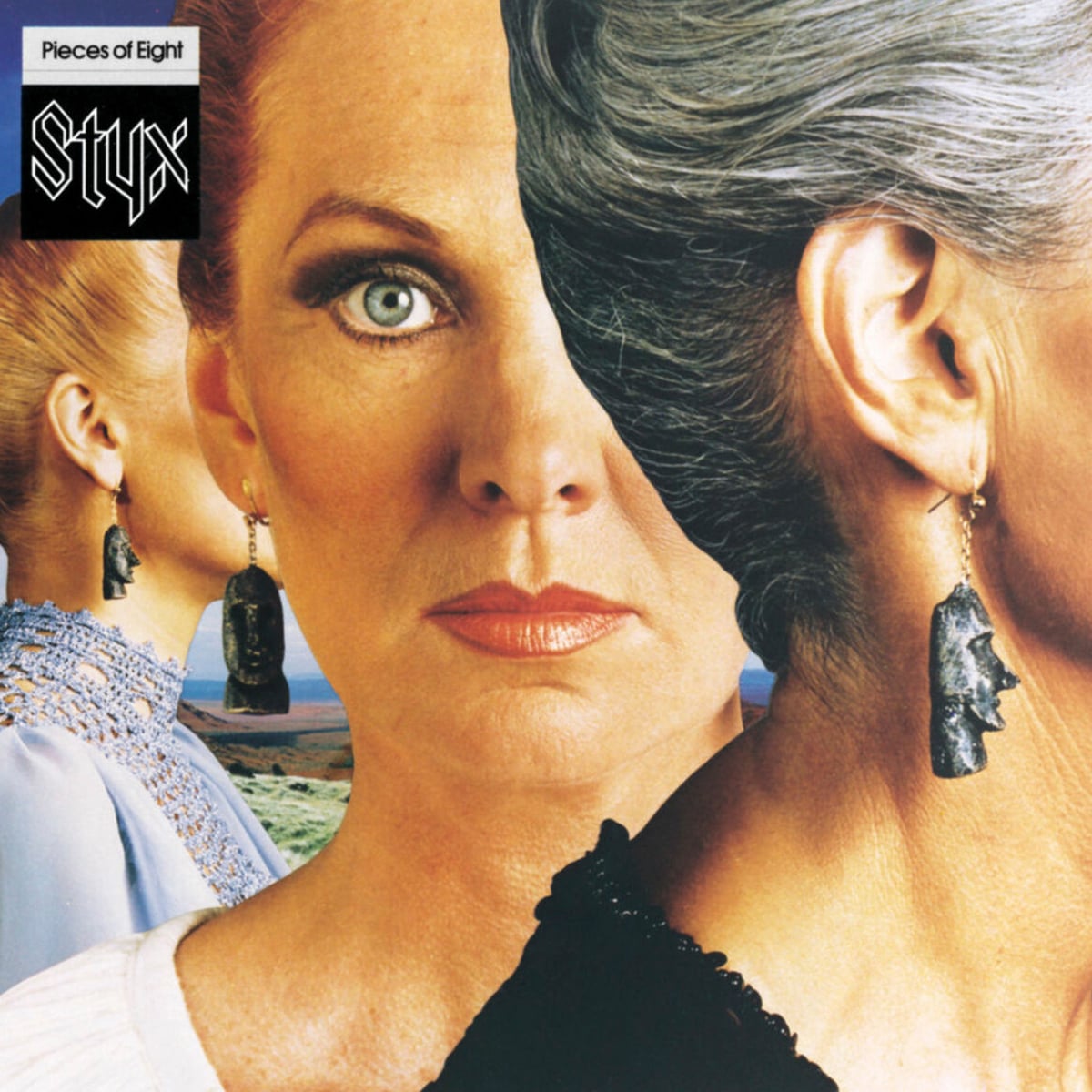
Release Date: September 1978 | Producer: Styx | Label: A&M
Supposedly, Styx’s eighth LP offering was a conceptual spotlight on “not giving up your dreams just for the pursuit of money and material possessions.” Fine, if tame thematic fodder in the progressive rock world of the 1970s. It’s hard to know if Hipgnosis received any kind of memo on Pieces of Eight’s brief, but in either case, the team thought to realise Dennis DeYoung and team’s ephiphanous musings with a kitsch slice of thrift store tat that looks like a shotgun marriage between American Gothic and Mills & Boon.
A middle-aged woman stares head-on at the viewer, her left side obscured by the side profile of another, more silver-haired lady, while a blonde female in the background is obscured by the main subject’s face. None of it seems to make sense or offer the slightest crumb of visual intrigue, let alone bear any connection to the album’s ethos. Supposedly, DeYoung hated the cover when first presented with Pieces of Eight’s uncomfortably gaudy cover, and he was absolutely right.
Good: The Nice – ‘Elegy’
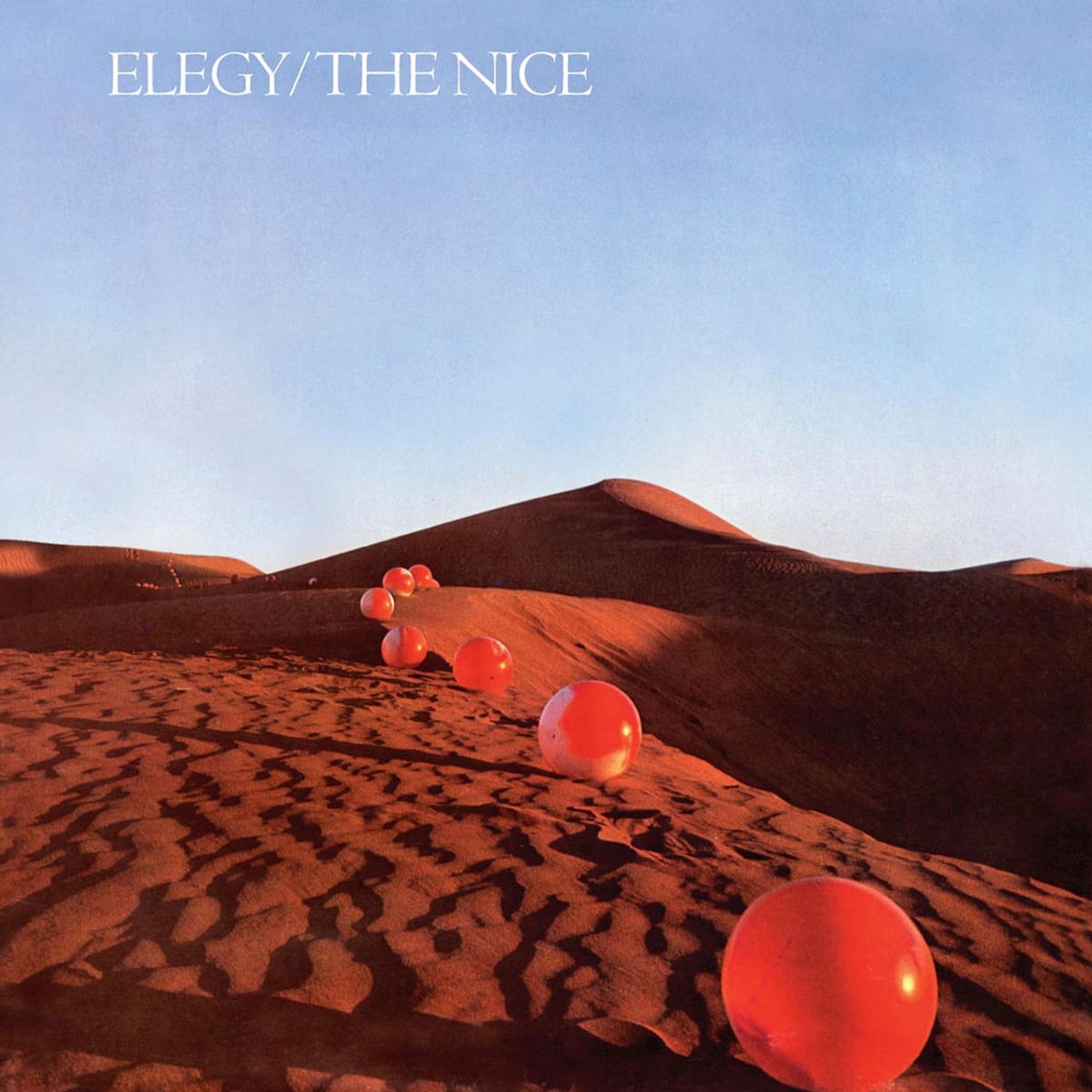
Release Date: April 1971 | Producer: The Nice | Label: Charisma
Alien terrain was Hipgnosis’ speciality. Bottling some of Alejandro Jodorowsky’s psychedelic cinema, Hipgnosis sought to up their game for The Nice’s final LP after their showboating keyboardist, Keith Emerson, had already kicked off his Emerson, Lake & Palmer prog Hydra. Photoshop was a long way off yet, necessitating Thorgerson and Powell’s trek to the Sahara Desert armed with about 40 inflated footballs painted red.
The results were magic. Afforded a clear sky without a cloud in sight, the balls were all arranged to snake in a lengthy row among the sand dunes to create some kind of divine architecture or extraterrestrial technology, radiating with sheer mystique. It’s here where Hipgnosis truly marked their artistic powers, one look at Elegy’s transportive window, whisking the imagination away to some weird and far-flung corner of the universe.
Bad: UFO – ‘Force It’
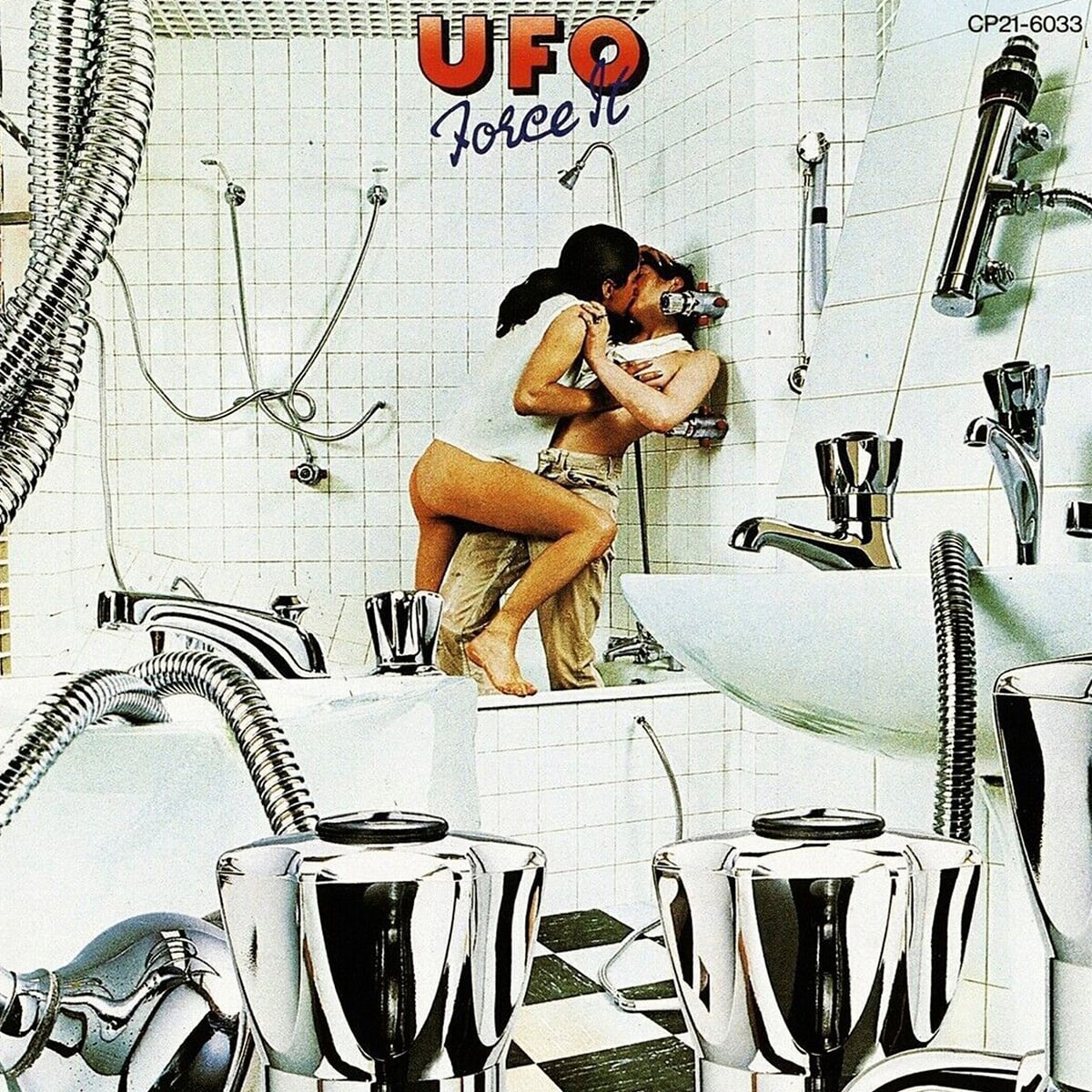
Release Date: July 1975 | Producer: Leo Lyons | Label: Chrysalis
Hipgnosis fans will be aware of the team’s penchant for a good in-joke or visual pun, sometimes at the risk of narking their rock and pop clients. However, while the likes of Capability Brown or Wisbone Ash’s respective Voice and There’s the Rub may trigger a wry eye roll, the entire Hipgnosis must have groaned when having to realise the brief for UFO’s Force It.
Force It, faucet, get it? Throbbing Gristle fans will take note of the heavy metal LP’s cover, for years, the smooching couple was unknown before it was discovered to be Cosey Fanny Tutti and Genesis P-Orridge via the Christopherson connection, but otherwise, UFO’s Force It is just a dull idiom slapped together with a load of bathroom taps and sinks, eagerly chasing its own satisfied titter at the expense of any kind of rock immortality.
Good: Led Zeppelin – ‘Houses of the Holy’
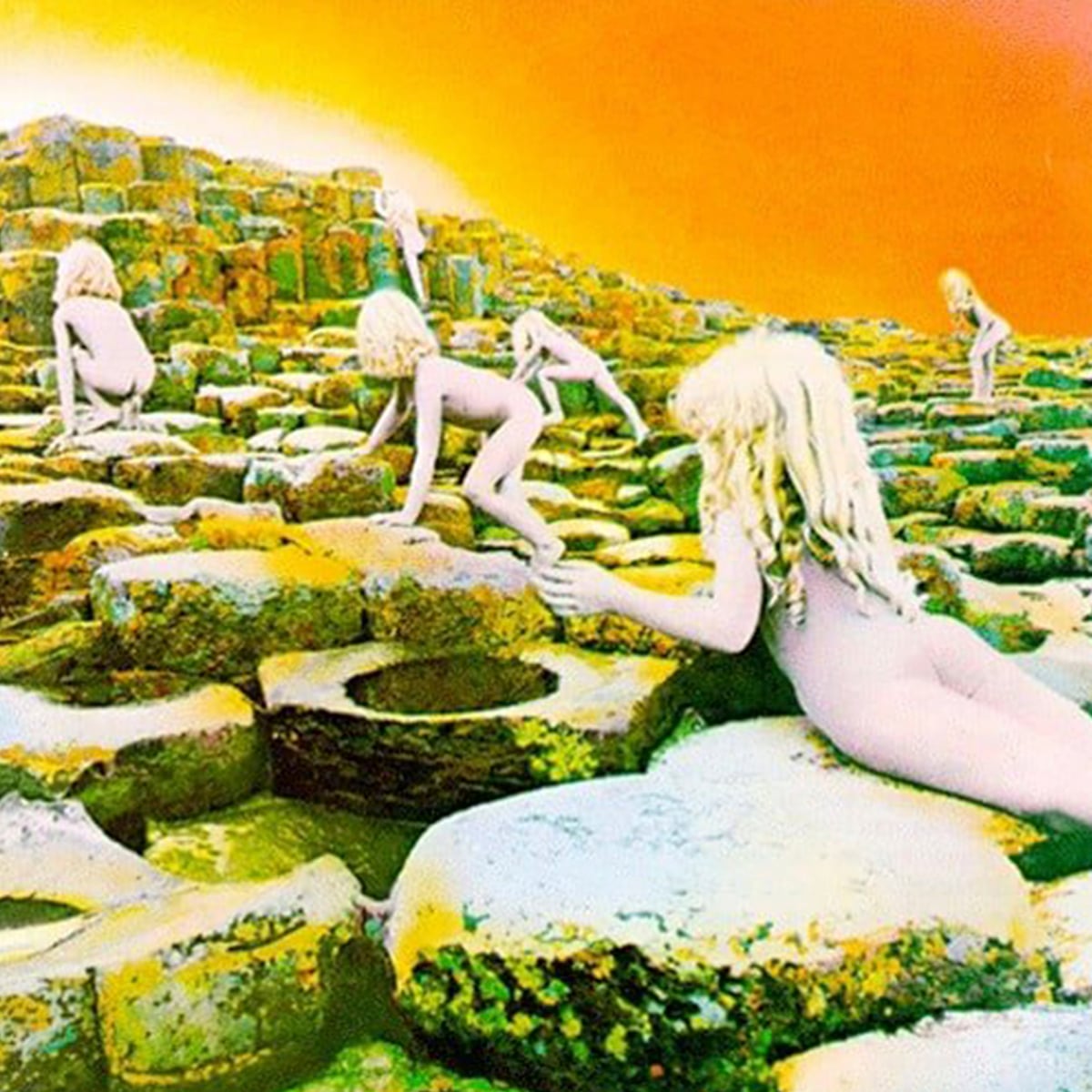
Release Date: March 1978 | Producer: Jimmy Page | Label: Atlantic
Amazingly, it took the world’s biggest rock band four albums before giving the Hipgnosis crew a call for cover duties. Finally shaking off the eponymous titles, Led Zeppelin immersed themselves further into Jimmy Page’s occultist fancies, but otherwise no insight into the music for the upcoming Houses of the Holy LP, when Hipgnosis had to come up with an idea for the stadium behemoths.
Taking cues from Arthur C Clarke’s Childhood’s End, Hipgnosis took off to Northern Ireland’s Giant’s Causeway to take advantage of its strange, octagonal rock formations and cast two naked children to ascend the angular formations. All it needed was some colour grading in post, and the composite of the children in other spots creates the perfect fantasy gateway, depicting a brood of innocent, cosmic beings all chasing the titular holy house’s beckoning glow atop the trippy megalith. Over 50 years later, Houses of the Holy has lost none of its gripping surrealism.
Bad: Scorpions – ‘Lovedrive’
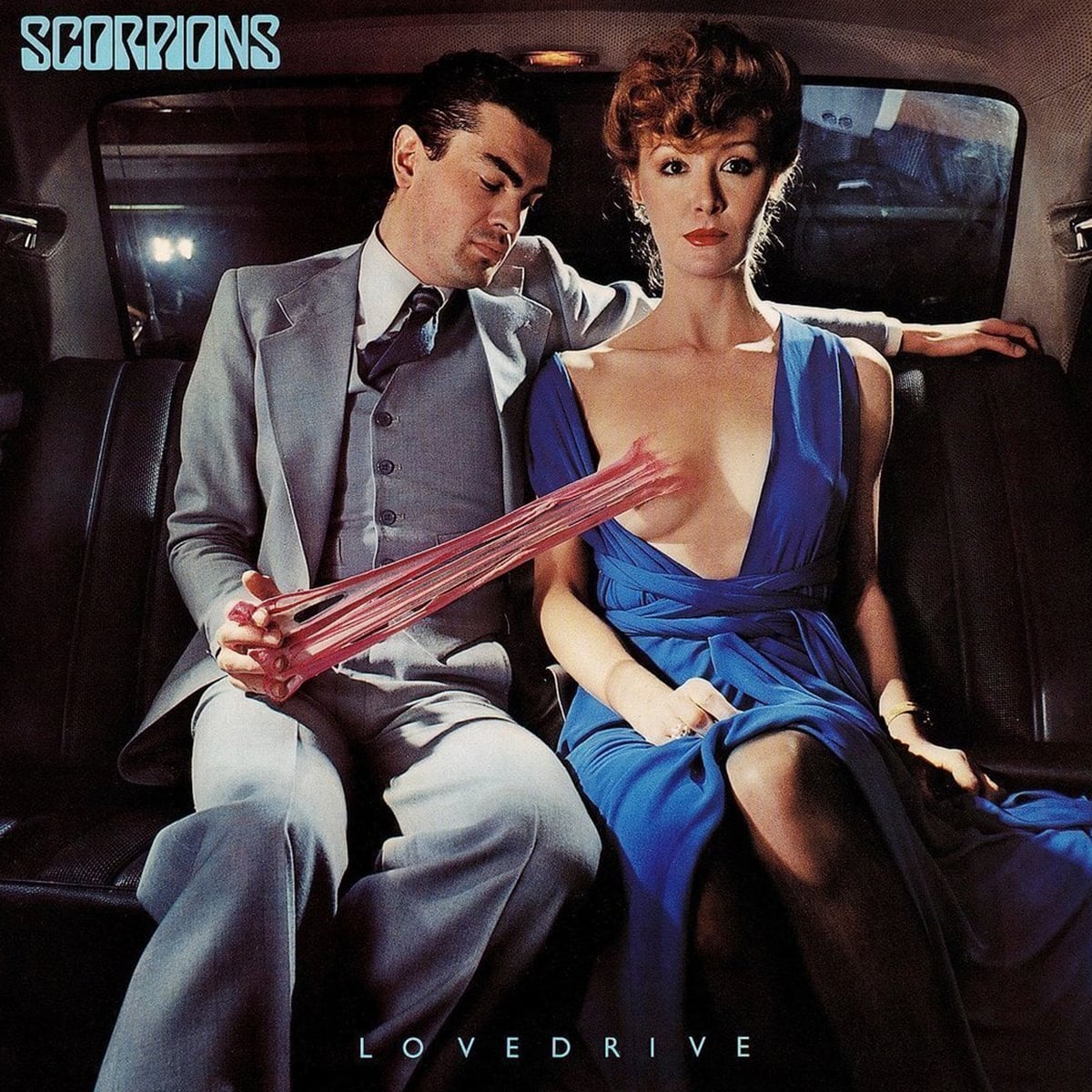
Release Date: February 1979 | Producer: Dieter Dierks | Label: Harvest
It stands as a classic of heavy metal, bringing Scorpions their first real international breakthrough after plugging away with several records behind them back home in Germany. Aiming to crack America, the Scorpions enlisted Hipgnosis’ artistic eye to deliver an edgy and sexually charged cover to signal the arrival of Lovedrive’s unleashing to the hard rock world.
So, Thorgerson’s bright idea was to curate a vignette of bubblegum stretched off a woman’s bare breast in the back of a car. OK. The two are well-dressed and sit in what looks like the passenger seat of a limousine, which may prompt some musings on the grubby side of the elite if we’re being charitable, but the image just reeks of tastelessness and a lack of ideas across all involved. Far from offering provocation as was grabbed at, Lovedrive looks destined for the bargain bin artworks cluttering the same junk store as Styx’s Pieces of Eight, and might well be even using the same model.
Good: Pink Floyd – ‘Wish You Were Here’
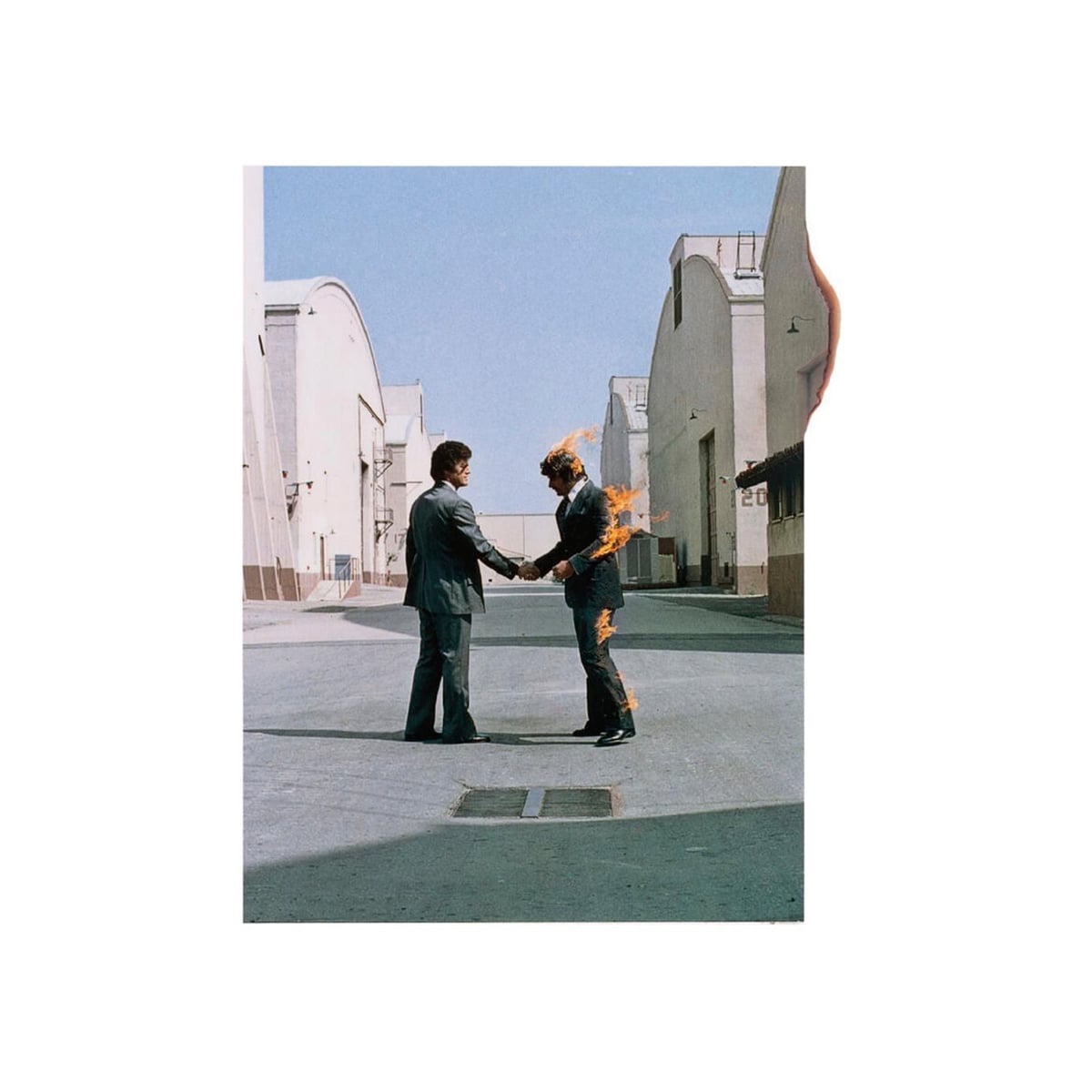
Release Date: September 1975 | Producer: Pink Floyd | Label: Harvest
The Dark Side of the Moon may stand as the band’s most iconic cover, but Pink Floyd’s Wish You Were Here follow-up lets loose a masterclass of fever dream presentation and everything ingenious about Hipgnosis’ artistic ambitious when they’re firing on all cylinders. Thorgerson reportedly had spent considerable time with the band during their 1974 tour to really nail down a creative coherence to illustrate the progressive titan’s expansive journey into alienation, the artifice of the entertainment industry, and the lost souls left to life’s wayside.
Surrounded by its artful shrink wrap to denote ‘nothingness’ and the mechanical handshake insignia to represent the shallow business world, stood at its centre is the disquieting but commanding image of two suits engaging in a deal with the businessman on the right, alight with flames. In just one image, Hipgnosis manages to say so much without compromising the cover’s stark, poetic arrest. Conjuring a perfect dream mirage that looks like it crawled straight out of Wish You Were Here’s introspective psyche, Hipgnosis and the crew raised the bar with Pink Floyd’s 1975 effort, drawing a piece of art that belongs in any of the prestigious national collections anywhere in the world.
Bad: Toe Fat – ‘Toe Fat’
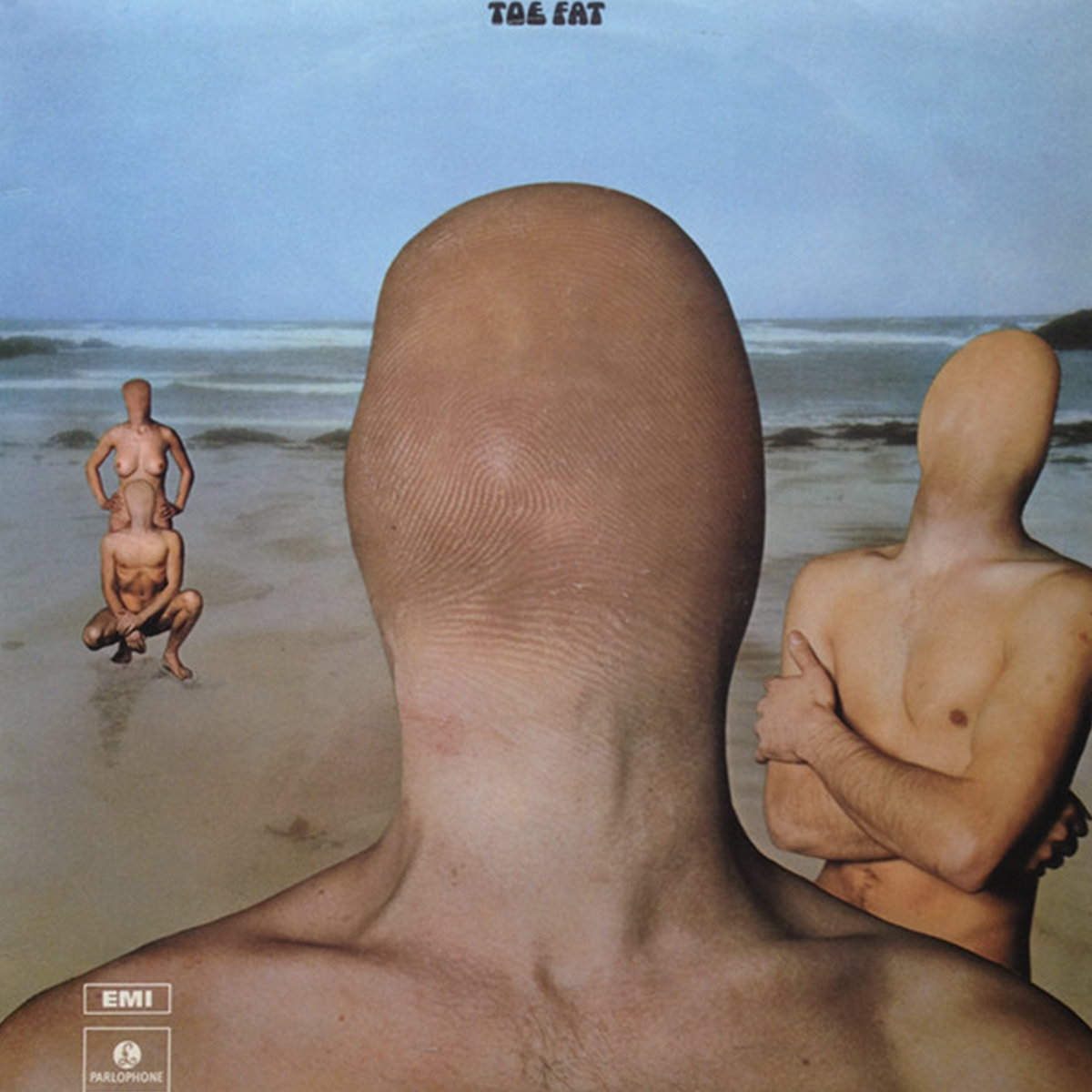
Release Date: May 1970 | Producer: Jonathan Peel | Label: Parlophone
Awful taste, great execution perhaps? It’s certainly a cover that at least goads any music store record rifler to have a morbid gawp at Toe Fat’s eponymous debut, but the Hipgnosis crew’s erratic aim for the fantastical can evidently just as easily reach the nadir of godawful as it can rock and pop’s celestial heights.
Four naked humans are wandering the beach with giant thumbs for heads, clearly acting as big toes. Houses of the Holy, it ain’t. Sometimes you gotta go a little further than the mere band name in front of you, but it’s hard to see quite what evocative realms Hipgnosis thought they’d unveiled with Toefat’s ugly, clammy, and bafflingly unappealing artwork, best left as a piece of studio fuckaboutery before being tossed straight for the bin where it belongs.

Never Miss A Beat
The Far Out Led Zeppelin Newsletter
All the latest stories about Led Zeppelin from the independent voice of culture.
Straight to your inbox.