


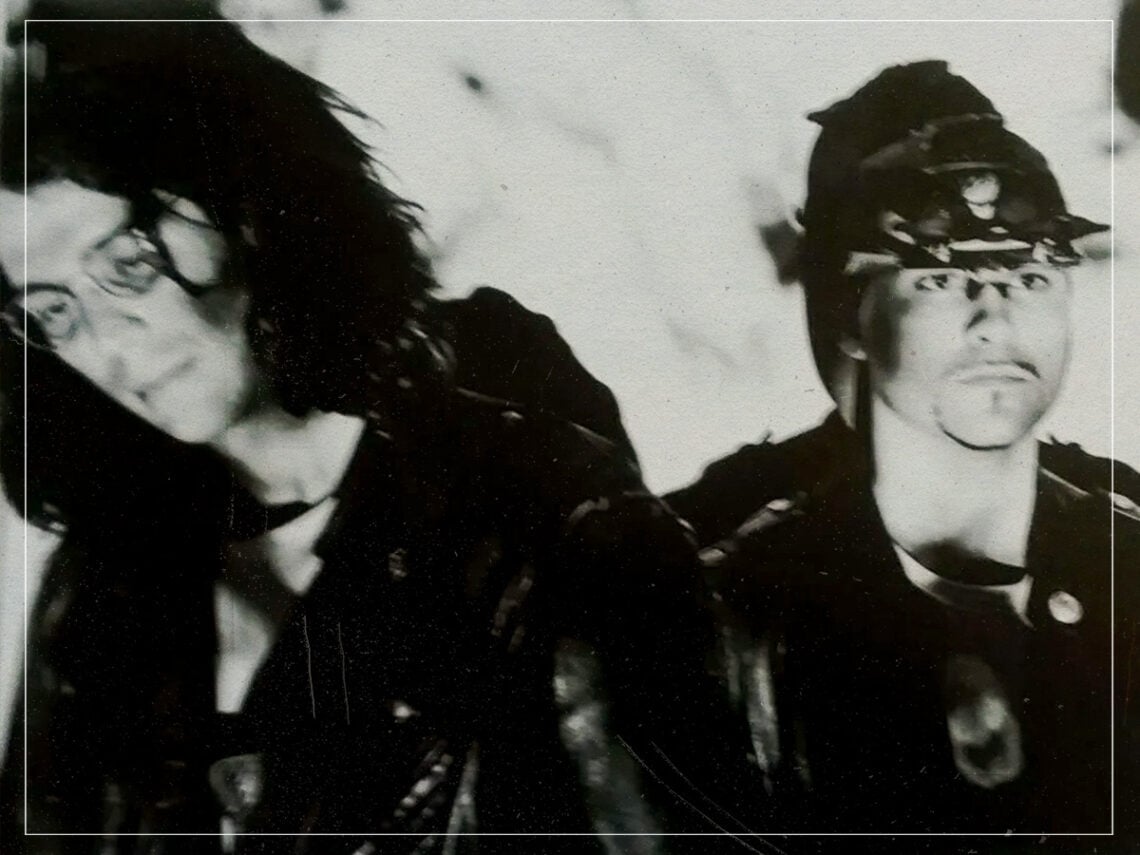
From Lard to Acid Horse: the five best Al Jourgensen and Paul Barker side projects

Before Nine Inch Nails’ mid-1990s, mud-caked takeover of MTV’s alternative orbit, the undisputed titans of industrial metal were Al Jourgensen’s speed juggernaut, Ministry. Unleashing a blistering, mechanised assault of thrash riffing, warped samples, and Jourgensen’s buzzing robotic growl, Psalm 69’s lead single, ‘NWO’, provided the 1990s with one of its most pertinent and hellish soundtracks. Queasily documenting the uncertain global order following the USSR’s dissolution, it artfully sampled George HW Bush’s “new world order” Congressional address to disquieting effect.
Originally founded as a synthpop outfit inspired by the ‘Second British Invasion’, complete with faux-English accent, Ministry’s debut New Wave-lite With Sympathy has been cloaked in conflicting admissions as to its derivative pop stylings. Frequently claiming top-down pressure from Arista Records to soften their sound for greater commercial appeal, Jourgensen has alleged that artistic control was rescinded by the label and thwarted his original vision for the LP. He’s also stated elsewhere that he simply discovered hardcore music and naturally changed his direction. Whatever the case, his recent live resurrection of ‘Effigy (I’m Not An)’ and ‘Work for Love’ indicate he’s at peace with his maligned debut.
A crucial introduction to Ministry’s toughening sound was a chance encounter with Seattle punk band The Blackouts. In addition to meeting the band manager and future wife Patty Marsh plus key collaborator Bill Reiflin, bassist Paul Barker’s admission into the Ministry fold secured a fruitful run of grubby industrial gems from 1988’s The Land of Rape and Honey through to 2003’s Animositisomina, the last album before Barker’s departure. Ministry forged on with the ‘Bush Trilogy’ and on-off hiatuses, and Barker continued crafting heady, electronic ruminations under his Lead Into Gold moniker.
Operating like an aggro P-Funk conglomerate, Jourgensen and Barker stood as the nucleus of a revolving cycle of artists across the late 1980s underground all nebulously passed through Chicago’s Wax Trax! Records to work with Ministry and the litany of creative offshoots under the pair’s Hypo Luxa & Hermes Pan production aliases.
With announcements that the duo are back in the studio together working on the 17th and ‘final’ Ministry record, let’s take a look at Jourgensen’s and Barker’s five best side projects.
The five best Al Jourgensen and Paul Barker side projects:
5. Revolting Cocks
Initially formed with Richard 23 from labelmates Front 242 along with Belgian singer Luc Van Acker as a purer EBM affair with ’86’s Big Sexy Land, its later personnel rejig with Scottish singer Chris Connelly heralded Revolting Cocks’ most memorable cuts, Beers, Steers, and Queers and Linger Ficken’ Good wrapped in notoriously wild live shows. The gleefully vulgar name allegedly came from an incident in a Chicago bar, the band testing out insulting French expressions to the waiter and ordering “revolting cocks”, prompting the curt reply “You are revolting cocks!”
Crafting a viscerally psychotropic slice of Ministry’s fire-breathing industrial assault, Revolting Cocks soaks their combative pummel in a rusty bucket of ‘brown acid’, ensuring a trip that’s equally hilarious in its caustic surreality. From covers of Rod Stewart and Olivia Newton-John to phoney sex ads promoting their albums, Revolting Cocks is the sound of Jourgensen and Barker kicking back in the studio with their pals and having fun.
4. Lard
Teaming up with Jello Biafra under the moniker Count Ringworm, Lard welded the former Dead Kennedys frontman’s satirical, political attack with a vitriolic charge of grinding hardcore in some of the pair’s most bruising production. Dropping the blistering The Power of Lard EP in ’89 and featuring one the greatest record covers of all time, Lard took sludge to new murky depths with ‘Time to Melt’, a full half-hour track of crashing, hallucinogenic din that stands as their most audacious moment.
1990’s ‘Forkboy’ notably soundtracked Natural Born Killers’ violent prison riot scene, giving Lard their widest exposure. Their final release proved to be their most scathing—a biting attack on classic rock with 2000’s 70’s Rock Must Die. Deftly balancing industrial programming with punk’s volatile urgency across a stellar two-album, two-EP stretch, Lard remains one of Alternative Tentacles’ standout acts, sitting among the best names in the alternative underground.
3. Acid Horse
Another of Jourgensen’s groaning wordplays, combining the slang words for LSD and heroin, the dabble with the acid house that was exploding in Chicago during 1989, brought original synth pioneers Cabaret Voltaire to the city during their latter, techno-inspired direction. Far removed from the duo’s Dadaist tape experiments they were founded on, Stephen Mallinder and Richard H Kirk’s club-focused bounce sparked an intriguing sonic frisson with the industrial duo’s abrasive groove.
Only dropping one single and featuring Chris Connelly on vocals, ‘No Name No Slogan’ is possessed with a pulsing electro heft and motorised drum machine muscle that scrapes and jabs with pumped monotony, littered with stabs of phoney brass, and Jourgensen’s spaghetti-western guitar twang injects a nice touch of tongue-in-cheek drama to the dancefloor thumper. Cabaret Voltaire themselves provide the B-side’s remix, indulging in their obsession with leftfield dance as heard on LPs like Groovy, Laidback and Nasty they were crafting at the time.
2. Pailhead
It was an unlikely alliance. Dischord Records founder and Fugazi frontman Ian MacKaye’s straight-edge discipline in cahoots with the infamously decadent Jourgensen and Barker, but it worked. Bonding over a shared musical and political common ground, Pailhead predates Lard with the taut fusion of industrial and punk, capturing MacKaye’s focused intensity with iron clarity and giving the old DC hardcore scene a run for its money.
The crowning achievement is ‘I Will Refuse’, a lit-fuse of a track that burns with rumbling clangour of metal pipes and corrugated post-punk, illustrating the lyrical defiance against a world struck in a whirlwind of brutality and cruelty, MacKaye’s defiant titular refrain making the path to peace sound utterly explosive in its affirmation of solidarity. Only ever releasing the Trait EP and a single and never playing live, Pailhead shows Jourgensen and Barker were more than capable of expert exercises in tension and restraint as they were enveloping din.
1. 1000 Homo DJs
A detour into dissonant sludge comprised of studio outtakes from The Land of Rape and Honey sessions, 1000 Homo DJs comes off like another party EP and excuse to invite the squad over, charged with an infectious spirit akin to Revolting Cocks but sonically staggering hungover in the aftermath of the supergroup’s heavy night. ‘Apathy’ demonstrates Jourgensen and Barker’s keen ear for a pop tune, hidden underneath its saxophone bile and electronically irritated scrape, and ‘Better Ways’ manages to carve some vestige of rhythm for its white noise dissonance.
Notable for its cover of Black Sabbath’s ‘Supernaut’ featuring a pre-Broken Trent Reznor still in aggro-synthpop mode before its legal burying by TVT Records, it’s the delirious depiction of cop brutality on ‘Hey Asshole!’ which steals the EP’s show. A processed inferno that shoves your brain in its pulverising microwave and details the American police force in all their squalid power trip.
