


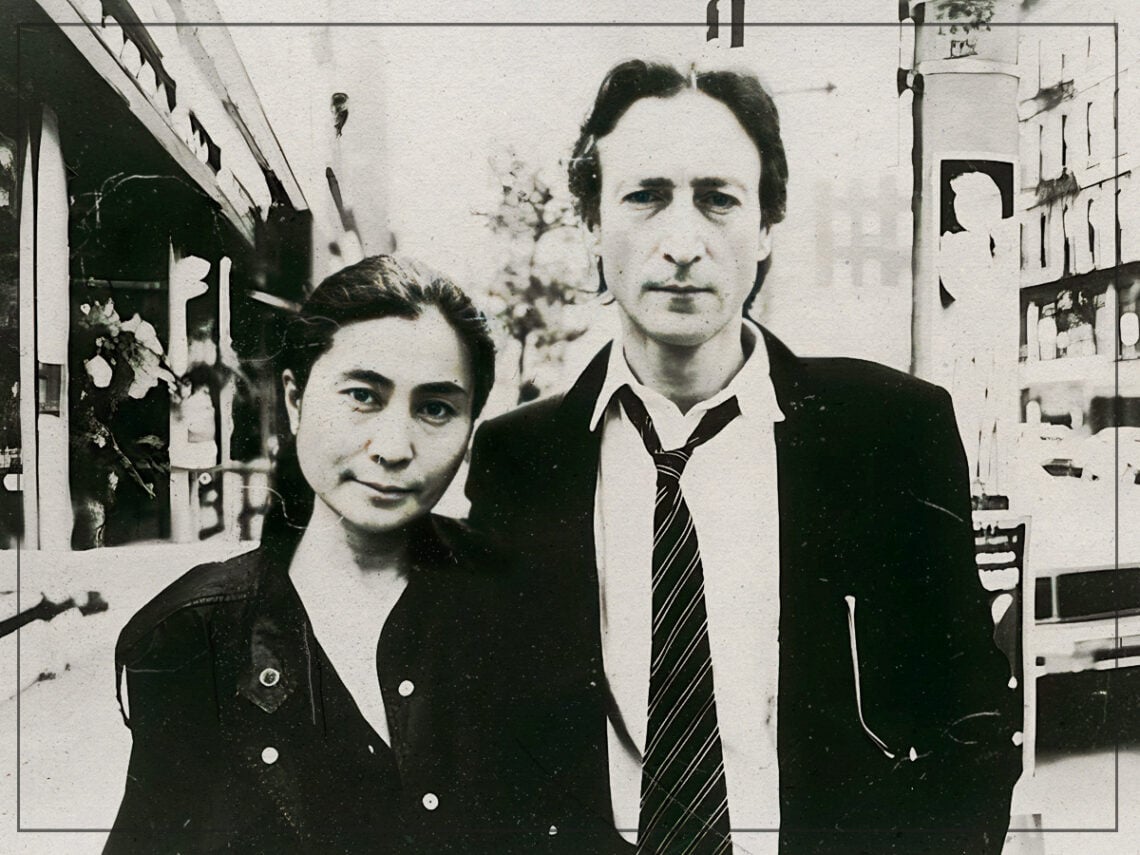
‘Nobody Sees Me Like You Do’: The first Yoko Ono song that addresses John Lennon grief

John Lennon’s passing in 1980 was undoubtedly one of the most shocking events in the history of music. However, beyond the extensive media reaction and the despair felt by fans, nothing could have encompassed the sheer gut-punching guilt and sadness felt by the one person who was arguably the closest to him: Yoko Ono.
Losing someone is difficult on its own, but to have lost your person following years of being demonised and labelled as “the evil woman who stole John Lennon” must have been heartbreaking. Lennon and Ono had a deep-rooted mutual understanding and unbreakable bond founded on love, respect, and eternal dedication, and for something so sudden and unwarranted to take that away likely left her feeling as though her heart was unrepairable.
From the moment they met, Ono was drawn to Lennon’s unique perspective and endearing sense of humour. Initially crossing paths at an art gallery in London, the pair discussed Ono’s famous ‘Yes’ piece, which included a ladder that, when climbed, presented a magnifying glass used to discover the word ‘yes’ in tiny printed letters. Many who stumbled across this neglected to understand the broader meaning, but Lennon immediately recognised its comedy aspect.
This encounter deepened their connection, with Lennon becoming immensely drawn to Ono’s abstract ideas and the way she viewed the world through a lens similar to his own. Her radical worldview was unlike anything he had experienced before, and they soon became inseparable, much to the dismay of Lennon’s bandmates and broader fanbase.
In the beginning, Ono was often used as a scapegoat for the band’s problems, cited as a major blocker to their creative processes and the reason Lennon became more estranged. However, the bitterness aimed at Ono only pushed Lennon away more, and he eventually became even more protective of her, distancing himself further from the band.
However, while Lennon sought to heal and move on from the fallout, Ono always carried it with her, the idea that she was universally hated a consistent lurker in the back of her mind. So, when he died, she likely felt a myriad of emotions—though none could touch the surface of her sheer grief at losing the one person she loved and admired the most. Many of the songs Ono wrote after losing Lennon centred around grief, loss, and the nature of complicated relationships.
However, the one that stood out as the most telling of her perspective and experience was ‘Nobody Sees Me Like You Do’, from her first album since Lennon’s passing, Season of Glass. After what seemed like a lifetime of media and public scrutiny, Ono addresses how Lennon made her feel safe and understood in the song, touching upon the various ways she felt empathy for her late partner and how she yearns for peace, not just for her but for Lennon, too—wherever it is that he may be.
“I see your face looking into the space all tired and worried / Why does it have to be like this, you and I / I wanted us to be happy,” Ono sings, the raw delicacy shining through an intimate aura, almost as though she is allowing the listener to peer into a once-private conversation between the two. However, although she deliberates with various insecurities, she always comes back to the one thing she will always hold onto: “Nobody sees me like you do.”
“Even with our dreams and yearnings, the feeling of loneliness hangs over like a thirst,” Ono continues, showing that, even in the pits of despair and longing, what she shared with Lennon will always be something she deeply yearns to get back. After all, grief is non-linear and often appears ugly in its conjecture, and likely forced Ono to confront a series of emotions she thought she had already overcome.
