


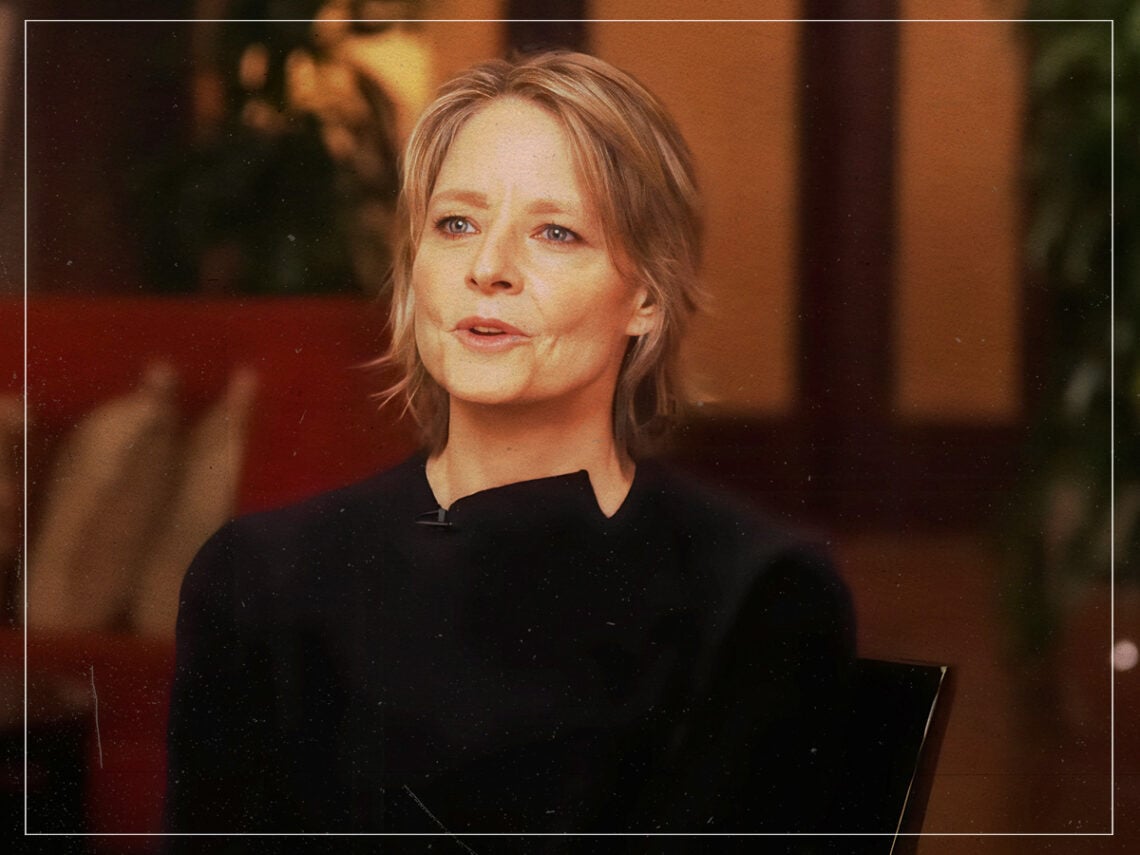
The first time Jodie Foster understood the art of acting: “It was absolutely right”

There aren’t many actors who can accurately claim to have made their most controversial movie at the age of 12, but Jodie Foster can. At that point, she was already an industry veteran, having gotten her start at age three in television adverts. Throughout the late 1960s, she appeared on popular television series like Bonanza, Gunsmoke, and The Doris Day Show before landing her first film roles in the early ‘70s.
One of her first movies was Martin Scorsese’s 1974 drama Alice Doesn’t Live Here Anymore. She only had a small part, but it was enough to establish her skill to the director, who went on to cast her in Taxi Driver two years later. Being in a spectacularly violent and nihilistic film at the age of 12 wasn’t in itself controversial, but Foster was cast as a sex worker (or what we now call a victim of child sex trafficking).
By 1970s standards, the production did its due diligence to protect her. She had to undergo a psychological evaluation before taking the role and was accompanied by a psychologist on set. Her older sister, Connie, served as her stand-in whenever the script called for anything sexually suggested, and the film never required the character to do anything explicit.
Perhaps because of these precautions, Foster was able to focus on building a character like never before. It helped that the film’s star, Robert De Niro, took her under his wing and helped her build their scenes through extensive rehearsals. What could easily have come across as a problematic, all-too-familiar Lolita character turned into one of the decade’s most indelible performances.
As Iris, Foster projected toughness and wisdom while maintaining the character’s youth and vulnerability. She earned widespread acclaim for her performance despite the predictable controversy and received an Oscar nomination for ‘Best Supporting Actress’.
In a 1991 interview with Rolling Stone, she revealed that Taxi Driver had been a breakthrough moment for her as an actor, accolades aside. It was, she explained, the first time she understood that the work was a form of artistic expression. Iris was the first character she ever played who didn’t feel like a version of herself, and it constituted something of an epiphany.
She credited De Niro with helping her get there. “He didn’t tell me anything,” she said. “He doesn’t really talk about things that way. He just grabbed me, pulled me into the scene. And we kept doing it, over and over. And over and over again. Until it was only us amid all those people, and it was perfect, it was absolutely right.”
De Niro would receive his own praise for his portrayal of the anarchic taxi driver Travis Bickle, and he also earned an Oscar nomination. The film remains a high point of both their careers, even though they’ve each won two Oscars since then.
For De Niro, it came in the middle of the most fruitful period in his career, several years after The Godfather: Part II and several years before The Deer Hunter and Raging Bull. For Foster, it was a harbinger of things to come. By the late 1980s and early ‘90s, she was able to show her full potential in films like The Accused and The Silence of Lambs, both of which earned her Oscars.
