


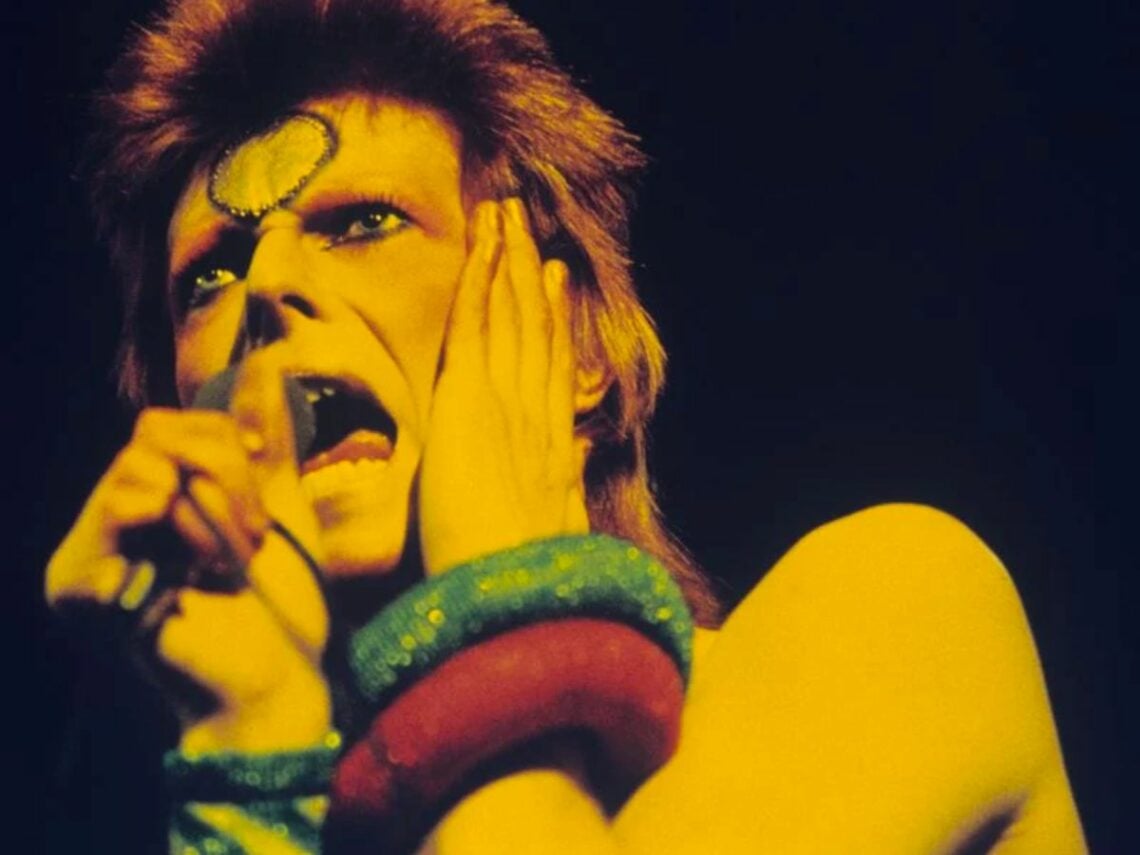
The first song David Bowie heard in America changed his entire outlook and turned him into an icon

There’s no doubt that David Bowie operated as a singular figure in the music industry.
The icon was chameleonic in his appearance and utterly dedicated in his approach to making music and delivering his artistic vision. He managed to cultivate a persona that not only inhibited his expression but managed to select, like a cultural magpie, the shiniest and most pleasurable parts of the world.
Bowie was always happy to explain the many threads that adorned his tapestry of expression. He was a star that was more than happy to appreciate the constellation he found himself in. He wasn’t simply out there on his own; he was using the world around him to build a new vision.
One such artist who endlessly inspired Bowie was Lou Reed and his band, The Velvet Underground. The effortlessly informed Brian Eno once said of the group that they “only sold 30,000 copies” of their debut album but that “everyone who bought one started a band”. This is certainly the case with Bowie. He may have already been grafting at being a musician for many years before he ever heard the Velvets, but there’s no doubt that when he did, they changed his entire life.
“My manager brought back an album, it was just a plastic demo of Velvet’s very first album in 1965-ish, something like that,” Bowie recalled in an interview with PBS. “He was particularly pleased because Warhol had signed the sticker in the middle, I still have it by the way. He said, ‘I don’t know why he’s doing music, this music is as bad as his painting’, and I thought, ‘I’m gonna like this.’ I’d never heard anything quite like it; it was a revelation to me.”
“I don’t think I ever felt that I was in a position to become a Velvet’s clone, but there were elements of what I thought Lou was doing that were unavoidably right for both the times and where music was going.”
David Bowie
This early introduction would see Bowie perform perhaps the earliest Velvet Underground cover in British history. “In December of that year (1967), my band Buzz broke up, but not without my demanding we play ‘I’m Waiting For The Man’ as one of the encore songs at our last gig,” he added. “Amusingly, not only was I to cover a Velvets song before anyone else in the world, I actually did it before the album came out. Now that’s the essence of Mod.”
This handover of acetate would see Bowie keen to meet the group and their manager, Andy Warhol, when he was set to visit New York. “It [Velvet Underground’s debut album] influenced what I was trying to do, I don’t think I ever felt that I was in a position to become a Velvet’s clone, but there were elements of what I thought Lou was doing that were unavoidably right for both the times and where music was going. One of them was the use of cacophony as background noise and to create an ambience that had been unknown in rock I think.”
Bowie elucidated on this subject when he delivered a special 1979 radio show, whereby the Starman picked out his favourite song of the moment. During that run of songs was a classic from The Velvet Underground: “The first single that I heard when I first went to American on the first day that I got there was in New York. I was taken over to a writer’s apartment that he had. Probably on eighth avenue somewhere. He played me an album that had just come out, and he was very excited by this track, and so was I. So I expect you were when you heard it as well. It’s ‘Sweet Jane’ by the Velvet Underground,” David Bowie said.
That song, that album and that band would go on to give Bowie the impetus for his largest and perhaps most notable musical transformation. During the late 1960s, Bowie had been pursuing the ethereal brilliance of traditional folk. Following the explosion of acid rock in London’s swinging streets during that time, he had moved a little further down the rabbit hole, releasing ‘Space Oddity’ and later The Man Who Sold The World, both of which were flecked with an opiate-drenched style that was hard to ignore. After his 1971 album Hunky Dory, arguably Bowie’s most obviously pop-orientated LP of the lot, Bowie needed something new.
Rather than rehash his old ideas, Bowie simply looked back to the New York street style that the Velvet Underground embodied with their songs ‘Sweet Jane’ and ‘Heroin’. During a rarely heard interview with US radio, Bowie confirmed that Ziggy Stardust, the persona behind which Bowie would make his greatest lunge forward, was informed by a combination of mime, Kabuki theatre, and the pulsating New York art-rock, “Velvet Underground, whatever”.
One notable moment sees him accurately describe the music of Ziggy and the Spiders from Mars “a British view of American street energy.” The song ‘Sweet Jane’ stands as a marker of this energy. For Bowie, the idea of a rock band being as explicit with their referencing and so callous with their poptastic subversion, was one that would never have been seen before in Britain. He would turn himself into a rock and roll superstar, born in Britain, made in the mould of the USA’s greatest export, the Velvet Underground.
