


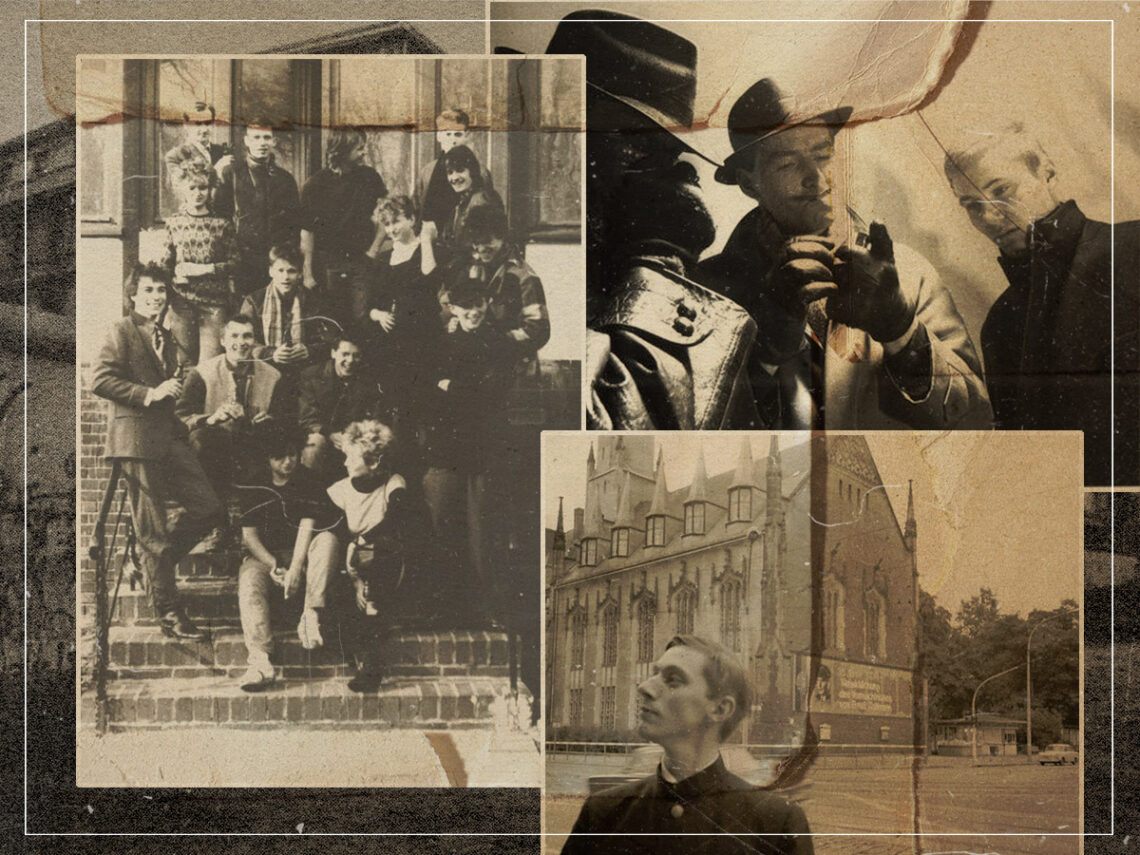
Breaking Through the Iron Curtain: the daring first punk show in East Berlin

In the 21st century, Berlin has solidified itself as a bohemian hub. The leather city is now the home of countless ‘cool’ Australians who decided to trade the sunshine for ketamine dependencies. But there was a time when it was a fractured beast. When only the foolhardy would dare to relocate. East Berlin stood behind an iron curtain that kept culture out. The divide with the westernised half was stark and fiercely guarded by spies and gunmen.
Checkpoint Charlie marked a sci-fi portal to an alternate world—to a world where punk was strictly verboten. The conservative communists had understood that everything was being weaponised in the Cold War. In their eyes, punk was not the youth trying to revive the original spirit of rock ‘n’ roll but rather an anarchic political force determined to pollute the global utopia that the USSR was holding out for.
If you dared to wear a dog collar and spiked your hair on the streets of East Berlin, then one of the countless spies who wandered the streets would happily throw you in jail. “That is why I believe that the real punks were actually in East Germany,” Mark Reeder, the Manc member of Die Unbekannten, tells me. But these punks had a predicament: they could subversively tape John Peel shows and so on, but what use was being punk if you couldn’t go to a punk show?
In the East, AMIGA was the single state-controlled record label. It sporadically released music from government-approved bands recorded in a studio besieged by power outages. Punks scoffed at this sorry parade of poorly produced asinine Soviet pop. But as they lurked in basements, they often had little else to listen to once clampdowns had seized all their own home recordings. Reeder was aware of this plight, so a fateful plan was set in place so daring that makes Hollywood heist movies look tame.
Through an overheard conversation in a bar, Reeder became aware of something called a Blue Mass that was being hosted in a Rummelsburg church in East Berlin once a month. It was, in essence, a musical protest stowed away from prying eyes by the cover of the clergy. So far, dissenting priests had only dared to permit a few Bob Dylan covers on acoustic guitars, but Reeder wanted to give back to the underground punk neighbours he so admired on the other side of the unfortunate wall. He wanted to organise a punk Blue Mass.
The consequences if such a show was discovered by the STASI would be hellish. Those involved were flirting with gulag territory. “We decided it would have to be very top secret, and I suggested we should only invite 30 trusted friends. I wanted it to be like the legendary Sex Pistols gig in Manchester. I went to the church and asked the priest if I could play a gig there at the next Blues Mass. He was a bit sceptical and said, it’s not a gig! It’s a religious service with prayers. I told him I would pray if I had to.”
His own band’s synthesisers were far too bulky to sneak through Checkpoint Charlie, but perhaps the more traditional instrumentation of Die Toten Hosen would be easier to pull off. So, a plan fell into place. The church was largely safe from the STASI because it was respected as a spiritual ground that should be spared from spying. With this in mind, the 30 daring punks decided to stage a fake funeral.
They dressed in their stately best and mournfully made their way to the church, never breaking character through fear of condemnation from the many watchful eyes. They smuggled instruments in via altar lecterns. Popped a drumkit into a casket. And prayed to the punk Gods for their safety.
Reeder recalls: “All through the gig, I held my breath. I kept imagining the STASI kicking the door in and arresting us all at any moment.” But the doors weren’t brayed, and punk rang out with only Jesus Christ looking on concerned. It was one of the greatest nights of everyone’s life, perhaps including Christ himself. That night, there was a church-backed mutiny against the tight grip of the Iron Fist.
“After the word started to spread around East Germany about what we had done, it invigorated other Eastie punks. Suddenly all the churches were filling with punk bands and doing their own Blues Masses. It gave the punks a place to play and a place to meet. The priests were happy too because young people were coming back to the church,” Reeder informs me. The first punk gig in East Germany had been staged, and many more were set to follow. It would take a while for the wall to topple and the floodgates for ketamine-craving Australians to open, but the sermons at Blue Mass certainly wobbled the foundations in their own roaring way.


Never Miss A Beat
The Far Out Punk Newsletter
All the latest Punk content from the independent voice of culture.
Straight to your inbox.