


The story behind the first nude in human history

Nudity in art has always been controversial.
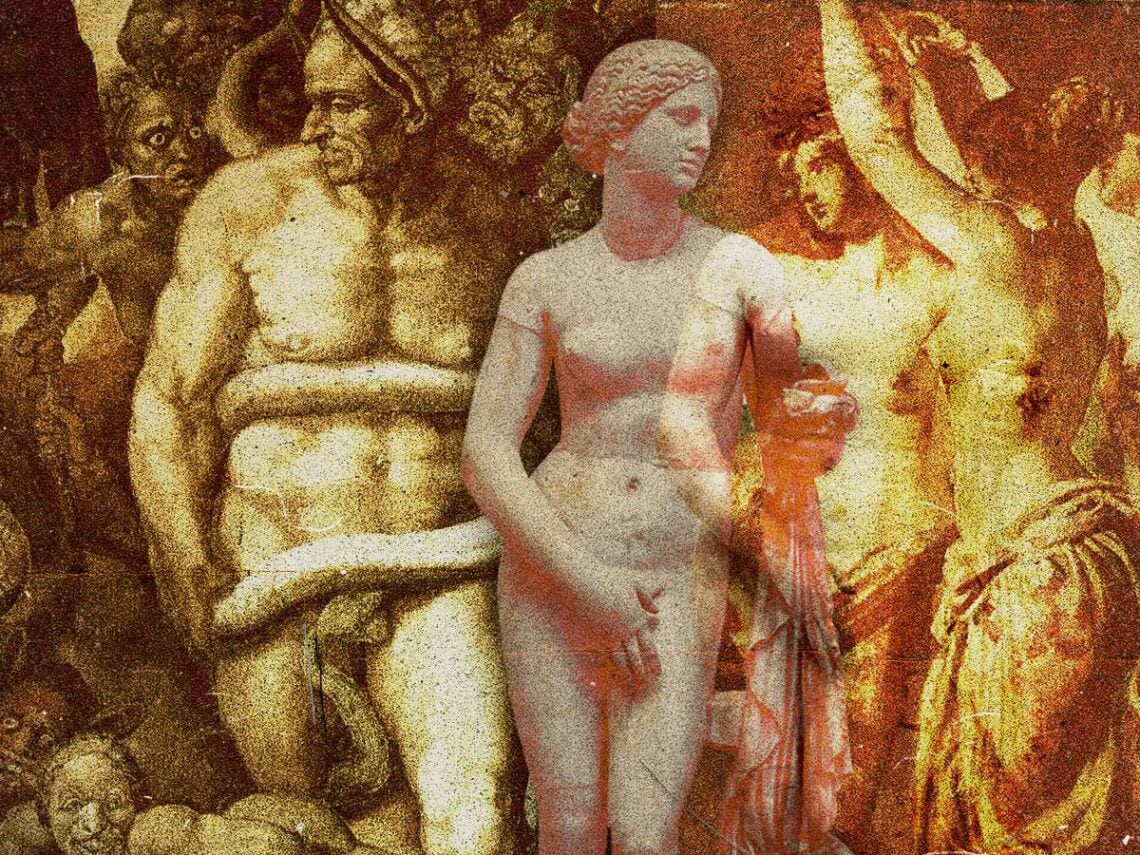
You may have once read that a Florida school principal was forced to resign after a parent complained that he’d exposed sixth graders to Michelangelo’s “pornographic” statue of David. That parent would probably have been good pals with Biagio da Cesena, the Papal Master of Ceremonies, who deemed Michelangelo’s The Last Judgement – which depicts “nude figures, exposing themselves so shamefully” – too outrageous for the Sistine Chapel. The artist responded by painting Biagio into the work, with a snake devouring his testicles. Let that be a lesson to the prudes of the world.
Nudes, especially female nudes, have been central to art for hundreds of years. Many of the paintings that have made the biggest impact on the art world are representations of the naked human form. Take Botticelli’s The Birth of Venus, Courbet’s The Origin of the World or Modigliani’s Reclining Nude. Clearly, we are fascinated by the female form as a pictorial subject.
What these works share is the idea that the nude body is not simply about eroticism but about representation. For many artists, the human form became the ultimate vehicle for exploring proportion, anatomy and emotional expression. From the Renaissance onward, painters studied the body obsessively, sketching from live models and classical statues in an effort to understand how movement, light and muscle interacted. In this sense, the nude became a technical benchmark for artistic mastery as much as a cultural symbol.
Over the centuries, representations of the human body have evolved to reflect changing perceptions of beauty and aesthetic developments. In the medieval era, for example, the church regarded the nude as a reflection of man’s innate vulnerability. Countless artists were commissioned to craft frescoes, sculptures and paintings to decorate churches and religious manuscripts. While nudes were frequently seen as sinful, they provided a symbolic resonance that rendered them essential, with artists relying on nudity for iconographic reasons. Sometimes nudes were synonymous with sin, but nudity was also associated with the prelapsarian purity of Adam and Eve, who were frequently depicted with snakes or fig leaves covering their genitals.
Mosolino’s 1424 image of Adam and Eve is one of the earliest medieval nudes. It is painted on the wall of the Santa Maria del Carmine in Florence and shows the couple in the Garden of Eden. They are tall, elegant and serene – the very image of purity. On the opposite wall, Masaccio’s 1425 fresco offers a very different view of nudity. In this image, Adam and Eve, now ashamed of their nakedness, are driven from Eden by an angel holding a sword. While Adam lowers his gaze and hides his eyes, Eve holds her mouth open in a never-ending scream, her eyes hollow, her body bent.
To find the earliest nude, however, we need to go back to ancient Greece, where around 330 BCE, the artist Praxiteles made a sculpture now known as the Aphrodite of Knidos. As Mary Beard writes in her book How Do We Look, this sculpture was celebrated as “a milestone in art” because it marked the first full-sized naked statue of a female body. The story goes that it was later taken to Constantinople, where it was destroyed in a fire. Thankfully, by that time, countless copies had been made.
But the Aphrodite of Knidos is, again, not the oldest nude we know of. Nudes have existed since prehistoric times, and some of the very oldest were made while we were still living in caves. Take the famous Venus of Willendorf, for example, a voluptuous statuette crafted around 25,000 to 30,000 years ago, by which time prehistoric artists all over Europe were experimenting with the female form. The eleven-centimetre statue has been described as some of the “earliest pornography” in existence, though others have argued that it’s, in fact, a depiction of an ancient fertility goddess.



What makes these early works so fascinating is how persistent the human fascination with the nude has remained. Whether carved from limestone in prehistoric Europe or painted on the walls of Florentine chapels, the unclothed body has repeatedly served as a canvas onto which societies project their anxieties, desires and ideals of beauty. The debates that still erupt over nude art today echo arguments that have been taking place for thousands of years.
So, there you have it, one of the oldest surviving artworks is a nude.
