


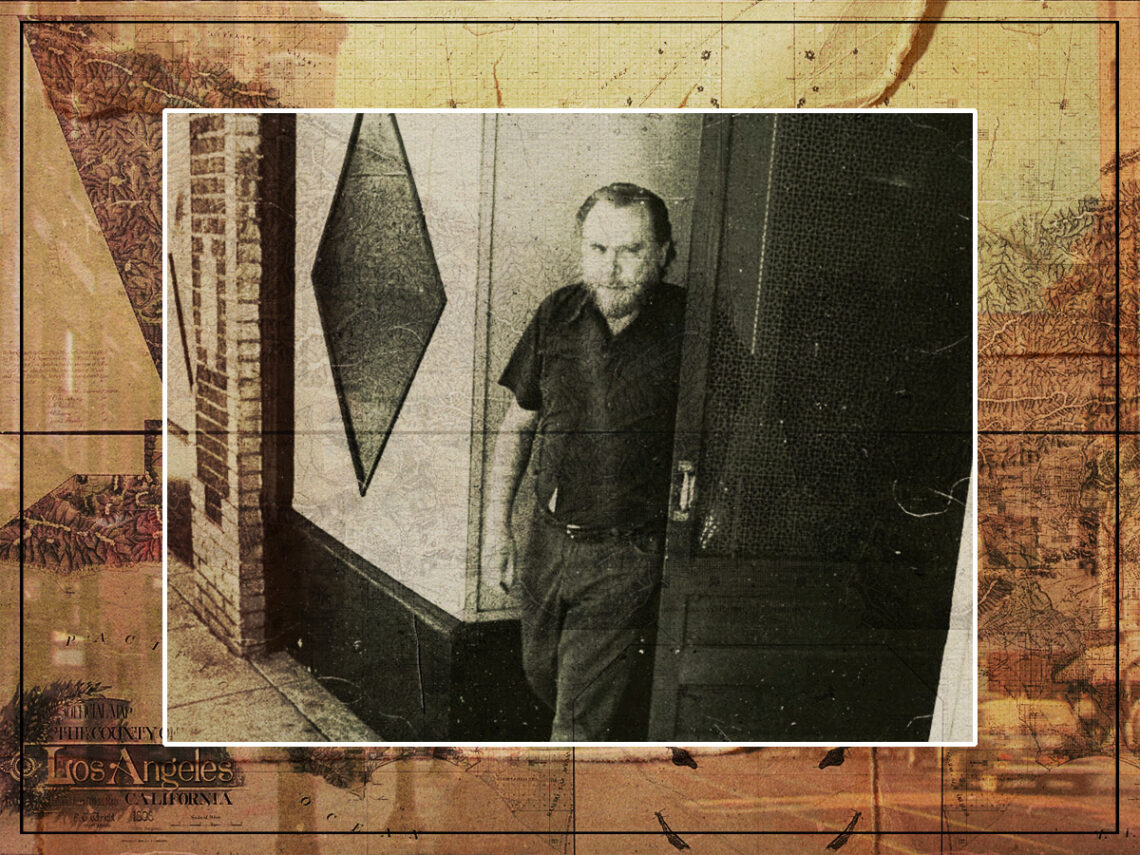
The first movie that had an “impact” on Charles Bukowski

Though the writings of Charles Bukowski received little academy attention during his life time, there’s no doubt that the German-American author left a deep impression on the world of popular culture at large, delivering a series of poems and novels that absolutely capture the spirit and mood of the 20th century.
Bukowski was born in Andernach in Prussia, but eventually came to call Los Angeles his adopted home. It was in LA that Bukowski wrote about the lives of everyday, working-class and poverty-stricken Americans and the mundanity of life in the mid-late century environments of twisting and turn social and political changes.
Of course, we know Bukowski as a man undoubtedly aligned with the literary medium, but the truth was he also played his hank in the world of cinema too. In 1987, Barbet Schroder directed the semi-autobiographical film Barfly, starring Mickey Rourke and Faye Dunaway, written by Bukowski.
The film tells of the times that Bukowski spent drinking heavily and writing in Los Angeles, although it’s presented through his alter-ego, Henry Chinaski. Bukowski was no stranger to the brilliance of the cinematic medium, and in an interview with Film Comment, he once spoke of the movies that left the deepest impression on him.
After noting his love for One Flew Over the Cuckoo’s Nest, David Lynch’s The Elephant Man and Eraserhead, as well as a number of works by Akira Kurosawa, Bukowski moved onto the first movie that “had an impact” on him, meaning the first movie that ever made the alcoholic, womanising writer “cry”.
Bukowski revealed, “All Quiet on the Western Front. The scene with the butterfly got me. The truce had been signed, the Armistice. Trying to catch that butterfly, God, it really affected me. The way the build-up was, you knew it was going to happen, and yet you said, ‘Maybe it won’t happen.'”
Of course, there are a number of version of All Quiet on the Western Front, based on Erich Maria Remarque’s 1929 novel of the same name. In 1979, Delbert Mann released a television version of the story and years later, Edward Berger released another version that was incredibly well-received at the Academy Awards.
However, the version that Bukowski loves the most is the original, the 1930 pre-Code film directed by Lewis Milestone, starring Lew Ayres, Louis Wolheim and John Wray, and containing the touching butterfly scene that brought Bukoswki to tears. It focuses on an idealistic young German soldier called Paul Baumer, who is subject to the true horrors of warfare.
Discussing another time that he saw the movie, Bukowski noted, “Then I saw it three years ago, and oh no, before it even started, I knew what would happen, and I started crying. I was a young kid when I saw it. Lew Ayres, with those bright eyes. ‘We must defend the Fatherland!’ And they all turn to Lew. ‘Should we go?’ ‘Yes.'”
Indeed, there’s a stunning beauty to all the versions of All Quiet on the Western Front in the way that it compares the innocence of adolescence with the brutal reality of global conflict. Bukowski was known to shift between being overly emotional and hardened, as proven through his writings, but when it came to cinematic brilliance, he simply could not help but be moved by the end of Lewis Milestone’s film and its touching butterfly scene.
