


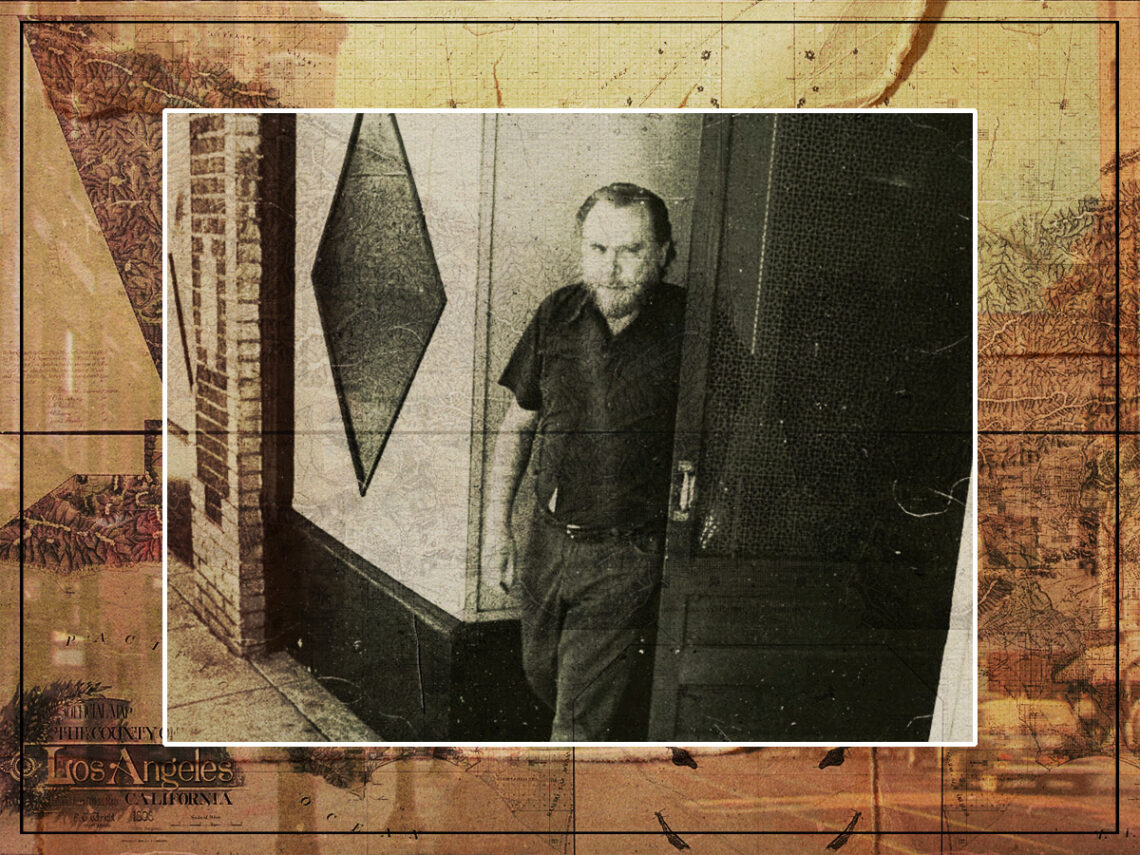
Discovering Charles Bukowski’s Los Angeles

Throughout the work of Charles Bukowski, whether in prose or in verse, he treated us to his distinctive vision of Los Angeles. We can sometimes think of the iconic writer as a lonely (“dirty”) old man, tapping away at his typewriter in a small apartment, but really, the artist that grew up in Pasadena after moving from Andernach, his Prussian birth town, left an indelible pen-scratch all over the City of Angels.
The city of LA remains one of the most populated metropolises in the world, sprawling for miles and miles with an array of quirky personalities and varying cultures and backgrounds making up its populace. Bukowski lived and breathed Los Angeles throughout his life, so we’re going to take a quick tour through some of his favoured and most visited spots.
It’s the Hollywood area that we largely associate with Bukowski, especially his 1989 novel named after the famous district. He lived in several apartments in Hollywood throughout the 1960s and 1970s, in the area known today as “Thai Town”. He once said of the culturally vibrant zone, “This is the place. This is where the people are.” Of course, Hollywood has changed into something of a culturally messy wasteland dotted with tourists in the 21st century, but at one point, it was “the place” to be for Bukowski.
He wrote a number of his most famous works while living in an apartment at 5124 De Longpre Avenue, including Post Office, Notes from a Dirty Old Man, South of No North, Mockingbird Wish Me Luck, The Days Run Away like Horses, and Factotum and it also serves as the setting for his novel Women.
Hollywood would be nothing without Hollywood Boulevard, and Bukowski was known to frequent the Frolic Room and Musso & Frank Grill to enjoy a drink and a bite to eat. In his novel Hollywood, we find the latter restaurant, and Bukowski had been known to take the likes of Dennis Hopper out for a meal there.
Los Angeles is far more than Hollywood, though, and Bukowski was not necessarily confined to just one area of the city. In Women, he details the Pink Elephant Liquor Store on North Western Avenue in Los Feliz, a spot he’d visit when stocking up on the undoubtedly copious amounts of booze he liked to fuel his days with.
For that real dirt and grit that we associate with Bukowski, however, it’s hard to ignore Downtown Los Angeles, and particularly the Central Library, where a young Bukowski would devour the works of his fellow writer John Fante. An admitted bibliophile, Bukowski was first and foremost a reader, and only then could he become the writer we know him as.
When it comes to Bukowski’s best-known vocation outside of writing, we, of course, think of him working around in the USPS Terminal Annex Post Office on North Alameda Street as a sorter and a mail carrier for several years. After he finally signed with Black Sparrow Press in 1969, it would only take a further two years for Bukowski’s experience at the mail centre to arrive in the 1971 novel Post Office.
While these are certainly the areas of Los Angeles that we most closely associate with Bukowski, there are others too. He had a loose affiliation with Venice via the Beat Generation veneration down on the beach, with the Santa Anita Racetrack, where he enjoyed a flutter or two, with San Pedro, where he brought a two-bed house in the late 1970s.
Aric Allen once made a short film detailing the few places that remain today of Bukowski’s Los Angeles, from his 2122 Longwood Avenue childhood abode to his frequent haunts such as the Central Library and Grand Central Market via the Musso and Frank Grill in Hollywood, where we might have found the writer enjoying a steak and whiskey.
Check out the film below.
