


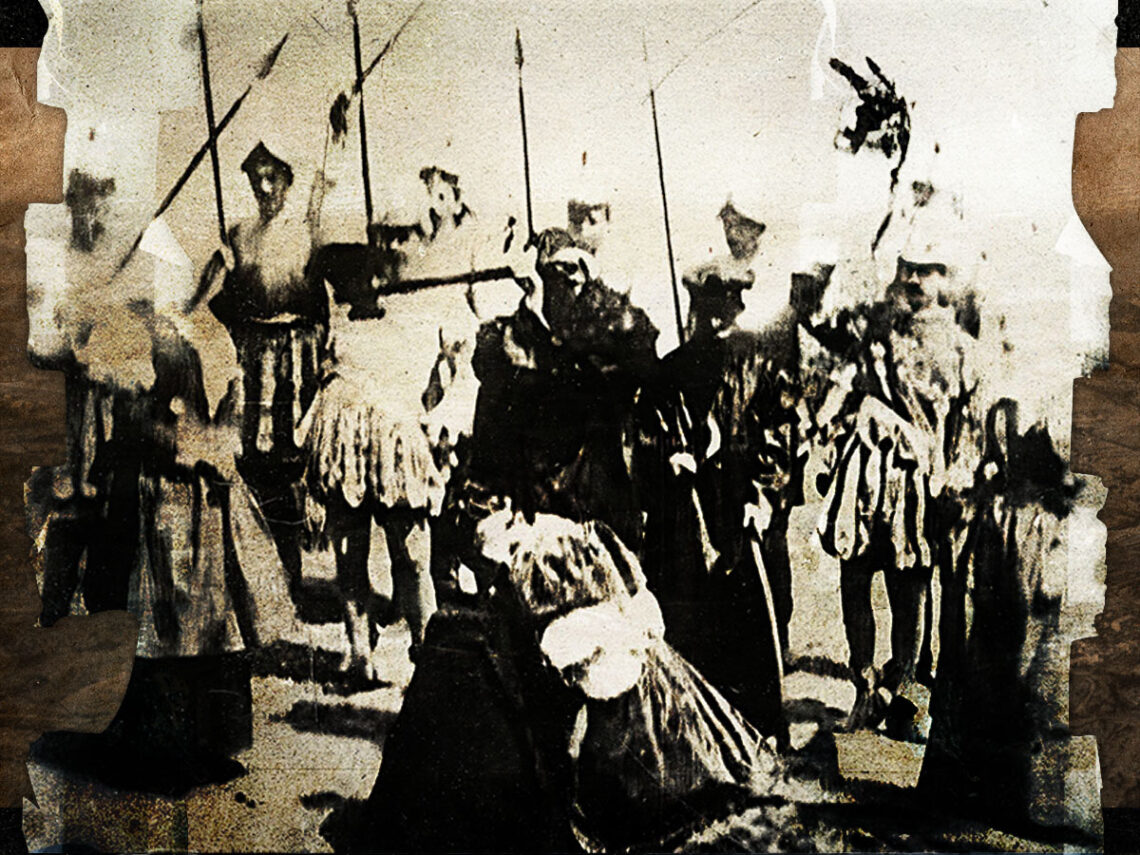
The first-ever decapitation featured in a movie

It’s hard to believe that a method as gruesome as decapitation was a common method of capital punishment for centuries. Yet, humans are capable of all sorts of evil, and purposefully beheading others is just one of many examples of terrifying extremity. For decades, many filmmakers have preoccupied themselves with depicting such scenes of human depravity and violence for the cinema, shocking and disturbing audiences in the process.
From the shit-eating and eye-gouging horrors of Salò or the 120 Days of Sodom to the stomach-turning violence of Cannibal Holocaust, there’s no shortage of movies available that depict the lowest of human lows. Inserting a decapitation scene, whether that be an accidental beheading or a purposeful one, will always shock viewers. It’s a foolproof method of eliciting a physical reaction, making the audience squirm as they subconsciously (or consciously) reckon with their own mortality.
There have been many iconic beheadings in cinema history, appearing in a range of movies, from X-rated exploitation horrors to mainstream box-office hits. One film that immediately springs to mind is Indiana Jones And The Last Crusade, where a Hatayan soldier meets his untimely fate in the temple after getting caught in a massive blade.
Another memorable decapitation scene comes in Werner Herzog’s 1972 film Aguirre, Wrath of God. Whereas Indiana Jones And The Last Crusade features an accidental beheading, Herzog’s involves a ruthless purposeful one, enacted by Aguirre’s henchman Perucho. Before he removes the rebel’s head in one swift movement, Aguirre even quips, “That man is a head taller than me. That may change”.
Although modern special effects aid most beheading scenes to give the action more realism, the earliest decapitation sequence in cinema dates back to 1895, when filmmakers had to be a little more creative with their camera trickery. The Execution of Mary Queen of Scots, or The Execution of Mary Stuart, was a silent black-and-white film directed by Alfred Clark and produced by Thomas Edison. Coming in at just 18 seconds, the film replicates the tragic event that took place several centuries prior, with Robert L. Thomas playing Mary.
It was the first film to use special effects and potentially the first to use trained actors. Clark experimented with the stop trick, replacing the actor with a mannequin in another shot while keeping every other aspect of the mise-en-scene the same. The mannequin was executed, giving the effect of a human beheading, understandably shocking viewers at the time – after all, filmmaking was a pretty new concept.
Check out the film below.
