


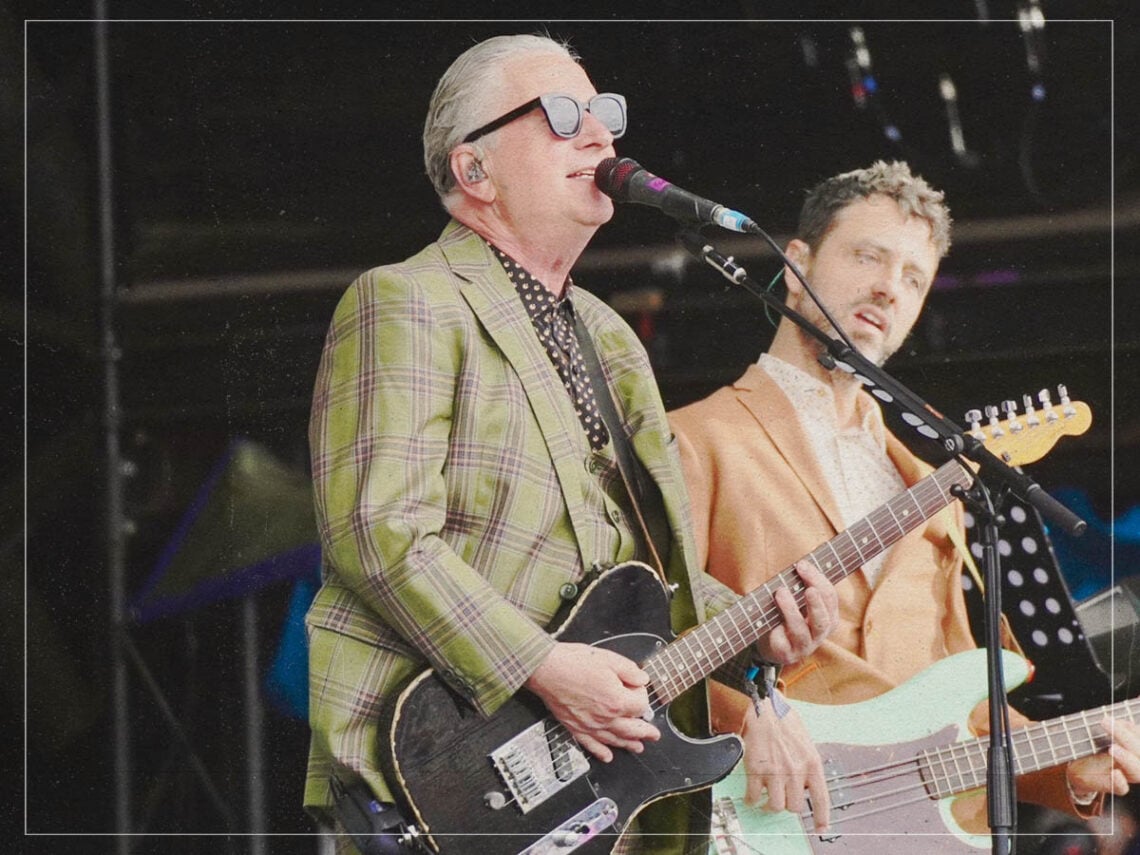
“A band of amazing talents”: the first album Chris Difford ever stole

Not that you could ever condone stealing, but in many ways, we wouldn’t have the new wave gods that are Squeeze if it weren’t for lyricist Chris Difford setting out on a campaign of theft from a young age. They do say music is power, but pulling one towards a life of criminality probably wasn’t what they meant. But in any case, Difford wouldn’t have secured one of his most seminal, influential albums if it weren’t for this, so he finds a way of getting away with it.
Speaking to Goldmine about the albums that changed his life, Difford explained that the pioneering concept album Ogdens’ Nut Gone Flake by Small Faces holds a special – if not also slightly immoral – place in his heart. On the record and the band as a whole, he said that it was: “The first album I ever stole from a shop, a story within recordings which I try to trace with my own solo work. A band of amazing talents.”
In one sense, Difford’s succinct summation of the album and its effects tells you all you need to know, but in other ways, it opens up a whole expansive world of sonic connections between the 1960s rockers and the late 1970s new wave titans that is fascinating to explore. For starters, the pivotal swinging ‘60s era not only changed the entire course of music by assembling a fresh vision of rock, but it provided the essential muse to Difford and the musical ingenuity he would later behold.
For the part of Ogdens’ Nut Gone Flake, the whole notion of a concept album, at that particular point, was all the rage in musical terms. Encompassing the widest possible breadth of sound from London pub culture to the smooth beats of soul, the album was a true reckoning of what the sound of rock music could be, all rooted around the idea of the whimsical.
The second half of the record then went on to depict the fairytale story of a boy called Happiness Stan, taking interpretations of music, language, and character to whole new heights. Granted, it sounds pretty dizzying, but given the context of the time, ultimately, what else could be fuelling this kaleidoscopic swirl other than psychedelia?
You don’t need to go any further than the other illusionary masterpiece of the time, Sgt Pepper and the Lonely Hearts Club Band by The Beatles, to find more evidence of that. In this vein, however, Difford himself, alongside his Squeeze musical counterpart Glenn Tilbrook, became known as the Lennon and McCartney of their time as they led the charge of the second British invasion. As such, all in all, the sonic segue between them and 1960s psychedelia is not all that difficult to decipher.
It just shows how much these albums were prized possessions for young music fans like Difford if they went to such lengths to secure them. Again, not that crime will usually get you very far in life, but in his case – as well as the entire sonic legacy of Squeeze – it rarely might lead you on to something bigger and better.
