


‘Finisterrae’: cinema’s most meditatively farcical exploration of the afterlife

Ghost stories have been part and parcel of cinema for decades, but not many of them actively seek to break new ground. For the most part, spectral apparitions and things going bump in the night tends to be the exclusive property of horror, but every now and again an oddity like Finisterrae comes along.
The closest spiritual companion to the offbeat 2010 dramedy is arguably David Lowery’s A Ghost Story, if only for their shared adoption of the classic white sheet-wearing archetype and the fact they’re equally bizarre. It’s not the most conventional supernatural tale by any stretch, but that’s what makes it so interesting.
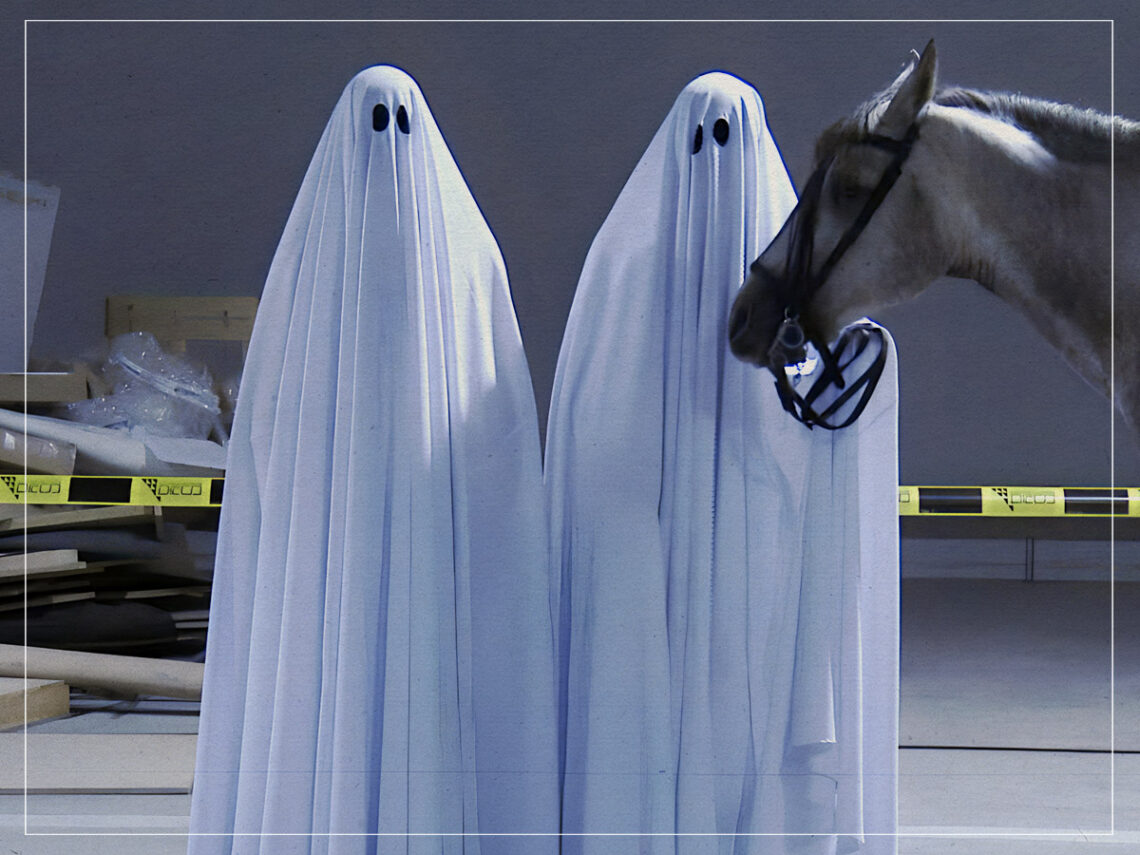
Written and directed by Sergio Caballero, it’s a road movie in the broadest sense. That obviously does a major disservice when the two central characters are ghosts draped in white sheets who decide to embark on a pilgrimage of sorts after growing bored of endlessly roaming purgatory with no sense of purpose.
Naturally, they decide to do that on foot, although sometimes a horse or a wheelchair will appear to speed up the process, but Finisterrae revels in making very little sense. Aesthetically, it feels like it was created to channel the spirit of surrealist absurdism’s 1970s heyday when filmmakers would knock out off-kilter cult classics without a care in the world.
It asks big questions about what it means to be alive (or dead) but doesn’t provide much in the way of answers. The two ghosts who power the story are obviously dead, but they want to return to the world of the living after discovering there isn’t much fun to be found on the other side of the blinding white light.
And yet, they murder a hippie along the way and stumble from one awkward scenario to the next, weaving between deadpan and slapstick while somehow finding time to reflect on the biggest unanswered question of them all: what happens when we die, and what if it’s a bit shit when we get there?
Finisterrae has very little rhythm in a narrative sense, but it isn’t a string of unconnected scenes that play out like an improvisational exercise. On the other hand, it does feature a ghost peering into a tree trunk to watch an art video involving a person regurgitating food onto a cutting board and has no interest in contextualising it. It’s a film of contradictions and about as avant-garde as supernatural cinema has ever gotten, even if mileage will vary on whether that’s a good or bad thing.
Does Finisterrae have anything to say, or is it merely a collection of disjointed shorts that passes as a feature because it has the same two protagonists as its constants? The answer isn’t one that comes easily and remains entirely in the eye of the beholder, which is exactly why the experimental oddball should appeal to those with a taste for cinema’s most unique curios.
