


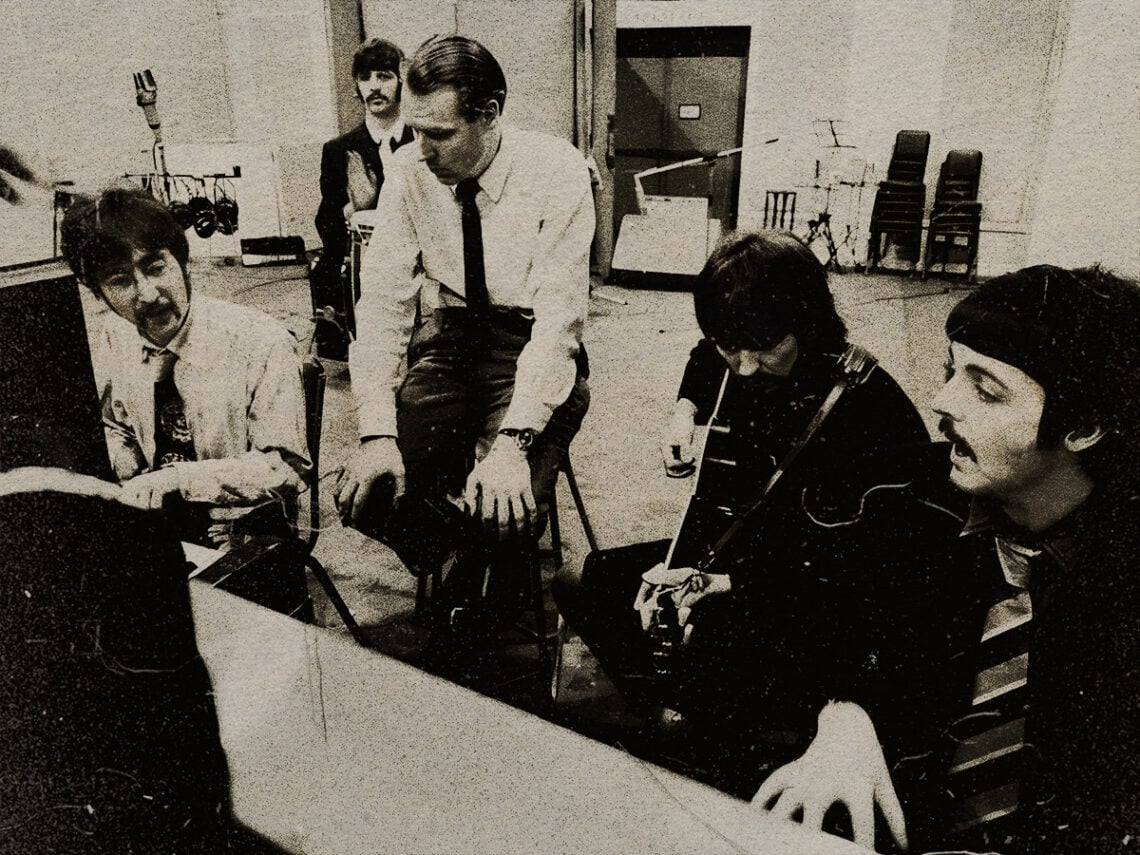
The member who had final say in The Beatles, according to George Martin

For the most part, The Beatles were a democracy. It’s really how all great collaborations need to work: all solid friendship groups, all strong teams. Each person’s voice has to be listened to with equal weight and respect, or the whole thing can crumble – as it did in the late 1960s, when certain Beatles members began to feel ignored. But at the same time, a group needs a decision-maker; without one, debates can roll on forever and ever with no resolution. According to George Martin, the band always had a leader.
Immediately, the mind goes to Paul McCartney or John Lennon. While a big part of the Beatles’ power comes down to the fact that all four members could step up to the mic as the frontman and even write their own songs, meaning that they were built on an incredible foundation that quadrupled the talent, Lennon and McCartney were undeniably two somewhat leaders.
The band was founded on their friendship and their development as young songwriters. Without the day the two met at a church fête and without the connection they began to build as two teenagers with a mutual interest in music, the band would not have got underway for one and most definitely would not have taken the incomparable shape it did. There’s also the simple fact that they wrote most of the songs, taking the lead on all of the albums. It was also, arguably, the moment their relationship irreparably splintered that the band finally fell apart.
According to George Martin and his post from behind the mixing desk, while Lennon and McCartney might have had the first word, they didn’t have the last. Even if the songs they were working on were their own, and even if they had a staunch vision for what it should sound like and where it should go, the democracy of the band still got to say their piece. New suggestions would be floated, ideas would be tested out, and opinions would be thrown out there. There would always be a level of discussion between the four members and collaborators like Martin. Then, at the end of the day, a decision on what would be done had to be made. According to Martin, for that, they turned to Ringo Starr.
“Ringo was like that, and he always had a word for something, and his word was always accepted,” Martin said. It might surprise people. For too long now, Starr has gained this underestimating reputation for being almost useless in the band. People constantly shrug off his contributions, but from where their producer was sitting, they were essential and were deeply respected by his bandmates.
“If John was doing something he wasn’t sure about he said, ‘What do you think of that, Ringo?’ and if Ringo said ‘Crap’ then John would abandon it. He wouldn’t think twice,” Martin said. Part of it came down to the fact that they seemed to see Starr almost as Switzerland. While the others were caught up in their own parts, he could be somewhat more neutral, explaining, “He didn’t have a great deal to do once his drums were done,” and so became “a kind of critic too”.
Listening and watching while the others figured out their parts, it meant that Starr could have a view of the big picture while the rest were in the weeds. So if a final call needed to be made, they turned to him to make it.

Never Miss A Beat
The Far Out Beatles Newsletter
All the latest stories about The Beatles from the independent voice of culture.
Straight to your inbox.