


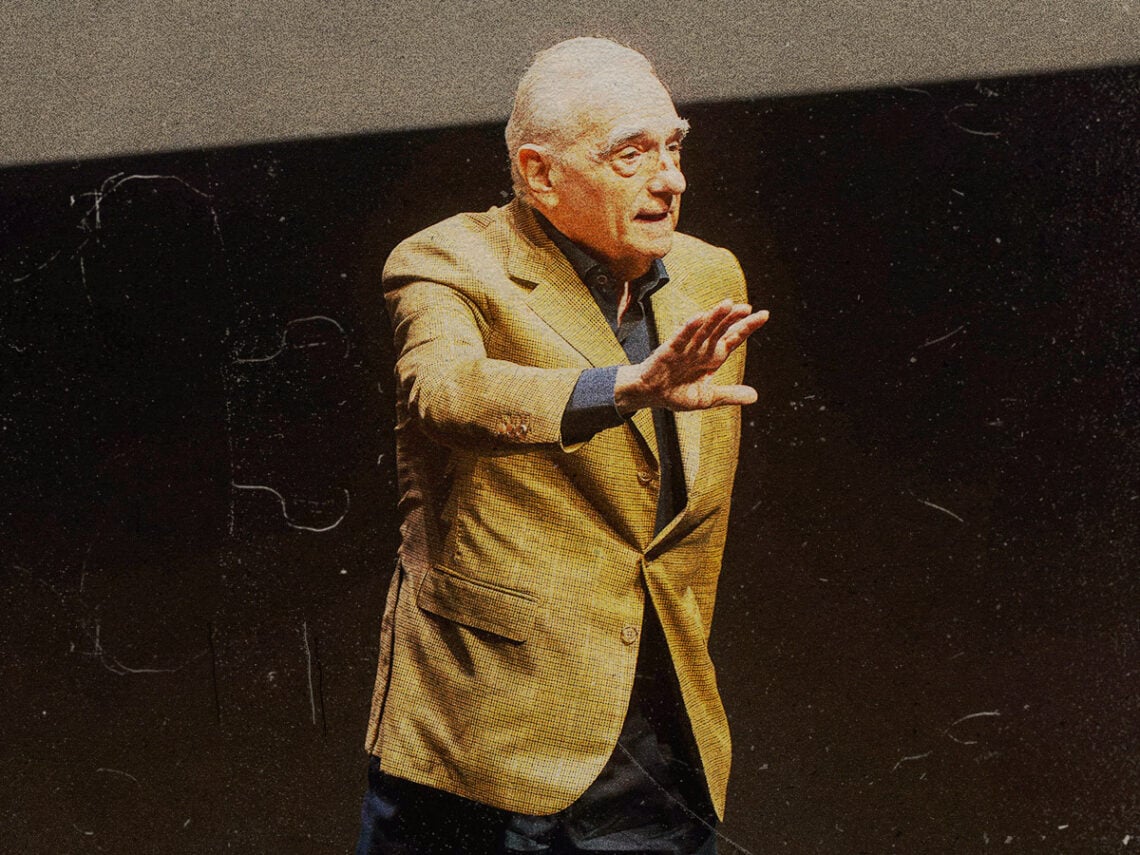
“A creation that wiped the slate clean”: the filmmaker Martin Scorsese called a “force of nature”

You watch some movies and wonder how on earth the director came to end up making films, because clearly they have fuck all notion about filmmaking. How did Uwe Boll come to be a director? Tommy Wiseau? Martin Scorsese? Some of the greatest mysteries of cinema.
But then, of course, you come across the directors who so clearly devote their lives to watching good films, truly studying their craft and making an active effort to familiarise themselves with the most niche titles from a bygone era of cinema. Martin Scorsese falls into this category, his Oscar-winning work being proof that if you delve into the annals of cinema history and examine what makes a film great, it’ll help you become a genius of the craft.
For years, Scorsese got clued up on the movies that changed cinema, even the controversial titles like The Birth of a Nation were required viewing for him so that he could move from his position as a student to that of a master. There comes a time in every film student’s education when you have to tick off certain classics – Le Voyage dans la Lune, Un Chien Andalou, perhaps The Cabinet of Dr Caligari. Then you get to the behemoth that is Orson Welles’ Citizen Kane, a project that Scorsese is forever in awe of.
Made when he was just 25, Welles wrote, directed, and starred in the movie, which changed the course of cinema by introducing viewers to techniques that hadn’t been used before. This was a film of epic proportions, full of flashbacks and carefully considered storytelling that really stopped critics in their tracks. Not only was the narrative compelling – charting the rise of Charles Foster Kane, who rose from modest beginnings to become an incredibly successful newspaper tycoon – but the cinematography was breathtaking, too.
Instantly, critics were taken aback by what they were seeing, because there was a completely new language for visual expression on display. The legacy of Citizen Kane has endured ever since, and Scorsese will be the first to detail just how valuable its place in film history is. Particularly, the cinematography of the film has always been special to the director of Taxi Driver, an influence that has affected Scorsese’s own way of creating indelible images.
Talking to Fast Company, the director explained just how influential Citizen Kane remains, stating, “This was a force of nature that came in, a creation that wiped the slate clean from the type of films that preceded [Welles]. There was never any grey with him.”
Scorsese continued, “He told Kane cinematographer Gregg Toland, ‘Let’s do everything they told us never to do.’ The low angles and deep focal-length lenses, the structure of the story, the flashbacks, the overlapping images – no one had ever seen anything like it.”
To change the films, it would take breaking the rules, and Scorsese is grateful that Welles and Toland were willing to throw everything they learnt out the window and come up with a new, innovative way to tell their story. They learnt that in order to move forward, it was only going to take a breakaway through the straws. He was going to have to barrel through the staleness to create something that was going to be remembered.
