


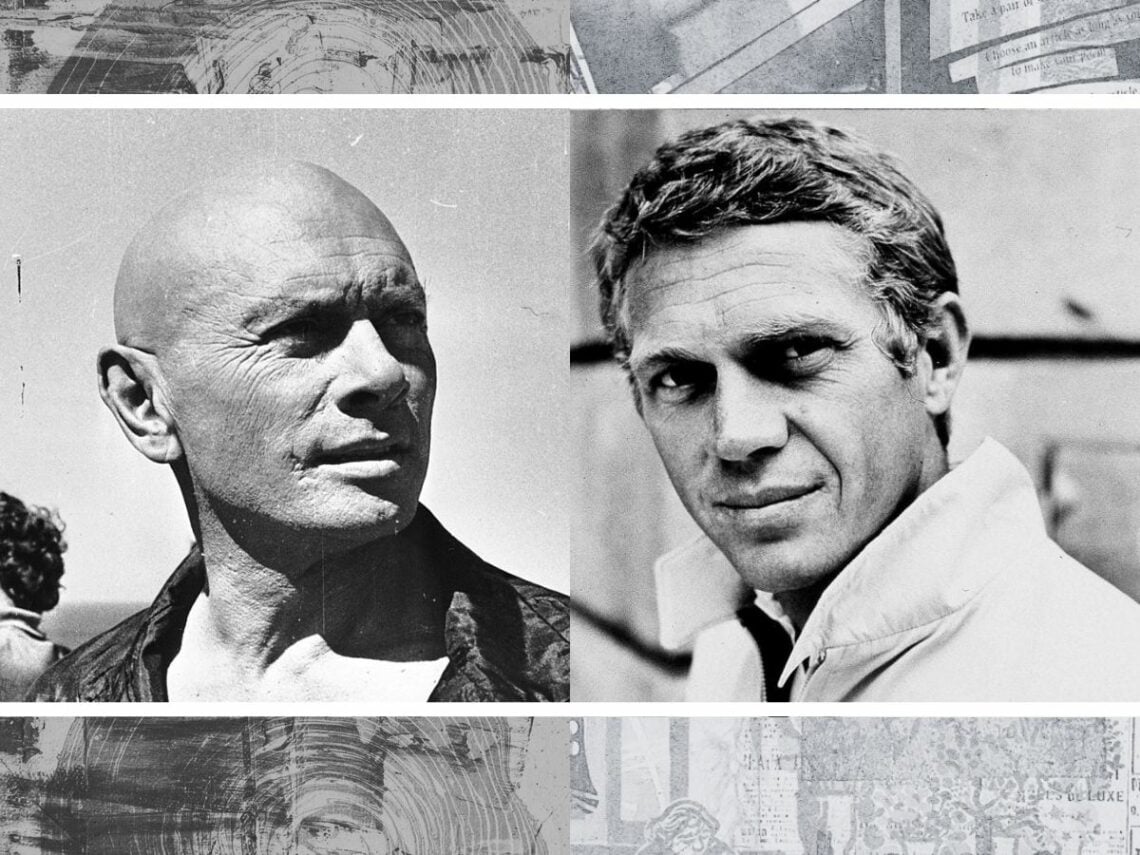
The bitter feud between Steve McQueen and Yul Brynner: “I was in my element. He wasn’t”

Hollywood is, at its best, a place where dreams are shared, stories equally told, and the work of the collective is brought together into one shining thread that is sewn across the silver screen. However, at its worst, it is a collection of egos all vying to gain more of the spotlight than the other. Biting and scratching at one another, actors are often some of the worst offenders, and this can often lead to bitter feuds, something Yul Brynner and Steve McQueen can attest to.
Known as one of the finest contemporary actors of his time, Yul Brynner was an intriguing Hollywood figure with an eclectic background. He was a Russian, French, Swiss, and American actor, singer, director, producer, model, photographer, and writer. He was a consummate Renaissance man, the likes of whom rarely appeared too often in Hollywood.
While he is known for a range of movies created throughout the end of the mid-20th century, Brynner is largely remembered for his portrayal of King Mongkut in the Rodgers and Hammerstein stage musical The King and I, for which he won two Tony Awards. Later, when the theatre production was adapted into a feature film, Brynner also took home an Academy Award for ‘Best Actor’ at the 1957 Oscars.
Only his second feature film role, Brynner’s appearance in The King and I, kickstarted an impressive Hollywood career, featuring in The Ten Commandments in 1956, as well as The Brothers Karamazov and The Sound and the Fury to cap off the decade.
At the turn of the 1960s, however, Brynner’s success reached commercial heights with the release of The Magnificent Seven, a western remake of Akira Kurosawa’s Seven Samurai, in which the actor starred alongside the likes of Charles Bronson, Eli Wallach, James Coburn and Steve McQueen. The picture is widely regarded as one of the finest efforts in the western genre and can be considered among the best films of every actor attached to the picture, but that doesn’t mean it was a comfortable place to work.

Inflated with several egos, the ensemble cast became a hotbed of tension, particularly when McQueen became displeased that his character only had seven lines of dialogue in the original script. Bowing to pressure, the director, John Sturges, told the heartthrob McQueen that he would give him some control behind the camera, a power which the actor abused, using his unique position to upstage Brynner and draw attention to himself.
It’s the kind of role afforded to stars whom the studio is desperate to add to a movie’s ensemble —the kind of move that gains audience-filled seats on opening weekend. However, they clearly misunderstood how seriously McQueen might take his newly acquired role. The actor would use his spot to make fun of Brynne, completing childish acts that would draw the camera to himself rather than Brynner. Such acts included flipping a coin and rattling his shotgun shells during one of Brynner’s speeches.
Perhaps the most infuriating of his pranks was when McQueen would kick away the mound of dirt Brynner had created for himself to stand on to make him look as tall as the other actors. The kind of bullying behaviour that would befit a snotty high school teen, not one of the most watched actors of his generation.
This came to a head at one point in production, with Marc Eliot writing in the 2005 book Steve McQueen: A Biography that Brynner once “grabbed” McQueen in a threatening manner. Recalling the tension between himself and the star of The Magnificent Seven, McQueen stated, “We didn’t get along. Brynner came up to me in front of a lot of people and grabbed me by the shoulder. He was mad about something. He doesn’t ride well and knows nothing about guns, so maybe he thought I represented a threat”.
Continuing, McQueen added, “I was in my element. He wasn’t. When you work in a scene with Yul, you’re supposed to stand perfectly still, ten feet away. Well, I don’t work that way”. While McQueen is right in certain terms, not letting another performer try to deliver their best work is the kind of attitude that can make an entire production feel sour.
The pair’s co-star, Robert Vaughn, further commented on their on-set feud in his 2008 biography A Fortunate Life, in which the actor recalls that McQueen was jealous of Brynner’s gun in the movie. With the feud sounding driven by the American film icon, Vaughn writes, “Steve was intensely competitive. It wasn’t enough just to be successful —he had to be more successful than anyone else”.
Hollywood can be a nasty place. Just like the schoolyard, accidentally stepping on the toes of one of the cool kids can leave you in hot bother. However, it’s refreshing to know that, at least in this story, the new kid Brynner wasn’t afraid to stand up to the captain of the football team.
