


‘Ladies and Gentlemen…The Fabulous Stains’: The feminist punk movie that inspired Bikini Kill

There’s no doubt that punk was a revolutionary time in music. The raucous energy of these bands was infectious, especially among young people, and their songs and ethos spread rapidly via zines, vinyl, and flyers for dingy shows. In 1970s Britain, you could recognize a punk anywhere by their hair or their trousers—it was a subcultural phenomenon. It was also incredibly male-oriented, with few bands featuring female members.
Before punk had become a symbol of disaffected youths across Britain, American musician Patti Smith became one of punk’s earliest progenitors, and her lack of inhibition, paired with her mixing of poetry and minimalist instrumentation, became a vital influence. Without her, we wouldn’t have had the Slits, punk’s first all-female band.
The Slits ripped up the rulebook of both music and femininity, blending genres like reggae and dub with discordant guitars, vicious screams, and lyrics about being a young woman. They weren’t visions of ideal femininity – they were playing instruments while wearing outrageous outfits, and in the case of 14-year-old lead vocalist Ari Up, urinating on stage.
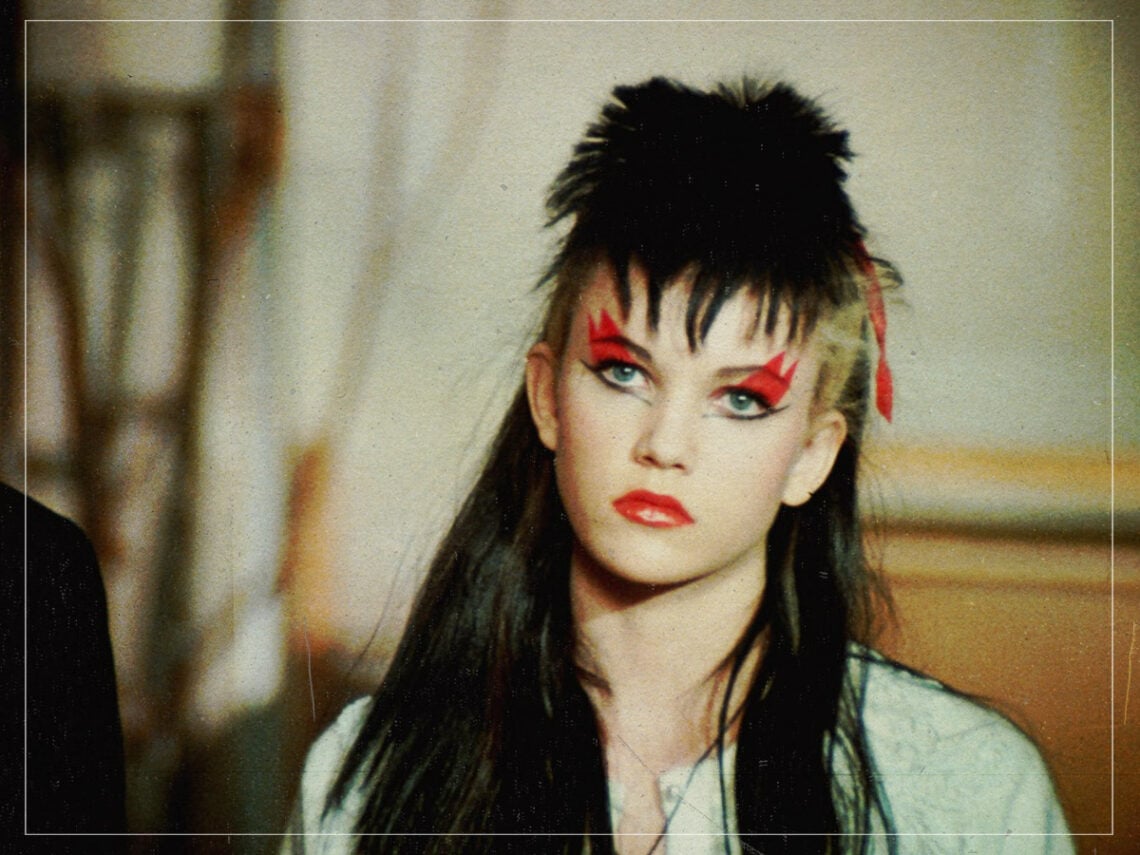
A few years after the Slits released their debut album, Cut, a movie featuring an all-female punk band with teenage members debuted that was almost certainly inspired by the Slits’ powerful take on feminist punk. Ladies and Gentlemen…The Fabulous Stains was released in 1982 and directed by Grammy-winning music producer Lou Adler.
While many believe that punk was dying, or basically dead by this point, the movie proved to be a source of influence on some burgeoning young punks who would subsequently revitalise the genre with a feminist spin several years later.

The film follows a teenage girl named Corinne, played by Diane Lane, as she rises to become the face of female punk in America. She is initially interviewed by a local news station about the economic depression facing her town, which leads her to explain that she is in a band called The Stains. From here, the teenage DIY band begin attracting attention, although they soon prove to be terrible musicians with a lack of experience in playing instruments.
Yet, as they tour the country and encounter the harsh realities of the industry, from creepy men to judgemental audiences and the over-reliance on drugs among musicians, the Stains become stronger and more fearless. They begin dressing more extravagantly and provocatively, challenging audiences and building an alliance with female fans. They become a phenomenon, proving that punk has the power to unite women, and can be used as a tool for expressing dissatisfaction and empowerment.
Naturally then, when a young Kathleen Hanna discovered the film in the 1980s, it became a catalyst for her foray into punk, and she eventually formed Bikini Kill, the most important band of the riot grrrl movement. In her book Rebel Girl, she revealed how the movie inspired the band. “Tobi’s dad, Eldon, was into laser discs at the time, and Tobi lobbied hard for him to rent a disc about an all-girl punk band called Ladies and Gentlemen, the Fabulous Stains, but it wasn’t available.”
“Luckily, her uncle taped it off TV and we watched it on a Betamax tape. The three of us lay on our stomachs with our chins in our palms, transfixed as Diane Lane, playing the lead singer of the band, yelled, ‘I’m perfect! But nobody in this shithole gets me because I don’t put out.’”
It was this cinematic experience of seeing the Stains take no prisoners as they climbed their way from musical inexperience to fearless punk genius that significantly inspired Bikini Kill. In 1991, the band released their first album, Revolution Girl Style Now!, becoming the main leaders of the riot grrrl movement, and their influence still lingers today.

Never Miss A Beat
The Far Out Punk Newsletter
All the latest Punk content from the independent voice of culture.
Straight to your inbox.