


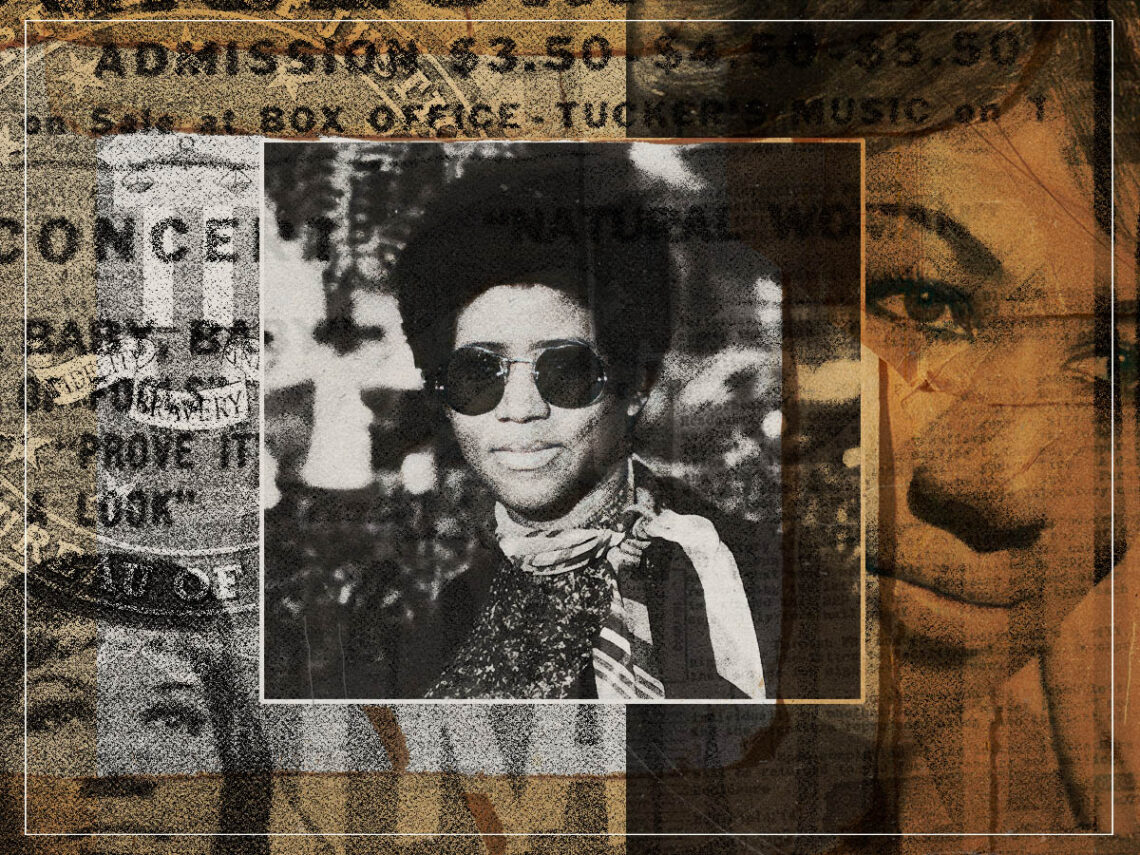
Soul versus the state: Why did the FBI investigate Aretha Franklin for 40 years?

The Federal Bureau of Investigation, or FBI to you and I, has hardly shown itself to be an organisation particularly troubled by issues of morality. The stars-and-stripes equivalent of the KGB, over the years, the organisation has become enmeshed in a plethora of scandals and controversies, from infiltrating the democratically elected governments of Latin America to orchestrating a campaign of harassment against Martin Luther King. The Bureau also kept files of prominent figures in the art world, including the likes of Bob Dylan, Charlie Chaplin, and even Aretha Franklin.
An undisputed queen of soul, Franklin wasted no time in establishing herself as being among the greatest vocalists of all time. During her years with Atlantic Records, the soul star was responsible for a variety of tracks that became anthems for the civil rights movement, including her definitive number, ‘Respect’. The fight for civil rights in America produced a wide range of incredible art, with artists like Nina Simone, Gil Scott-Heron and Marvin Gaye lending their talents to the movement. Unsurprisingly, given the FBI’s penchant for meddling in anything that threatens the capitalistic power structures which run the USA, the organisation quickly took note of this apparently dangerous artistic expression.
According to the file, which was uncovered by Rolling Stone in 2018, the Bureau took particular interest in the work and life of Aretha Franklin due to her support of activists like Angela Davies and Martin Luther King, leading the FBI to consider her a “radical” threat with possible connections to “militant black power”. For years, they endeavoured to dredge up dirt on the soul singer in an attempt to discredit her and, by extension, the civil rights movement as a whole.
The file offers some bizarre revelations about the operations of the Bureau at the peak of the civil rights movement. For starters, they apparently believed that the funeral of Martin Luther King could give way to widespread race riots and a complete uprising among the oppressed masses. What’s more, the FBI thought Aretha Franklin could be the “emotional spark which could ignite racial disturbance [in] this area”. Franklin was a tireless supporter of MLK and his pacifist stance, but much to the relief of the FBI, she never ignited any riots.
Worries over the death of MLK are quite ironic, in all fairness. After all, the Bureau constantly hounded the civil rights leader, going as far as to send letters to King advocating his suicide. There are even some question marks over their involvement in the murder of MLK, so it seems ridiculous that they then worried about the possible repercussions of his tragic death. On the topic of harassment, the file on Franklin confirmed that the Bureau were aware of death threats against the singer and, although it would be controversial to suggest that the FBI, who were noted for the various death threats they sent to a range of notable figures, were responsible for these threats against Aretha, it is in-keeping with their usual operations.
Much of the file was populated by general harassment and invasions of privacy against Franklin. Tapping her phone, intercepting her post, and monitoring her communications with fans, it seems as though Franklin had few methods of communication that could escape the Orwellian surveillance of the FBI. Nevertheless, not even the watchful eye of Uncle Sam could find any dirt on the queen of soul, for all the resources they put into the investigation, Franklin certainly came up trumps.
The surveillance of artists was hardly a new tactic when it came to the FBI; they had been keeping tabs on people, more or less, since their inception. During the era of McCarthyism and the ‘red scare’, the Bureau tirelessly watched over the likes of Charlie Chaplin and Groucho Marx for their apparent connotations with communism. When it came to the civil rights movement, the fear of communism was largely replaced by one of Black power and class consciousness. Although the campaign of harassment against Franklin must have been tiresome for an artist already under a great deal of stress, she never let it show. Throughout her illustrious career, she never let anybody – federal or otherwise – stand in the way of her radical soul mastery.
