


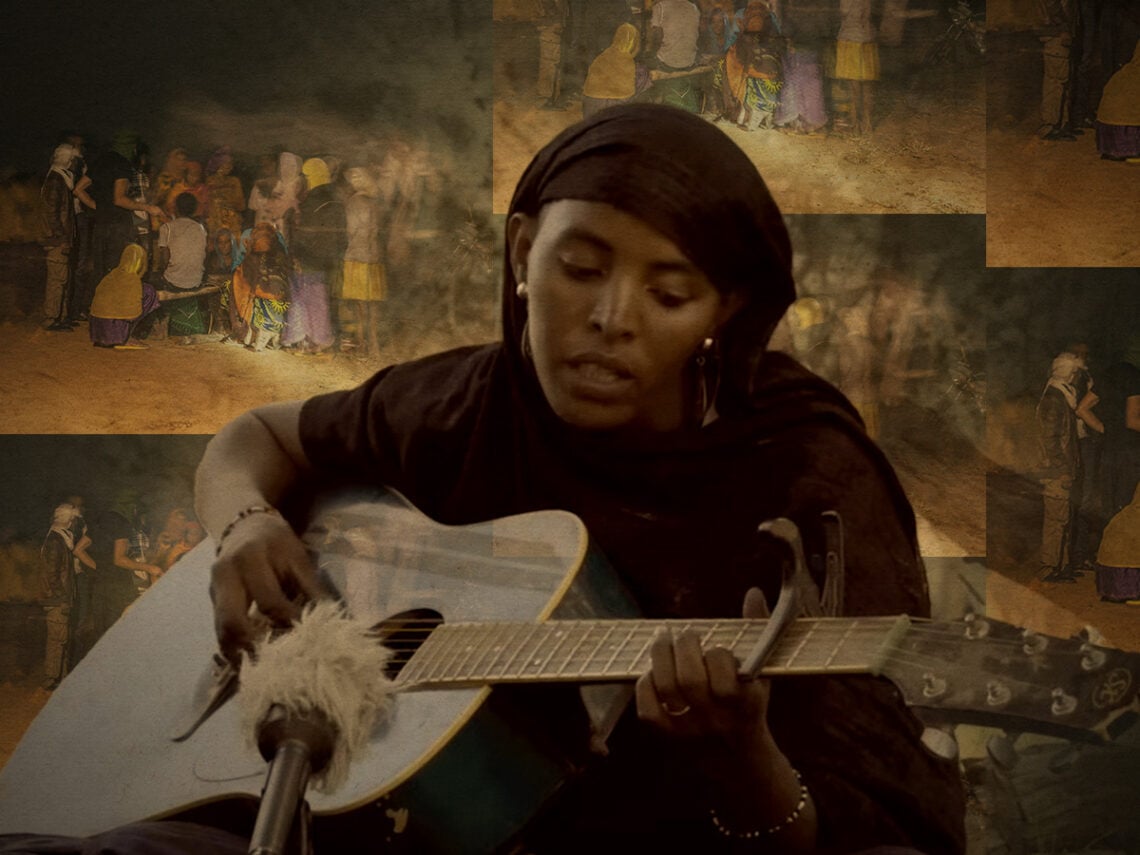
Fatou Seidi Ghali: the trailblazing tale of the first female Desert Blues guitarist

Just like Europe, North America, or anywhere else in the world, Africa is host to its own unique collection of sounds and cultural movements. The difference is, for women, it’s often so much harder to be heard.
Take the case of Fatou Seidi Ghali, the first ever example of a female Desert Blues guitarist: a path she probably never imagined laying, but is more than happy to travel. Along with her cousin, Alamnou Akrouni, she formed the band Les Filles de Illighadad back in 2016, and ever since then, they have never stopped in their mission to bring their music to the world.
Unlike certain other cultures, it was not the case that Ghali and her band, as women, were banned from playing music entirely. But as part of the Tuareg people of the Sahara, women typically play a type of traditional drum called tende, made out of mortar and pestle. The whole idea of Ghali sneaking away to learn to play her brother’s guitar in secret, before revealing her talent to the world, was enough to raise a few eyebrows.
With Akrouni in tow on vocals and the calabash, as well as former member Mariama Salah Aswan, the band set out to honour their small hometown of Illigahad in the Tuareg region of western Niger, while also blasting away the outdated misconceptions that women didn’t have a place within the Desert Blues guitar scene.
But this didn’t come without its struggles. “My father told me to stop wasting my time,” Ghali recalled to The Guardian during an interview in 2019. She was told she “should be busy looking after the cows”. But defiant as ever, the trailblazing guitarist chose to turn in the opposite direction.
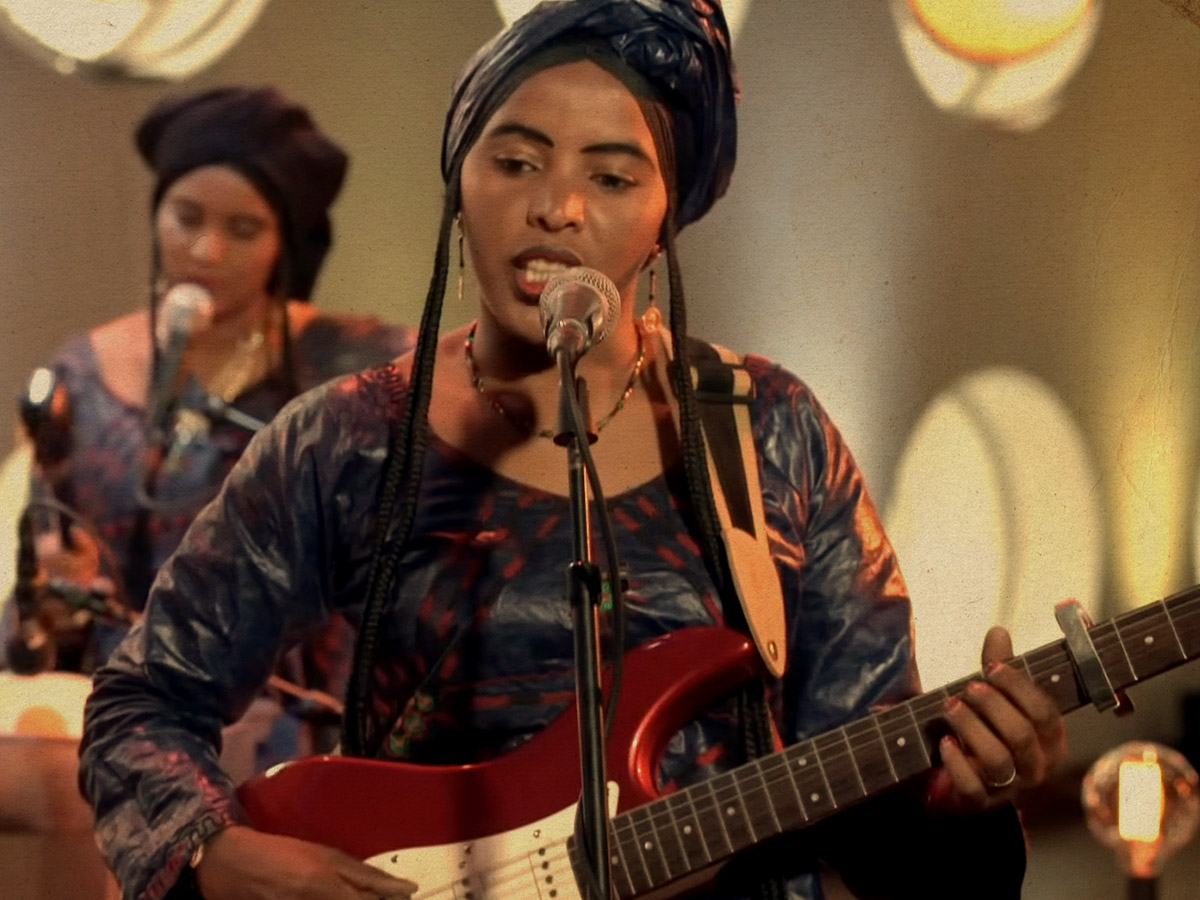
This dedication reaped its rewards when, as Les Filles de Illighadad began to pick up speed, they were also noticed by Christopher Kirkley, an executive from the US who founded the label Sahel Sounds in 2010 in order to give the thriving Saharan music scene the platform it has always deserved.
Under this wing, the band have been able to record three albums and even bring new members on board along the way, including Fatimata Almadalher, who joined Ghali as the second-ever female Tuareg guitarist, and with the brood growing, it was clear that the choice to pursue music, despite all the obstacles, was the right one. Ghali even contributes back to her community, using her earnings to buy more cows.
The sense of communality, however, is not just a tokenistic gesture from Les Filles de Illigharad: it bleeds into every corner and mantra of what they stand for. To this end, all their albums have been recorded in the open air, with people clapping, laughing, and singing along in the background. Trailblazing is not just an individual effort – it has to truly mean something.
It is testament to the power of women like Ghali and her band that they have never intended to take advantage of their status as narcissistic emblems. Their work may have taken them far away from Illigharad, to the US and all over Europe, but they have never lost sight of where their hearts belong. That’s the true definition of a homegrown talent.
