


The failed movies that crushed Kevin Costner: “Quite honestly, I am haunted”

If nothing else, Kevin Costner has always been a movie star who backs himself. Time and time again over the years, Costner has used the riches gained from his commercial megahits to bankroll his passion projects. Quite often, these projects have hit roadblock after roadblock, and would have died on the vine if Costner hadn’t bailed them out with his own money – something he’s been criticised for. Taking flak for putting his money where his mouth is doesn’t haunt Costner, though. Instead, he is crushed by other decisions made along the way to mitigate the risk of these projects.
In the 1990s, Costner’s career was defined by massive triumphs and catastrophic misfires. To kick off the decade, he directed and starred in Dances with Wolves, a three-hour western epic that won ‘Best Picture’ at the Academy Awards, and he was crowned ‘Best Director’ to boot.
After a subsequent run of hits that included The Bodyguard, Robin Hood: Prince of Thieves, JFK, and A Perfect World, Costner bet the farm on another western epic in 1994. He produced and starred in Wyatt Earp, but lightning didn’t strike twice. The movie was a dud at the box office and was dismissed in comparison to Tombstone, the much more beloved western that came out six months prior and starred Kurt Russell as Earp.
Next came the notoriously bloated, troubled production of Waterworld, which Costner again put his own money into to avoid the picture sinking beneath the waves. “I felt like there was a responsibility to the studio that had put a lot of money into the movie, and I didn’t want to abandon it,” Costner told Cigar Aficionado in 2000. “A lot of people ducked out, but I stayed with the film.”
Ultimately, Waterworld gained a reputation as one of the biggest bombs of all time because of its exorbitant cost, but over the years, Costner and others have claimed it made its money back and more. “For me, if I was going to retrace the history of my life,” Costner mused, “while that was a painful point for me, it was a highlight in that I rode it through to the end. That movie would have failed if I’d walked away. I was literally the last man standing.”
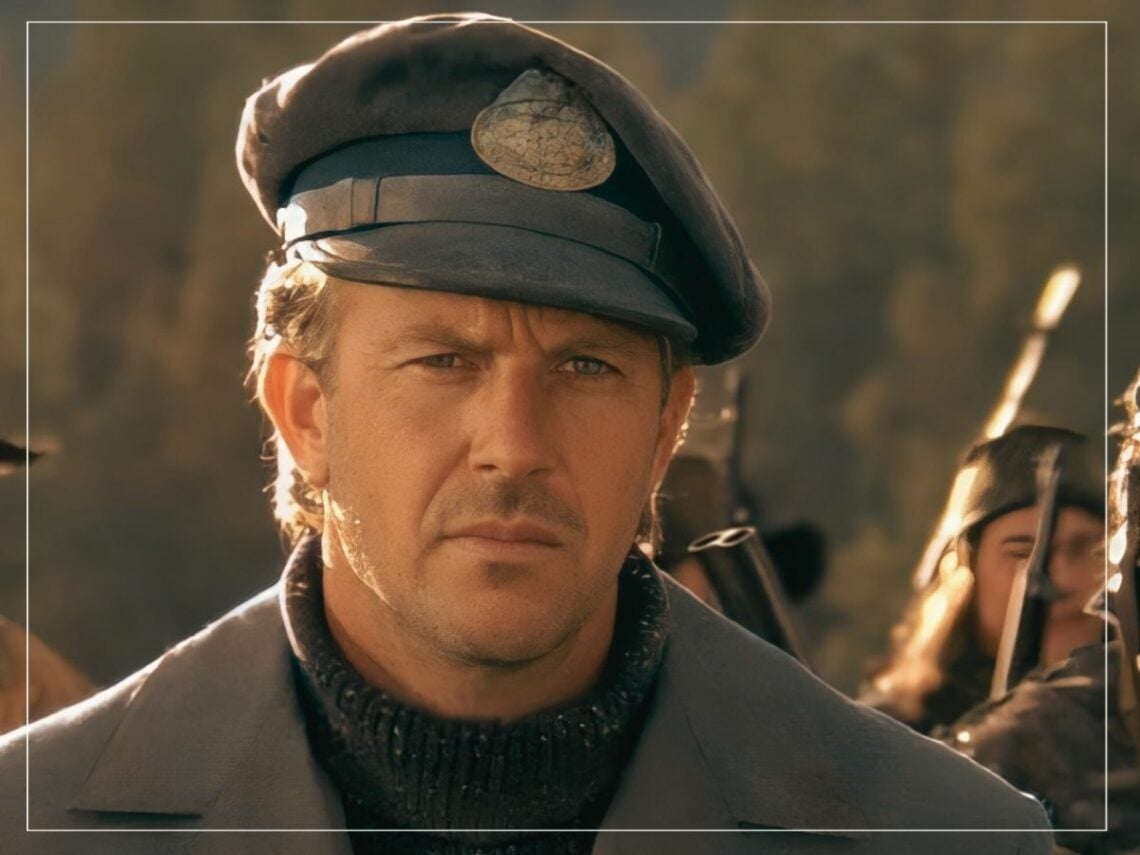
Two years later, Costner took yet another big swing when he directed the $80million post-apocalyptic adventure The Postman, which returned a miserable $30million at the box office. The failure of this movie in particular saw Costner lambasted by the press and critics, but he staunchly stood by the film. “I loved Wyatt Earp and I really loved The Postman, and no one can take those movies away from me,” Costner insisted. “I would stack those films up – not in the world we live in today – but five years from now, where people can just watch them untainted. I would stack my movies up with anybody’s movies.”
In truth, it’s not the commercial troubles of Wyatt Earp and The Postman that haunted Costner, as he resolutely believed people would find the films in their own time. Instead, it was the idea that he’d been forced into making any decisions purely based on the fear of them tanking at the box office. He hated the notion that he made any calls that weren’t about artistic integrity, but maximising the bottom line.
“Quite honestly, I am haunted by the decisions that are commercially based,” Costner admitted. “Absolutely haunted.” He added, “I just hate that you don’t see every moment that I really wanted you to see, as a man.”
“I could make every decision that could cater to the biggest demographic and try to make as many friends as I could,” Costner continued. “All my decisions would be really flat and really safe. And I would go, ‘God, I still didn’t manage to make them like me.’ Then I would hate myself.” Indeed, Costner truly believed that if he reduced himself to decision-making influenced by the lowest common denominator, instead of what he truly believed in as an artist, he’d castigate himself by thinking, “Shame on you, you miserable baby. You have successfully done nothing.”
