


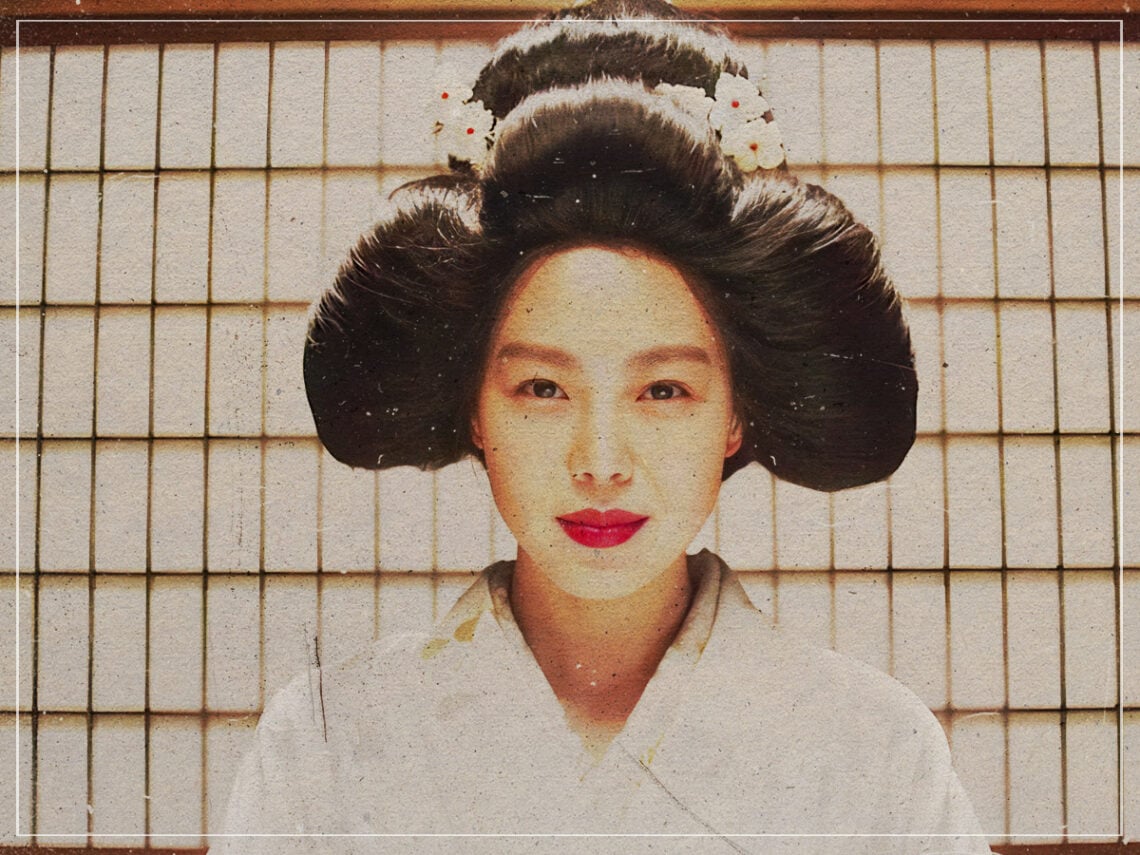
Exploring sexual politics in Park Chan-wook film ‘The Handmaiden’

In 2016, Park Chan-wook, the mastermind behind the audacious Vengeance trilogy comprising Sympathy for Mr Vengeance, Oldboy, and Lady Vengeance, delivered a movie that challenged the sensibilities of its viewers: The Handmaiden. The erotic thriller, adapted from Sarah Waters’ British novel Fingersmith, was relocated from Victorian London to Japanese-ruled Korea in the 1930s. Carrying a signature touch, complete with all the usual sultry suspense, it was reminiscent of cinematic giants like Alfred Hitchcock’s Rebecca or Henri-Georges Clouzot’s Les Diaboliques.
The movie is centred around the diabolical scheming of the devilishly handsome con artist, ‘Count’ Fujiwara. He enlists the assistance of Sook-hee, a pickpocket, to act as the handmaiden for Hideko, a wealthy heiress forced by her uncle to read erotica aloud to his guests. As Hideko and Sook-hee’s relationship grows, their intentions intertwine in a game of deception, seduction, and unexpected attraction.
While the film oozes with a palpable eroticism and sensuality, it has found itself ensnared in discussions about portraying its explicit LGBTQ+ content, more specifically, the male gaze’s presence in its narrative and visual compositions. The “male gaze” is a term coined in 1975 by feminist film theorist Laura Mulvey to describe the act of depicting women in visual arts and literature from a masculine, heterosexual perspective.
This perspective typically objectifies the female form, reducing it to an entity for male pleasure. This concept is pivotal when discussing films that delve deep into themes of female sexuality, as the presence of a male perspective could, and often does, overshadow genuine feminine experiences. The “male gaze” undoubtedly dominated cinema in the 20th century; however, as both filmmakers and audiences moved towards a more enlightened age in the 2020s, certain movies that would have gone unchallenged started raising eyebrows.
How not to depict lesbian sex
Perhaps most notable was Blue is the Warmest Colour. This 2013 French film, by director Abdellatif Kechiche, followed the blossoming lesbian romance and explicit lesbian relationship between a newly single teenager and an artist. Despite winning the Palme d’Or, the film quickly came under fire for reports of mistreatment of the lead actors on set, with problematic behaviour from the director dictating that graphic scenes took up to 100 takes. In the film critic and theory circles, a coherent critical argument was launched at Kechiche; rather than depicting an authentic gay relationship, the film presented a straight man’s fantasy of what he thought (or wanted) lesbianism to look like.
Following this, audiences were more attuned to the concept. So, when Chan-wook’s sexually explicit erotic thriller was released, with its frequent depictions of two women having sex, people naturally began to question whether this was another simple case of a relationship overshadowed by the male gaze. It’s an extremely valid reticence to have — however, diving into the film and the director’s statements, it would seem that the filmmakers were more savvy than others may think.
In an interview with the Georgia Straight, Chan-wook acknowledges the sensitive nature of adapting Fingersmith, which carries a strong lesbian theme. While the film received critical acclaim at the Toronto International Film Festival, it also faced criticisms surrounding its sexual politics. Park defended his portrayal by stating, “I tried to make sure that this film does not come across as all about the male gaze in the way that it portrays female sexuality.” He further emphasised his consultation with feminists and the lesbian community in Korea to ensure the portrayal was respectful and faithful to the narrative.

Sexuality with a purpose
Hideko’s “reading sessions” of erotica to her uncle’s guests, as described by Chan-wook, are akin to a “gang rape”. Yet, Hideko’s approach, especially during the initial reading, is to seize control over her listeners’ imaginations. As she delves into the erotic literature, she becomes a dominant force in the room, holding her audience captive. This power dynamic reversal demonstrates Hideko’s resilience, using the very act meant to demean her as a tool of empowerment. It wouldn’t be the first time the director interrogated these concepts; his 2022 movie Decision to Leave was equally entrenched in sexual tension and moral ambiguity.
Director Chan-wook’s portrayal of Hideko and Sook-hee’s relationship offers a contrasting narrative to the typical depictions of lesbian relationships in cinema. Rather than simply an avenue of escape from male oppression, their bond is central to the story. Rather than including the sex scenes for the sake of gratuitity, Chan-wook makes their burgeoning eroticism intrinsic to the plot. Through their affairs, the two gain agency and complexity, which makes the build-up to the con reveal all the more suspenseful — and, for Hideko, tragic.
However, no matter how well-intentioned, any film can never escape varying interpretations. Chan-wook acknowledges this, asserting that while he understands the responsibility of handling such charged material, it’s important viewers know how he “sought advice” from the lesbian community in Korea. While The Handmaiden delves deep into the realms of eroticism and gender dynamics, it is evident that Chan-wook has approached the narrative with both sensitivity and audacity.
The film serves as an intricate dance of power and politics, holding no punches in depicting graphic sexuality whilst ensuring that every shot is purposeful and vital to the narrative. It may be tempting for a filmmaker to opt to stay clear from this sort of material altogether for fear of justified interrogation, but as the director explains, “When it comes down to it, I had to do what I wanted to do with this film.”
