


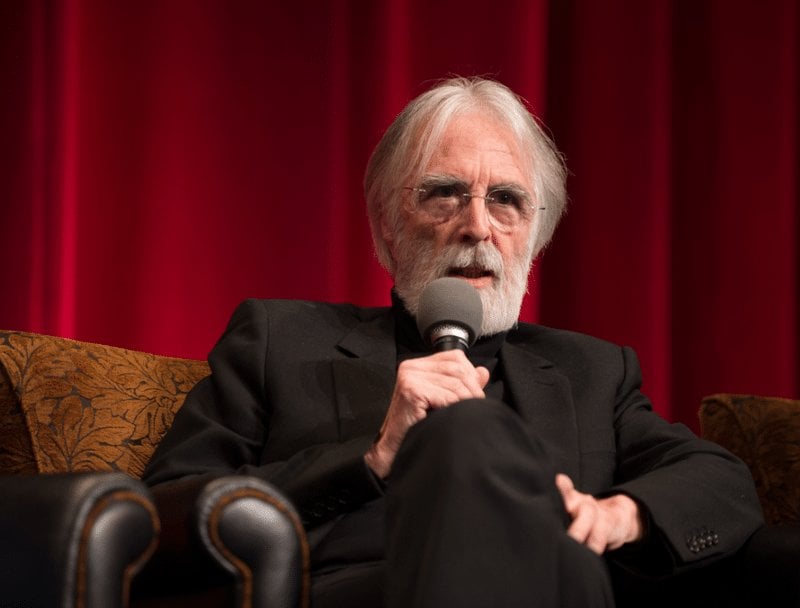
Exploring Michael Haneke’s controversial stance on the #MeToo movement

The Austrian filmmaker Michael Haneke isn’t afraid of a bit of controversy, with the director having attracted criticism for his provocative art films, including 1992s Benny’s Video and 1997s Funny Games. Still, Haneke is rightfully considered to be one of the most inventive filmmakers of modern cinema, barbing each of his dramas with divisive approaches to violence, sex and the boundaries of love.
The controversy over his art spilt into real life in 2018 when he addressed the growing #MeToo movement during an interview with the Austrian newspaper Kurier. First appearing online way back in 2006, #MeToo took off as a social movement against sexual abuse, sexual harassment, and rape culture after various allegations of sexual assault against Hollywood producer Harvey Weinstein in 2017.
Prefacing the interview by saying that any act of “rape or coercion” should be appropriately punished, Haneke further told the publication (via The Guardian): “this hysterical pre-judgment which is spreading now, I find absolutely disgusting. And I don’t want to know how many of these accusations related to incidents 20 or 30 years ago are primarily statements that have little to do with sexual assault”.
Continuing, he added: “This new puritanism coloured by a hatred of men, arriving on the heels of the #MeToo movement, worries me… As artists, we’re starting to be fearful since we’re faced with this crusade against any form of eroticism”.
Avoiding any mention towards Weinstein, it seems that Haneke’s qualms were more directed against the perceived “hatred of men” and restriction of free speech. In this vein, he argued that Nagisa Ôshima’s controversial 1976 erotic drama In the Realm of the Senses wouldn’t be allowed to be made today “because the funding institutions would not allow this, anticipating obedience to this terror”.
With the #MeToo movement came a new swath of criticism against current and historical Hollywood, with classic TV series being reconsidered under contemporary values and actors going under the microscope of public scrutiny. This led to such stories as Kevin Spacey being removed from the Ridley Scott movie All the Money in the World and Louis C.K. being dropped by the FX network after both actors faced allegations of sexual misconduct.
Haneke also voiced his dislike of such recent practices, stating: “Suspected actors are cut out of movies and TV series in order not to lose [audiences]. Where are we living? In the new Middle Ages?”.
Since his first allegations of sexual misconduct in October 2017, Spacey was discarded by the movie industry, appearing only in the 2018 movie Billionaire Boys Club and the 2022 Italian movie The Man Who Drew God by director Franco Nero. In June 2023, the actor is due to appear on trial in the United Kingdom for multiple sexual offences, including indecent assault and sexual assault.
Haneke is yet to make a film since the release of Happy End in 2017, starring Isabelle Huppert and Mathieu Kassovitz. Take a look at the trailer for the family drama below.
