


Exploring David Lynch’s obsession with crashing cars in his movies

Since his feature film debut Eraserhead was released in 1977, David Lynch has cemented himself as one of cinema’s most innovative minds. Master of the surreal, his movies often confuse viewers with their use of unconventional cinematic devices, such as nonlinearity and reversed dialogue. However, all of Lynch’s films have one primary concern – the destruction of the American Dream – and recognising this theme makes his work easier to detangle.
Lynch’s distinctive visual aesthetic directly correlates with his interest in critiquing the idealism of the American Dream. Classical Americana imagery and cultural references dominate Lynch’s work, including white-picket fences, diners, highways, Hollywood, Texas landscapes, and Elvis Presley. Yet Lynch’s characters often come face-to-face with the harsh realities of their homeland, and their deluded optimism, motivated by the vague promises of the American Dream, comes crashing down. In Blue Velvet, Lynch journeys into the dark side of suburbia, revealing what lies not too deep beneath the surface. In the opening sequence, images of a ‘perfect’ American neighbourhood (roses growing by a white-picket fence, residents tending to their gardens, children crossing the road in an orderly fashion) are undercut by a close-up of bustling ants, and soon after, a shot of a decaying severed ear buried amongst the grass.
Similarly, in Mulholland Drive, optimistic and naive Hollywood newcomer Betty is contrasted by the corrupt and jealous Diane, both played by Naomi Watts. The film has baffled many viewers, but at its core, Mulholland Drive is a cautionary tale about the artificiality of Hollywood, the dangers of repression, and the bitter realities of optimism in a bleak and unscrupulous world. One of the film’s key events is a car crash, which leads to Rita’s amnesia. Yet, Mulholland Drive isn’t the only Lynch film to contain a car crash – so does Wild At Heart, and Lost Highway features a memorable tailgating sequence; even Twin Peaks: The Return features a hit-and-run. But why?
Cars are the epitome of American culture – in the land of the free, a vehicle has the potential to take you anywhere. Americans have long been obsessed with cars as a symbol of ultimate freedom, so much so that drive-through restaurants, drive-in cinemas, highways and road trips have all become synonymous with the United States. Even when cars aren’t crashing in Lynch’s films, they’re present (particularly Chevrolets), symbolising liberty and prosperity. Therefore, when Lynch shows us a car crash, he shows us the destruction of freedom and the American Dream.
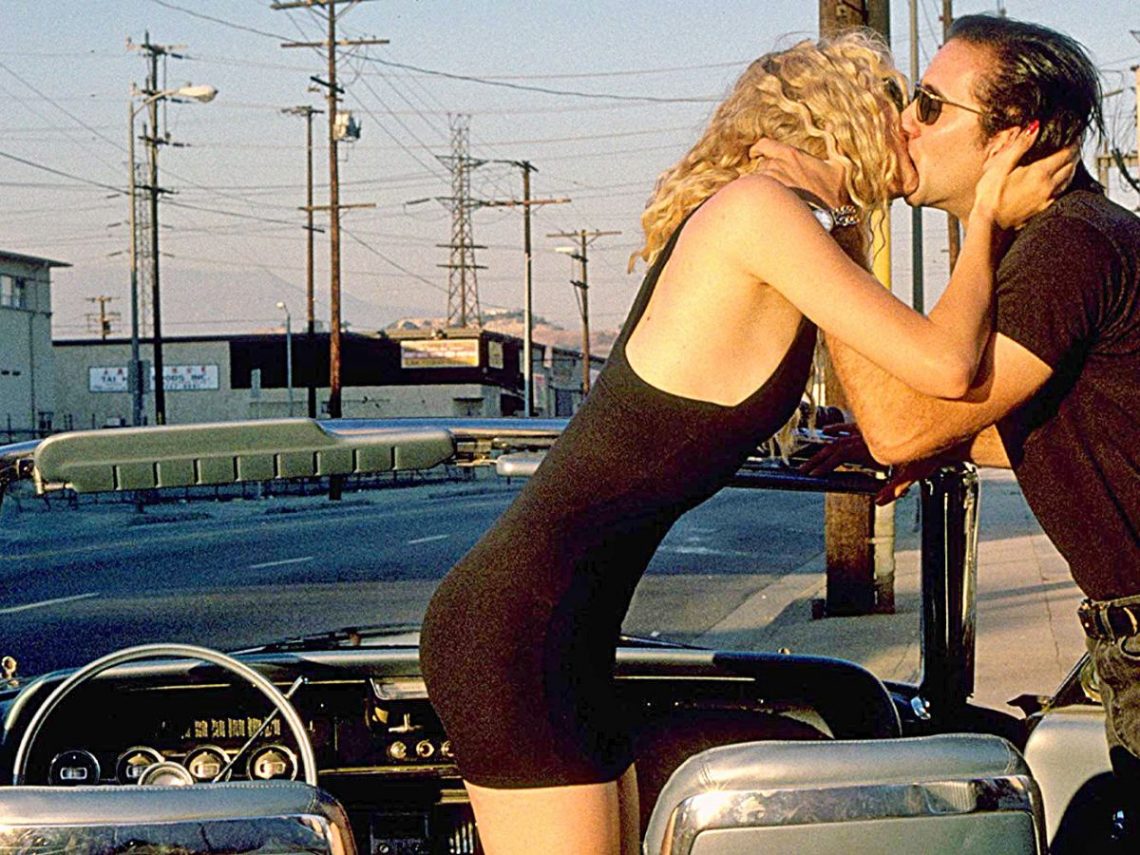
The most horrific car crash sequence in Lynch’s filmography occurs in Wild At Heart. After Lulu and Sailor notice clothes scattered on the road, they discover the site of a crashed car, headlights illuminating the body of a dead man. The couple finds an injured girl complaining of the “sticky stuff in my hair.” After coughing up blood, she dies in their arms, yet, the moment is never brought up again. However, Lynch’s insertion of this scene suggests that the pair’s journey will continue to be far from plain sailing. Moreover, by using a young girl as the crash’s dying victim, Lynch highlights the annihilation of youth, where optimism is more likely to be found. In a film where the central characters embark on a road trip as a means of escape from authority and to experience personal freedom, the sight of a car crashing couldn’t be a more fitting symbol.
Lynch’s personal experiences, from living in a “violence, hate and filth” filled Philadelphia neighbourhood to working in the film industry, have helped to shape his critiques of the American Dream. Cars, the quintessential symbol of freedom, are used by Lynch to represent America. Thus, if cars are destroyed, Lynch destroys hopes and dreams with them.
