


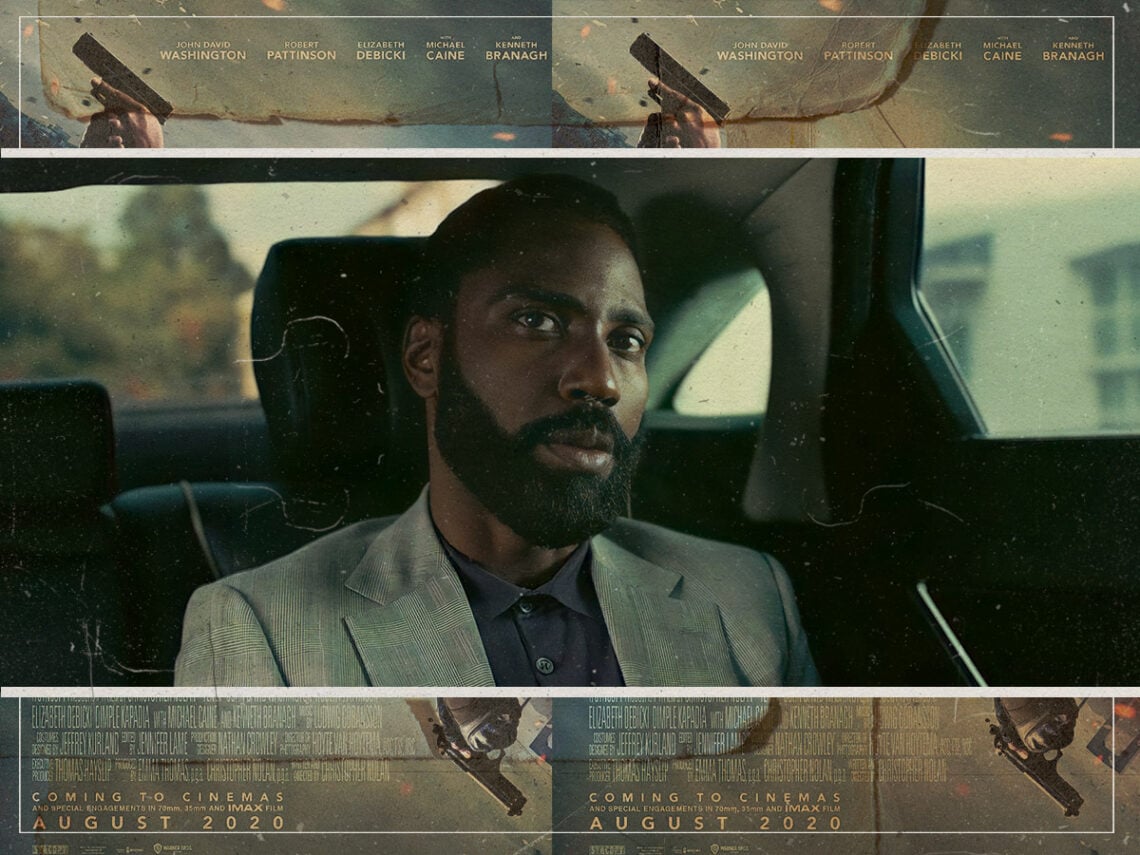
Explaining the ending of Christopher Nolan’s ‘Tenet’

Christopher Nolan fought hard to end his two-decade-long association with Warner Bros on his terms, with Tenet releasing as scheduled in the summer of 2020 despite the majority of cinemas around the world operating under restrictions.
That it turned out to be his lowest-grossing film in a decade and a half was hardly a shock, then, nor was the intense debate and discussion generated by not just the mind-bending sci-fi blockbuster’s narrative but its thematic undertones and conclusion, with Nolan once again ending his story on an ambiguous note designed to drive conversation.
Playing with and manipulating the concept of time has been a recurring hallmark of Nolan’s recent works in a literal, figurative, and thematic sense, and Tenet furthered that sentiment by taking things to an entirely different level than either Inception, Interstellar, or Dunkirk.
His most complex feature to date, unpicking and unpacking Tenet has become a favoured pastime among the filmmaker’s devotees, with the final scene once more closing the door on a Nolan picture without offering a definitive assessment of what he wanted it to represent.
What is Tenet about?
In the simplest of terms, Tenet follows John David Washington’s unnamed protagonist being recruited into a top-secret organisation and tasked to trace the origins of various objects and people travelling back and forward between two separate time periods within close proximity to each other in order to prevent an upcoming attack.
On a broader level, though, the film adopts a palindromic structure – echoed in its very title – that finds the plot meeting itself in the middle and inverting from there, with the events of the first half being replayed in the second from a different perspective and point of view.
Naturally, the overlapping timelines result in several paradoxes and raise questions on free will when there are characters either deliberately or obliviously reliving their lives in an inversion, with notions of determinism and fate being explored as Tenet‘s key players try to draw a distinction between events that can and cannot be changed, altered, or relived.

How did Christopher Nolan film Tenet?
Although it arguably would have been easier to shoot Tenet chronologically, given the way the story doubles back on itself, the production didn’t abide by those rules, leaving Robert Pattinson to admit that he had no idea what was going on for large portions of the schedule.
For the inverted scenes, visual effects supervisor Andrew Jackson admitted to Digital Trends that while “it would have been lovely if it was just a case of filming everything and reversing it”, that wasn’t the case. The actors were required to learn their performances in reverse as well as sequentially, leading to countless instances where one person on camera is acting chronologically while the other acts out the exchange backwards to create a seamless and CGI-free combination.
Nolan meticulously laid out the way he wanted the scenes featuring both linear and inverted characters to unfold, with the visual effects and stunt departments collaborating to create a method that would allow it to happen without looking jarring, unconvincing, or gimmicky. Almost everything in Tenet was captured practically and in-camera, with Washington having to learn the choreography for one major fight four times as both the Protagonist and Antagonist, one apiece moving forward and in reverse.
What does the ending mean?
At the end of Tenet, the Protagonist and his team secure the Algorithm to theoretically prevent nefarious forces from inversion and meddling with the past before Pattinson’s Neil drops the bombshell that he’s known Washington’s character for a long time, having been recruited by him in the future.
Before heading back into the timeline where he sacrifices himself, Neil acknowledges that he’ll “see you in the beginning”, indicating that Neil’s story took place in the past from his point of view, but they’re yet to happen to the Protagonist.
As well as Neil being recruited by the Protagonist, it’s revealed that the Protagonist was the one who started the organisation designed to stop the Algorithm from falling into the wrong hands in the first place. Of course, he hasn’t founded it yet – in his current timeline at least – but the inversion and exchange between the Protagonist and Neil, in addition to the movie starting with his recruitment and then coming full circle, makes it inevitable that it’s going to happen again and reignite the cycle.
Essentially, he inverted himself in the future to return to an earlier past in order to recruit the people who would later recruit him and set the narrative of Tenet in motion. Armed with this realisation, the Protagonist kills Dimple Kapadia’s Priya Singh, allowing Elizabeth Debicki’s Kat Barton to leave the scene with her son. It wasn’t crystal clear on first viewing, but the palindromic nature of the film extends right until the final shot.
