


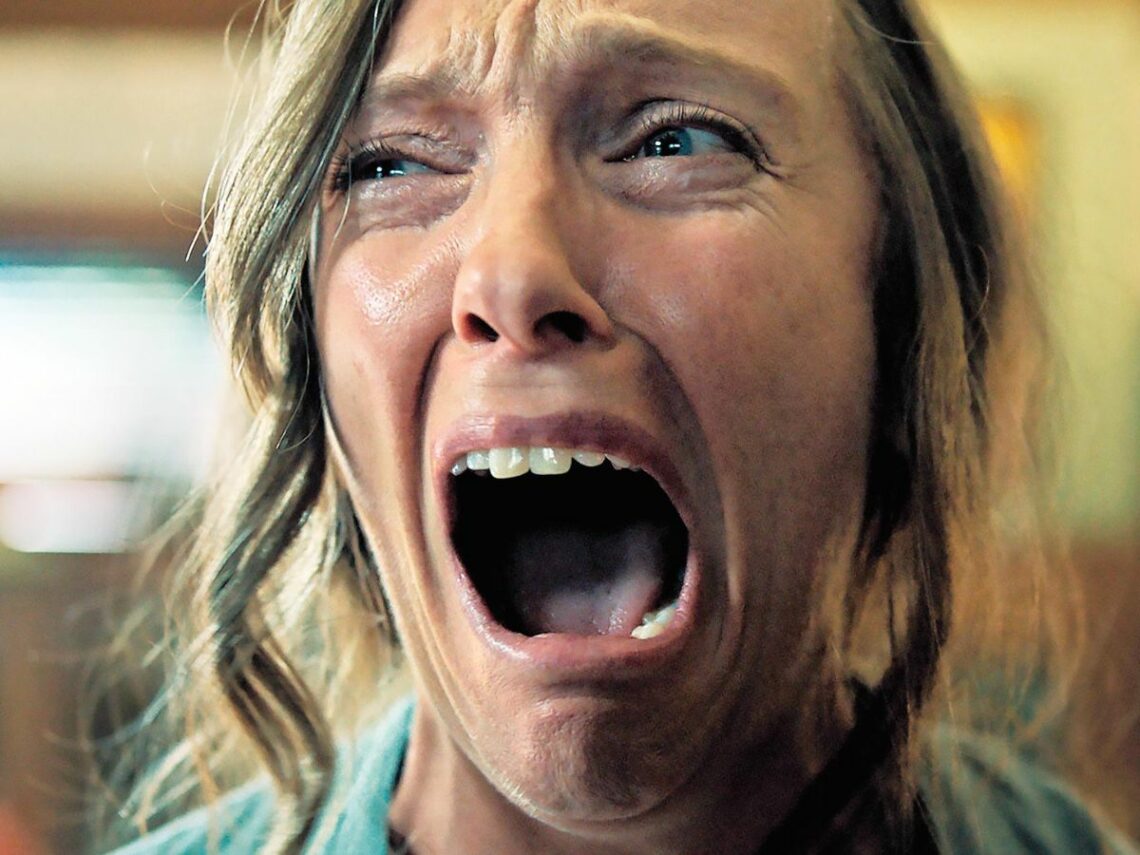
Explaining the ending of ‘Hereditary’

After gaining attention – and no small amount of notoriety – for his provocative student short films The Strange Thing About the Johnsons and Munchausen, Ari Aster graduated to feature-length directing. He did this in style with Hereditary, which quickly gained a reputation as a modern horror classic.
Bolstered by an incredible performance from Toni Collette, a constant sense of unease, and jolting bursts of gruesome terror, the film would go on to recoup its $10million budget and then some at the global box office. Now, it regularly finds itself named among the scariest movies ever made.
Throughout, Aster maintained that the driving force behind Hereditary was a family tragedy and not a supernatural horror. The ending sums up his approach to the underlying themes. It’s eerie and unsettling without a doubt, but it nonetheless ties together three generations of the Graham clan.
Once Gabriel Byrne’s patriarch Steve has been reduced to smouldering rubble, Alex Wolff’s Peter stumbles upon not just the body but the coven that’s infiltrated his home. After being chased through the family abode by his possessed mother, she decapitates herself with piano wire, and he jumps out of an attic window to his death. It’s after this that things get really weird.
An otherworldly orb enters Peter’s dead body and reanimates it, after which he begins acting in a manner reminiscent of Milly Shapiro’s younger sister, Charlie, who was beheaded in the first act. He follows the floating – and, of course, headless – body of his mother into his sibling’s treehouse, where he discovers the coven worshipping a mannequin adorned with Charlie’s head.
Ann Dowd’s Joan takes the crown from the crude effigy and places it on Peter’s head but addresses him Charlie, who is also Paimon, the demon that the cult – including their grandmother Ellen – had been worshipping. That technically turns out to be yet another ruse of sorts, with the entity seeking a male host all along. Essentially, Charlie’s spirit is inside Peter’s body, providing the ideal host the coven had been striving to secure for Paimon.
That’s dark enough as it is, but it gets darker still if you choose to interpret it in the manner suggested by Aster to Variety, where he said of Hereditary that “ultimately, the movie is a success story from the grandmother’s point of view and the coven’s point of view”. Not only that, but he confirmed that it was his intention to suggest the only reason Annie had children was for the sole purpose of completing the ritual, which also makes it a success story for her in a way.
At its core, the ending of Hereditary is simple to unpack when Paimon was always residing within Charlie, but it took Peter’s death for the demon to claim the host it demanded from its coven. Of course, it was getting to that point that sent shivers down the spine.
