


The crushing existential weight of loneliness: explaining the ending of ‘I’m Thinking of Ending Things’

Iain Reid’s novel I’m Thinking of Ending Things was deemed unfilmable when it was first published in 2016, which made it the perfect adaptation for Charlie Kaufman. The writer and filmmaker had become synonymous with dense, layered explorations of the human condition on both page and screen, which made him the standout choice to tackle a story that didn’t readily translate to cinema.
As the mastermind behind Being John Malkovich, Adaptation, Synecdoche, New York, and Anomalisa, the surrealist psychological thriller was right up his street. It’s difficult to imagine anybody else even attempting to even mount a semi-faithful realisation of Reid’s book, never mind pulling it off to such a successful extent.
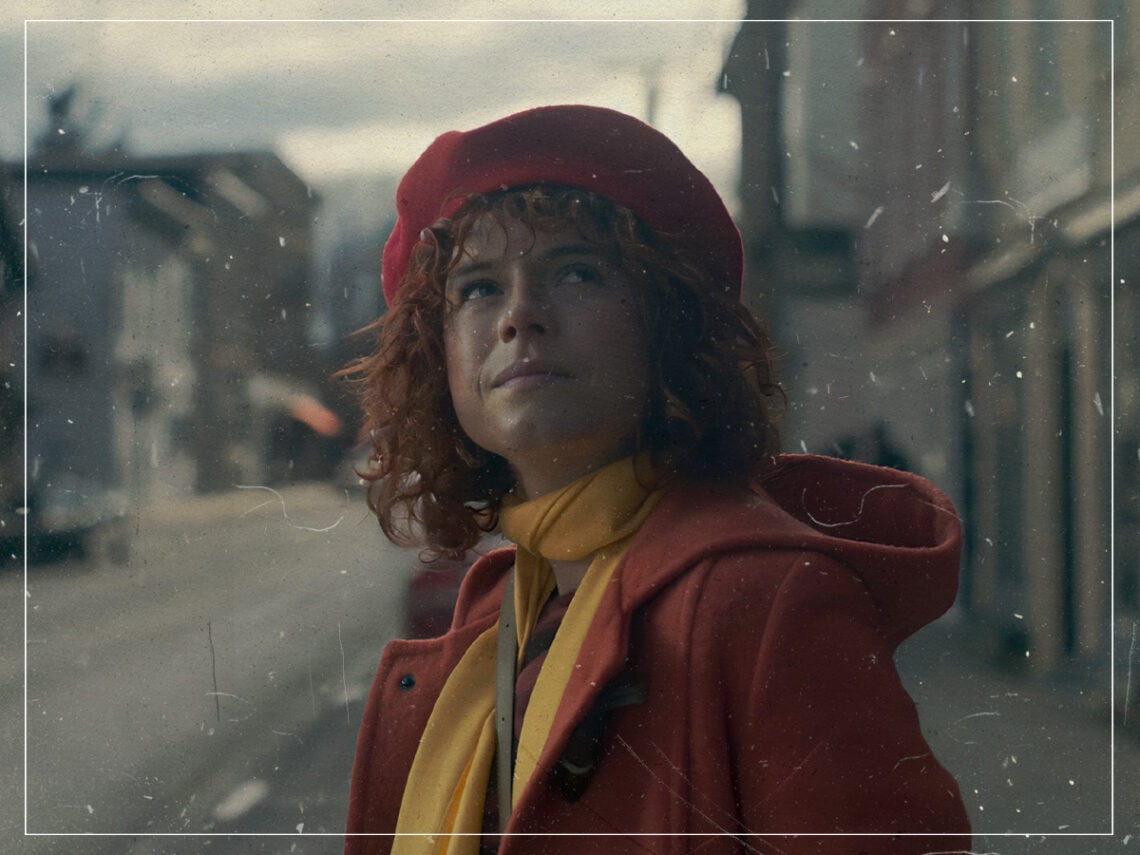
In the broadest sense, I’m Thinking of Ending Things follows Jessie Buckley’s character as she prepares to meet the parents of her boyfriend, Jake, played by Jesse Plemons, for the first time. It’s a daunting milestone that any worthwhile relationship needs to power past at one stage or another. However, that barely scratches the surface of what’s really going on, something that reaches a head during a climax that initially seems bewildering to the point of confusion but is relatively straightforward to unpack as it relates to everything that comes before.
Comparing it to Fight Club is doing the film a disservice. Still, it’s true in a way because Buckley’s character – who goes through multiple names, including Lucy, Louisa, Lucia, and Ames at various points – is a figment of Jake’s imagination. The entire narrative has unfolded as a vision of the potential future they could have had together had he struck up the courage to ask her out after encountering her at a trivia night, which he never did.
Buckley might be the one providing the narration. Still, the entirety of I’m Thinking of Ending Things is told from Jake’s perspective. This also explains why the dinner with his parents regularly descends into such outlandish territory from a visual, thematic, and dialogue-driven matter. There is a ‘Lucy’ in real life. However, she’s not part of this scenario, with Jake’s loneliness leading him to fantasise about an alternate reality where they met, started dating, and then ended up hitting the road to meet Toni Collette and David Thewlis as his mother and father.
Recontextualising everything that had unfolded up until that point, it also explains why she’s been referred to by so many different monikers and why her profession changes frequently throughout the narrative. Jake is constructing his idealised version of what they could have been as a couple and the one that would cater most to the sensibilities of his parents, making himself the unreliable narrator of a story the viewer doesn’t even realise he’s narrating, to begin with, until the third act.
However, Jake is so crippled with anxiety, insecurities, and self-doubt that even in his own curated world, ‘Lucy’ is still planning to break up with him. That speaks volumes about who he is as a person and the confidence he has in his abilities to endure the unforgiving world he lives in because he can’t even fabricate a successful relationship in his mind, even when he’s the one calling the shots on how it pans out.
In real life, she gives a demeaning account of the first night they met while talking to Gus Boyd’s janitor, referring to Jake as a “creeper” and “just one of thousands of such non-interactions in my life”. This soon spirals into Kaufman’s distinct style of madness when the custodian subsequently experiences another version of the couple getting married. A dancing janitor murders Jake with a knife, gets in his car, presumably freezes to death, and walks off into the distance with a maggot-infested pig. An older Jake gets a Nobel Prize and sings a song from Oklahoma! to an auditorium of people from past points in his life who give him a standing ovation.
It’s a weird, wild, wonderful, and whimsical way to round out I’m Thinking of Ending Things, with the janitor contemplating the mistakes he made as the younger Jake. He witnesses a series of events unfolding through a fantastical lens that could have changed his life for the better if only he had the temerity to follow through on the desires he never had the strength or resolve to achieve.
In the novel, it’s explicitly stated that ‘Lucy’ has never been real, and the janitor definitively kills himself, having resigned himself to the fact he’ll never be able to stop thinking about what might have been. Kaufman opted for something distinctly less bleak but every bit as off-kilter, with the revelations of the final stretch refitting I’m Thinking of Ending Things as the account of one man’s constant grappling with various states of depression, loneliness, and a hesitation to act that has lifelong consequences.
