


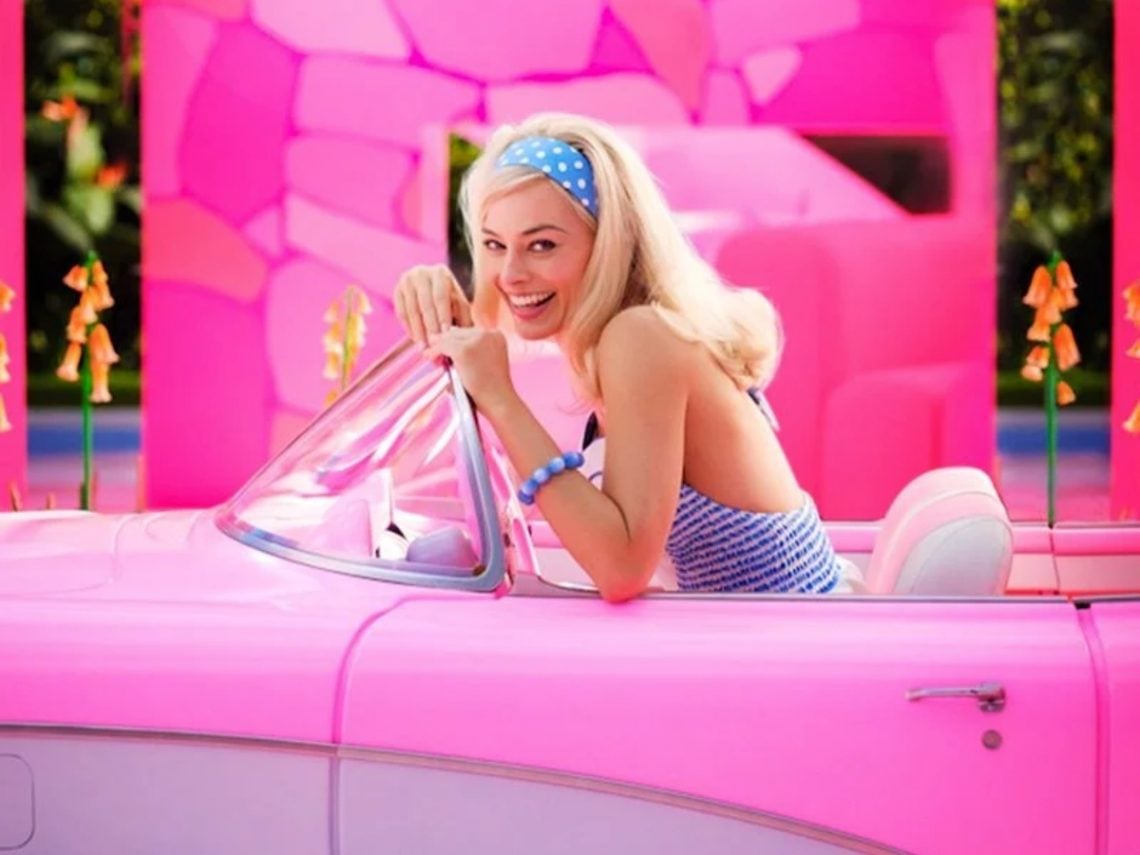
Explaining the ending of Greta Gerwig’s ‘Barbie’

Greta Gerwig’s live-action Barbie film, with Margot Robbie as the eponymous and iconic star, is much more than a dazzling dose of nostalgia; it’s a poignant exploration of womanhood in the 21st century. Stripping back the layers of its ending reveals a potent commentary on gender roles, identity, and societal expectations.
In the idyllic world of Barbieland, the Barbies ( including Robbie’s ‘Stereotypical Barbie’ and Ryan Gosling’s ‘Beach Ken’) live out the surreal existence dictated by their Mattel creators. The Barbies run Barbieland. Despite the problematic depictions of ‘femininity’, it is ostensibly a matriarchy. However, when Barbie experiences changes that prompt her journey to the real world, she and Ken react differently. Ken, entranced by the patriarchy, returns to Barbieland with a worrying message of male superiority, which incites a revolution that leads to the Barbies having to reclaim their world.
In the real world, Barbie meets human woman Gloria and her teen daughter Sasha, who then both accompany her back to Barbieland. After Gloria’s compelling monologue awakens the Barbies from Ken’s manipulative influence, they regain control and reinstate the female-led government. Barbie and Ken, meanwhile, have a heart-to-heart, with Barbie encouraging Ken to find his identity outside of their connection, reiterating that he can, in fact, be ‘just Ken’.
A neat end? Not quite. While the Mattel CEO (played by Will Ferrell) deems everything normal, the Barbies advocate for equal rights, and Gloria proposes an ‘Ordinary Barbie’. Their goal is to challenge the status quo, reject ‘universal standards’ and, most importantly, affirm that each individual should have their own aspirations.
This new societal shift, however, leaves Barbie in a state of existential crisis. After experiencing human emotions and shedding her ‘perfect’ stereotype, Barbie feels alienated in Barbieland. Aiding her journey of self-discovery is Ruth Handler, the creator of Barbie, who materialises to counsel her. Handler and Barbie deeply discuss her existential dilemma in a dreamy, ‘meet your maker’ style sequence. Barbie confesses she no longer feels like a Barbie. In response, Handler shares wisdom from the trailer, “Humans only have one ending. Ideas live forever,” and admits that the original Barbie’s feminine ideals are outdated.
This encounter triggers Barbie’s epiphany. She doesn’t want to revert to her previous, unattainable perfection, instead embracing her human emotions and societal pressures. Barbie no longer wishes to be the idea; she wants to “be the one imagining”.
A montage of women of varying ages, courtesy of Gerwig’s footage from the film’s cast and crew, paints a moving picture and celebration of womanhood. The movie’s ending affirms two things: Firstly, the Barbie we once knew can never return to her box, forever changed and endlessly evolving. Secondly, Gerwig’s Barbie is a complex and essential piece of cinema that deserves multiple watches.
