


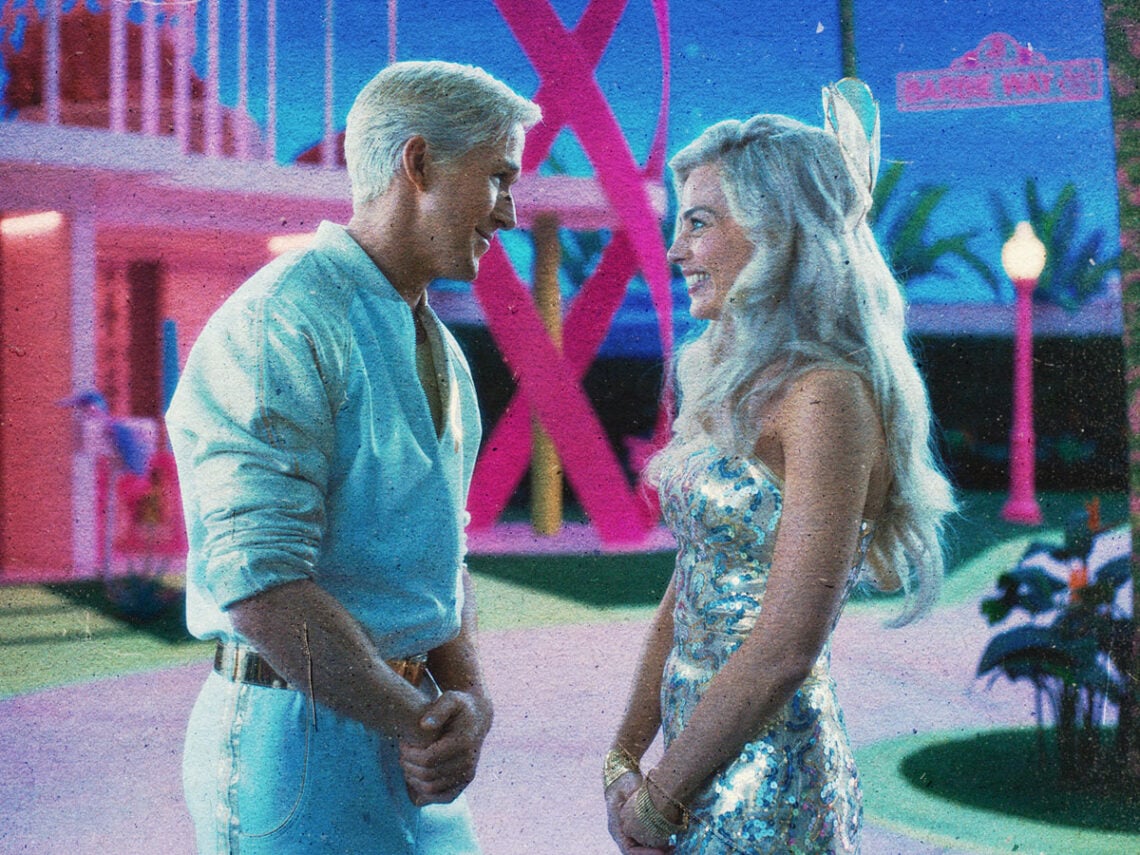
‘Barbie’ movie review: Don’t be fooled by the hype; this is an essential piece of cinema

There’s a certain intrigue surrounding the release of Greta Gerwig’s Barbie, not only because of its very subject matter, nor the all-star cast of Margot Robbie, Ryan Gosling, Will Ferrell and the like, but also for the kind of skewed socio-politics that the famed doll has represented since her arrival on shop shelves in 1959.
In bringing Barbie to life, we find the near-perfect Robbie playing the ‘stereotypical’ blonde version of the doll whose seemingly perfect life in Barbieland is thrown into disarray when she is afflicted with thoughts representing a depressive, existential crisis. Imbued with the kind of anxieties that so many of us experience in our lives, including a lack of self-worth, a crippling doubt in our very purpose, and, of course, the fear of growing old and ugly with cellulite, Barbie’s plastic fantasy falls apart.
Barbie’s perfect life had been going so well until this point; she lived in a perfect dream house with all the other successful Barbies – President Barbie, Lawyer Barbie, Doctor Barbie – and ruled over her dominion with grace and ease. However, when Barbie heads to the real world to confront her owner over these god-awful feelings she suddenly experiences (with Gosling’s Ken tagging along for the ride), she finds that this strange otherworld is diametrically opposed to her beloved fictional reality.
Barbie is mortified to discover that not only has she been abandoned by her former owner and her very existence is now deemed reprehensible for giving impressionable young girls the wrong ideas about their self-worth, but also that there’s a mysterious little something called ‘the patriarchy’, that renders her sexually objectified and overtly self-conscious, a belief system that Ken naturally seems to thrive in.
Barbie is obviously bright, glaringly fabulous, beautifully choreographed and attentively performed. There’s razor-sharp and poignant wit throughout the excellent script, whether in the snappy considerations of Weird Barbie (Kate McKinnon) or through the utter lack of self-reflection in the Kens or the Mattel CEO (Will Ferrell). However, Barbie is not merely a comic turn, a wry laugh at the ridiculous nature of a film based on the famous doll; it’s also a poignant reflection on what Barbie can represent in a life filled with the horrors and pains of mortality.
The harrowing losses, the misunderstandings, the utter lack of direction – all of these things are what make up our very existence as emotional beings, and Barbie is an outright celebration of that uniquely human experience. Gerwig suggests that Barbie (the Mattel product itself) essentially created a fantasy harshly sheltered from the torturous reality of the real world. The remedy? A normal Barbie, a Barbie who is just happy to get through the day without feeling like she wants to die. A broke, single mother Barbie, whose most significant achievement is being content with her lot in life.
Gerwig has struck gold with Barbie; a considerable audience and subsequent box office surely await, and by using the famed toy as the central allure, Gerwig is able to tell us ‘brainwashed’ cinemagoers of Barbie’s actual meaning and her relation to our actual human lives. This makes Barbie an essential piece of cinema, a film undoubtedly for us all, and that’s universal art deserving of acclaim.
This is, believe it or not, a very complex film indeed. There’s no immediate remedy for our presently still-troubled sexual socio-political situation; if it were that easy, we might not need such a film, even if it’s one where the bright lights can occasionally detract from the vital conversation that’s taking place.
This is certainly not merely a film to watch only once, to laugh and sing along to, and be done with. In fact, Barbie may just accomplish the greatest of all art’s tasks, and incite change. Don’t be fooled by her hype or her history; Barbie is an essential piece of cinema for the modern age.
