


‘Exit’ and the crazed killer who claimed he was inspired by U2

Before the concept of “true crime” had become equivalent to the “rom-com” as something to curl up and enjoy with a glass of wine, an in-depth investigation of a high-profile murder case was usually serious business, often handled by some of the best writers and journalists of their day.
Two of the most famous examples of this kind of work, Truman Capote’s In Cold Blood (1966) and Norman Mailer’s The Executioner’s Song (1979) are both now considered bedrock influential works in the true crime genre, but any comparison between these deeply human novels and today’s empathy-free “let’s solve a murder” podcasts is mildly insulting at best.
For millions of readers, In Cold Blood and The Executioner’s Song were eye-opening examinations not just of the nature of a crime, but of the larger criminal justice system and the factors that produce a criminal mind.
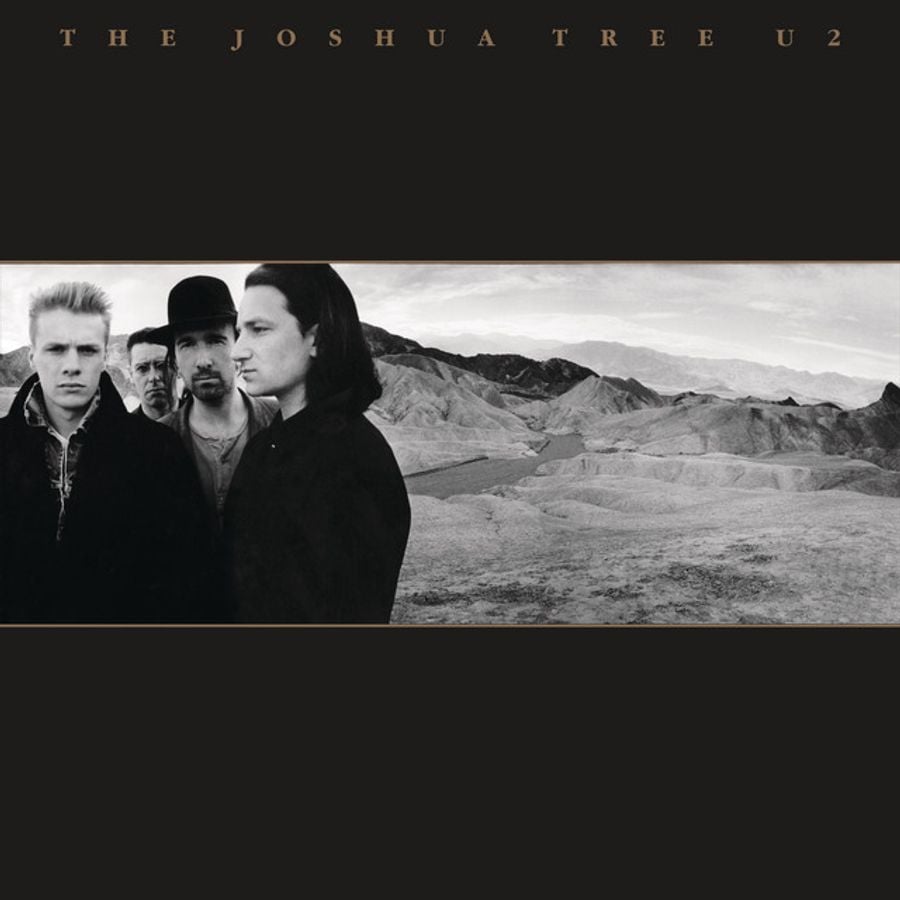
One such reader was U2 frontman Bono, who was moved by both novels and decided to try and write a song inspired by them during the sessions for what became arguably U2’s finest album, 1987’s The Joshua Tree. His lyrical experiment would find its home on that album’s penultimate track, the dark and slow-burning ‘Exit’.
“[‘Exit’] was my attempt at writing a story in the mind of a killer,” Bono clarified in the band’s 2006 autobiography U2 by U2. “It is all very well to address America and the violence that is in an aggressive foreign policy, but to really understand that you have to get under the skin of your own darkness, the violence that we all contain within us.”
Bono delivers the lyrics to ‘Exit’ in an increasingly frenetic, prime Patti Smith sort of style, describing the twisted view of a man overtaken by a delusional desire to do harm. “A hand in the pocket / Finger on the steel / The pistol weighed heavy / And his heart he could feel was beating, beating, beating.”
Most U2 listeners heard ‘Exit’ as a disturbing character study or warning about man’s darkest impulses. Unfortunately, one listener heard a song about himself.
In 1989, a teenager named Robert Bardo would claim that ‘Exit’ had partially inspired him to murder the young Hollywood actor Rebecca Schaeffer, whom he had repeatedly stalked and eventually shot to death in her home.
During his subsequent murder trial, Bardo even requested that ‘Exit’ be played in the courtroom as part of his defence, lip-syncing to the song as it played.
Bardo was found guilty and has spent the past 35 years behind bars, which included an incident in 2007 in which he was repeatedly stabbed by a fellow inmate, barely surviving.
Unlike some other violent crime cases in the 1980s and ‘90s, in which defendants tried to blame a specific rock and roll band, record, or song for their behaviour, U2 endured very little blowback or criticism in the aftermath of Rebecca Schaeffer’s murder. While some politicians and religious organisations had taken similar opportunities to go after other bands from the worlds of heavy metal and hip hop—citing Satanic or deviant influences in their music—these arguments were perhaps backed by less of an eager, pitchfork-wielding audience when it came to a band like U2, already well known to be a mainstream rock act that typically wrote uplifting music about righteous causes.
Bono defended ‘Exit’ nonetheless, telling Hot Press magazine that Bardo’s claims felt more like the case of “a good lawyer at work for his client,” and that he didn’t have regrets about the song, although U2 did keep it off its live setlist for many years afterwards.
“I still feel that you have to go down those streets in your music,” Bono added. “If that’s where the subject is taking you, you have to follow—at least in the imagination. . . I’ll take a walk occasionally, and have a drink with the devil, but I’m not moving in with him.”
