


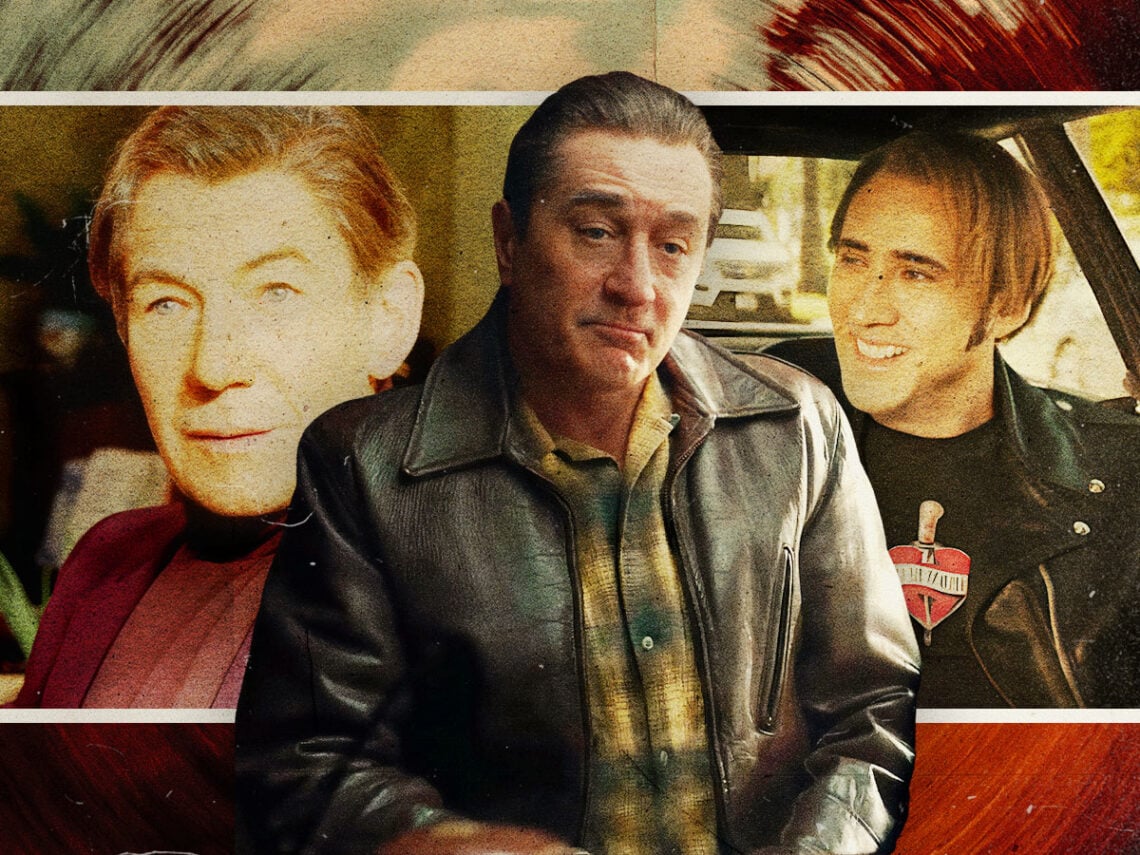
X-Men to The Irishman: tracing the evolution of de-ageing in cinema

Harrison Ford recently defended a flashback segment in the upcoming Indiana Jones and the Dial of Destiny, in which a digitally de-aged version of the character is shown. Despite some critics’ reservations about the increasing use of the technology, Ford was quick to praise it: “I know that that is my face,” he said of the CGI-based younger Indy. “That’s what I looked like 35 years ago.”
Despite initially calling the tech “a little spooky”, Ford has since changed his tune. Speaking at a press conference for Dial of Destiny at Cannes, the 80-year-old actor reassured audiences that “it was used very skillfully and assiduously”. But what exactly is de-ageing?
Ostensibly, it is the art of making a character or the actor portraying them look younger. The practice of altering age is by no means a new one. Citizen Kane famously used hair and make-up to make Orson Welles, then aged only 26, look like an old man, along with several other cast members.
Ageing characters, then, is quite achievable through practical effects alone. De-ageing, on the other hand, can really only be done with the use of VFX. Less than twenty years old, let’s look at the evolution of de-ageing in cinema.
The evolution of de-ageing in cinema
The very first film to ever employ the technique, X-Men: The Last Stand, made history by showing us younger versions of Ian McKellen’s Magneto and Patrick Stewart’s Charles Xavier. Jaw-dropping at the time, audiences were treated to a flashback that showed the two main mutants recruiting Jean Grey to the X-Men. Like a lot of CGI, it hasn’t aged amazingly, but it broke new ground and forever widened the possibilities of using such technology.
With David Fincher’s The Curious Case of Benjamin Button, Brad Pitt’s titular character was both aged and de-aged digitally. Given the strange nature of his affliction, in which he is born old and then ages backwards, getting gradually younger, the technology was used somewhat differently, showing us a withered old man in a small child’s body and then, towards the end of the film, a tall teenage version of Pitt. Nevertheless, it utilised the technology creatively and showed how, two years later, the effect had become remarkably advanced.
Studios had begun to cotton on to the power of the tech, and several films after Benjamin Button utilised it, but the next big advancement came with Tron: Legacy. In this sequel to the hit 1980s sci-fi, Jeff Bridges was de-aged by 20 years to maintain the look of his character from the first film. Reportedly using up a huge chunk of the film’s entire budget, the result was nonetheless impressive.
Ant-Man was the next truly progressive step in de-ageing, giving us a flashback to 1989 that showed 25-year-younger versions of Martin Douglas and Martin Donovan. In just under ten years, the evolution of the technology was astonishing. Compared to X-Men: The Last Stand, the de-aged characters in Ant-Man had none of the weird plasticity of the former film, and it seemed like all the visual hiccups had since been ironed out.
The most recent Martin Scorsese film to hit cinema screens and streaming services, The Irishman, gave us multiple different younger versions of Robert De Niro, Al Pacino and Joe Pesci. Always the innovator, Scorsese has a reputation for embracing new cinematic tools despite his age. The Irishman remains a triumphant success in the field of de-ageing, particularly in comparison to the fifth Pirates of the Caribbean film and Gemini Man, which came out the same year as The Irishman and was widely criticised for its poor depiction of a young Will Smith.
One of the most recent examples of digital de-ageing exemplifies how far the technology has come: The Unbearable Weight of Massive Talent. The absurdist comedy, which stars Nicholas Cage as himself, includes moments of his imaginary, younger self, specifically, his 1990s Wild at Heart era self. Using not just CGI but also Artificial Intelligence, the VFX team created one of the most visually impressive and outright spooky instances of de-ageing that we’ve seen so far.
Watch the first instance of de-ageing below, where you can see the debut of a technology that’s evolved to the point that Ford has said he’s “very happy” with it.
